Best Areas to Buy Land in Costa Rica for Building (2026)
Best areas to buy land in Costa Rica in 2026 depend on what you're building and why. James Caldwell breaks down Guanacaste, Nicoya Peninsula, Southern Pacific, and Central Valley.

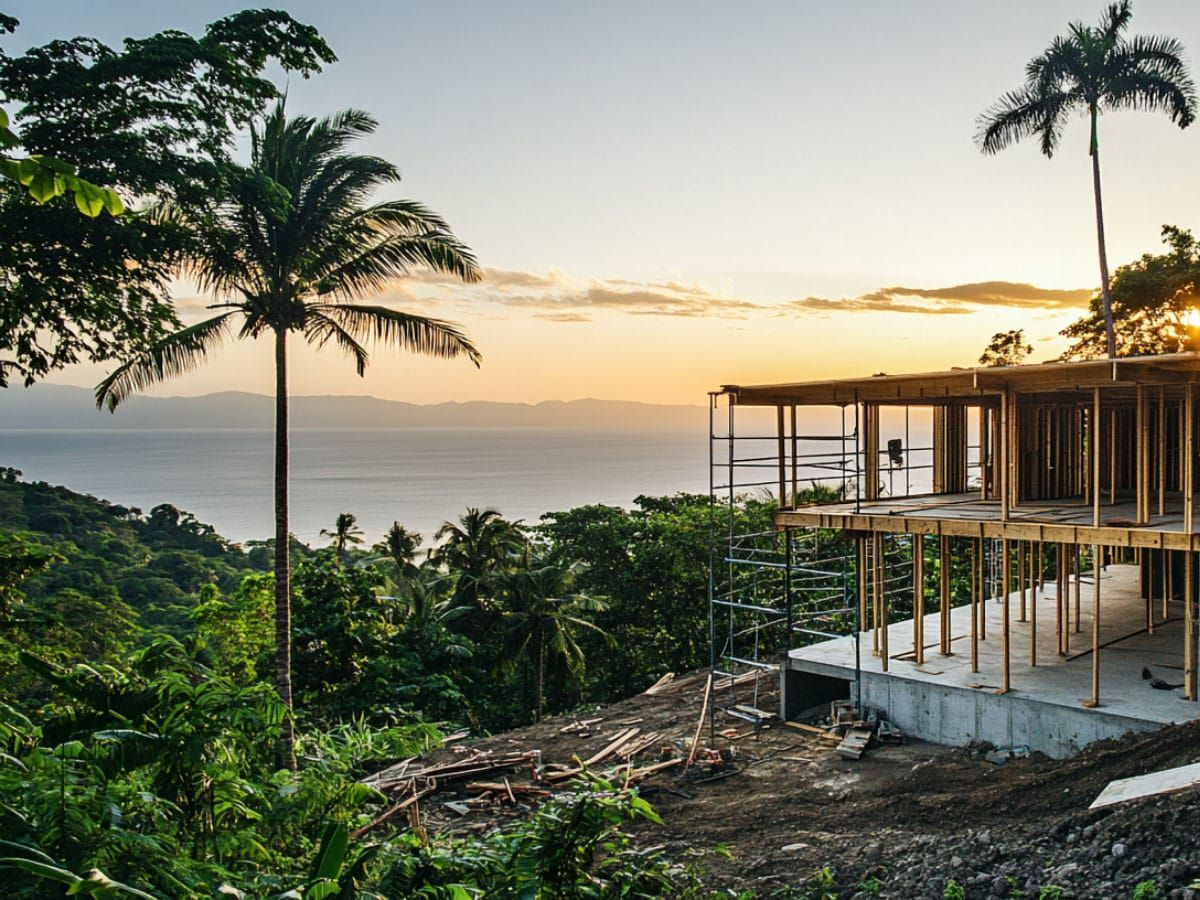
The question of where to buy land in Costa Rica does not have one answer. It has three different answers depending on what you are actually trying to do: build a primary residence, build a vacation home with some rental income, or build a rental property as a straightforward investment. Those three objectives send you to different parts of the map, with different price ranges, different risk profiles, and different time horizons for when the decision makes sense. Getting the objective clear before looking at the geography is more useful than any specific area recommendation.
What follows is my current read on the main land markets in Costa Rica, where prices are, what they reflect, and where the rational case for buying is stronger or weaker depending on what you are trying to accomplish.
In this article
Start with the objectiveGuanacasteNicoya PeninsulaSouthern PacificCentral ValleyWhat land costs per regionWhere I see the rational buyFAQ
Start With the Objective
A primary residence buyer and a rental investment buyer are not looking for the same land, and confusing the two frameworks produces decisions that serve neither goal well. The primary residence buyer should weight lifestyle quality, community, services access, and personal fit heavily. The vacation home buyer with rental income as a component should weight rental market strength and guest access. The pure investment buyer should weight yield, liquidity, and market trajectory above everything else.
Where these frameworks produce genuinely different land decisions: a primary residence buyer might rationally choose the Southern Pacific despite its distance from services because the environment suits them. A pure investment buyer has a much harder case for the Southern Pacific because the guest access challenges limit occupancy relative to better-connected markets.

Guanacaste: Established Market, Elevated Prices
Guanacaste is the most liquid and most internationally recognized land market in Costa Rica. The direct flight connections through Liberia airport, the dry-season climate, and the established tourism and expat infrastructure have made it the default destination for buyers coming from North America who want Pacific coast lifestyle without a difficult access story. All of that is real and it is priced in.
In Tamarindo and Flamingo, land that would have sold for $150,000 to $200,000 in 2018 is listed at $300,000 to $450,000 for comparable parcels in 2026. The appreciation has been real. What has also happened is that the yield math for rental investment has compressed: the combination of higher land costs, significant construction cost increases, and a short term rental market that now has 2x the 2019 supply makes the investment case thinner than it was. Building on land in Tamarindo at current prices to generate Airbnb income requires a strong property at a premium nightly rate to produce returns that justify the capital.
The Liberia airport corridor, Playas del Coco, Ocotal, the developments north of Tamarindo, is a more interesting area for new land purchases. Infrastructure investment is ongoing, the supply of rental properties has not saturated the market the way Tamarindo has, and the flight access improvements at Liberia are a genuine underlying demand driver. Land prices here are lower than Tamarindo for comparable proximity to services, though they have also moved significantly from their 2018 levels.
Nicoya Peninsula: Santa Teresa, Playa Hermosa, Montezuma
Santa Teresa, Playa Hermosa, and Montezuma on the southern Nicoya Peninsula have some of the most beautiful beaches in the country. The combination of consistent surf, clear water, and a barefoot-elegant aesthetic that photographs spectacularly well has created a buyer profile that is willing to pay a premium and that sustains strong rental rates in high season.
Santa Teresa is the most developed of the three and has the strongest rental market. A well located villa in the Mal Pais area with ocean exposure is a real rental performer in high season, average daily rates for quality properties run $300 to $800 per night depending on size, season, and finish quality. The occupancy pattern is seasonal: December through March and the surf season shoulder months are strong; July and August have good demand from European travelers. The overall supply of high quality rentals has grown but has not saturated the way Guanacaste has, partly because the access challenges limit the speculative construction that flooded markets like Tamarindo.
Land in the Santa Teresa area now runs $80 to $250 per square meter for residential lots with reasonable access, depending on proximity to the beach, elevation, and view quality. Oceanfront and beach adjacent land is significantly more. These prices have moved substantially in the past five years.
Playa Hermosa, just north of Santa Teresa, is quieter and less commercial. The beach is exceptional. Land prices are lower than Santa Teresa for comparable distance from the water, which makes it interesting for buyers who want the environment without paying the full Santa Teresa premium on the land itself.
Montezuma, at the southern tip of the Peninsula, is the most speculative of the three. The waterfalls and the character of the town have sustained a consistent visitor profile for decades. Land prices are lower than Santa Teresa. The investment thesis is that the Peninsula's overall trajectory continues and Montezuma eventually benefits from proximity to what has become a legitimate destination corridor. That is a longer-hold argument.
Southern Pacific: Uvita, Dominical, Ojochal
The Southern Pacific is the entry-level coastal land market in Costa Rica for foreign buyers, and it has an appeal that is genuinely distinct from the Pacific coast markets to the north. The Marino Ballena national marine park, the whale and dolphin sightings, the waterfalls coming down from the Talamanca range, the intact jungle that covers the hills behind the coast, this is Costa Rica in a more undeveloped form.
Land prices in the Uvita area run $20 to $80 per square meter for residential lots, depending on location, view quality, and road access. Dominical is in a similar range. Ojochal tends to have smaller lots with more infrastructure already in place.
The rental investment case in the Southern Pacific is more challenging than on the northern Pacific coast. Guest access is the limiting factor, the drive from San José is three and a half to four hours, there is no major commercial airport nearby, and the roads can be difficult in rainy season. Properties that perform well as rentals in Uvita tend to be distinctive in either their nature setting or their design, and they attract a buyer who specifically chose the Southern Pacific over Guanacaste. That is a real market, but it is smaller than the Guanacaste or Santa Teresa rental demand pool.
Central Valley: Different Use Case Entirely
The Central Valley, Escazu, Santa Ana, Atenas, is not a coastal lifestyle market. It is a different question: where in Costa Rica do I want to live year round, with good access to international schools, quality healthcare, urban services, and a climate that is more temperate than the coast? The buyers who end up in the Central Valley are often families, retirees, or expats on assignment who need the infrastructure that the coast does not provide.
Land prices in Escazu and Santa Ana are high by Costa Rica standards, $200 to $500 per square meter for residential lots in established areas. Atenas, which has a strong retirement reputation and a famously comfortable climate, runs considerably less: $15 to $60 per square meter depending on the specific location. The rental investment case in the Central Valley is weak for vacation rentals. The long term rental market, particularly in Escazu, is more active, supported by the expat and diplomatic community in San José.
What Land Costs Per Region in 2026
Guanacaste established markets (Tamarindo, Flamingo): $200 to $500 per square meter for residential lots. Guanacaste airport corridor (Coco, Ocotal): $80 to $250 per square meter. Nicoya Peninsula, Santa Teresa: $80 to $250 per square meter for residential land; $300 to $600 for premium beach adjacent lots. Nosara: $100 to $350 per square meter, depending on beach proximity and view. Southern Pacific (Uvita, Dominical): $20 to $80 per square meter for standard residential lots. Central Valley (Escazu, Santa Ana): $200 to $500 per square meter; Atenas: $15 to $60 per square meter.
These ranges reflect what I see in deals I look at, not listed asking prices, which frequently run 10 to 20 percent above where properties actually transact. Verify against current listings and completed sales with a local real estate lawyer before drawing conclusions about a specific parcel.
Where I See the Rational Buy in 2026
For an investor with a five to ten year horizon who wants coastal land in a market with genuine rental demand and room for appreciation: Santa Teresa and the Nicoya Peninsula represent the strongest relative value on the Pacific coast right now. The access challenges are improving and the rental market there produces better relative yields than Tamarindo at current prices because you are not competing against a saturated short term rental supply.
For a lifestyle buyer who wants the Central Pacific coast and cares about access: the Liberia airport corridor in Guanacaste gives you the infrastructure and connectivity that matters for comfortable daily life, at prices that have moved but not to the extreme of the Tamarindo-Flamingo corridor.
For a primary residence buyer who genuinely values nature over services: the Southern Pacific offers the strongest environment relative to price anywhere on the Pacific coast. The investment return is secondary. The life quality return is primary.
For a fuller picture of the investment side of Costa Rica real estate, see our investing in Costa Rica guide and our look at buying beachfront property.
Frequently Asked Questions About Buying Land in Costa Rica
What is the best area in Costa Rica to buy land for building a vacation rental?
For rental investment, the Nicoya Peninsula markets, particularly Santa Teresa, currently present the strongest fundamentals relative to entry price. The established Tamarindo market has seen short term rental supply double since 2020, compressing yields. Santa Teresa has a less saturated rental market and strong average daily rates for quality properties. The Southern Pacific has genuine rental potential but is limited by guest access challenges compared to markets with better flight connections.
How much does land cost in Costa Rica near the beach?
Beach adjacent and ocean view land ranges widely by region. In Guanacaste's established markets, walk to beach lots run $400 to $1,000 per square meter. In Santa Teresa, $300 to $600 for well located beachside land. In Nosara, $200 to $500 near the beach. Southern Pacific beachfront land starts around $100 per square meter for less competitive locations. All figures reflect actual transaction prices, not asking prices.
Is it better to buy land in Guanacaste or the Southern Pacific?
Guanacaste has better infrastructure, easier access for guests and owners, and a more liquid real estate market, but it is significantly more expensive and the rental market in established areas is saturated. The Southern Pacific has stronger nature and lower entry prices, but limited services, longer drive times, and a smaller rental demand pool. The decision depends on whether you are optimizing for lifestyle, investment returns, or some combination.
What due diligence should I do before buying land in Costa Rica?
Verify that the title is registered and clean in the National Registry. Confirm whether the land is titled or concession, critical near the beach. Check the uso de suelo to confirm the zoning allows what you intend to build. Commission a topographic survey. Verify water access, ASADA connection, AyA availability, or well viability. Confirm road access and legal easements. Use a Costa Rican real estate lawyer for the title search and purchase.
Is land in Costa Rica still appreciating in 2026?
In most coastal markets, the rate of appreciation has moderated from the 2020 to 2023 pace. The Tamarindo and established Guanacaste markets have seen price growth slow significantly. The Nicoya Peninsula markets, Santa Teresa, Nosara, have continued to appreciate because supply constraints and lifestyle demand remain strong. The Southern Pacific has seen gradual appreciation without the boom-level moves of the northern coast.

James Caldwell is a real estate investor and writer based on the Pacific coast of Costa Rica. He spent fifteen years in commercial real estate in Canada before shifting his focus to the Costa Rica market. He writes for Build Tropical about the numbers behind property decisions, the ones that hold up and the ones that do not.