
Beachfront Property in Costa Rica: What It Actually Costs and What You Need to Know
The best beachfront investment might be the lot at 15 meters elevation with an unobstructed view, not the one at 3 meters on the sand.

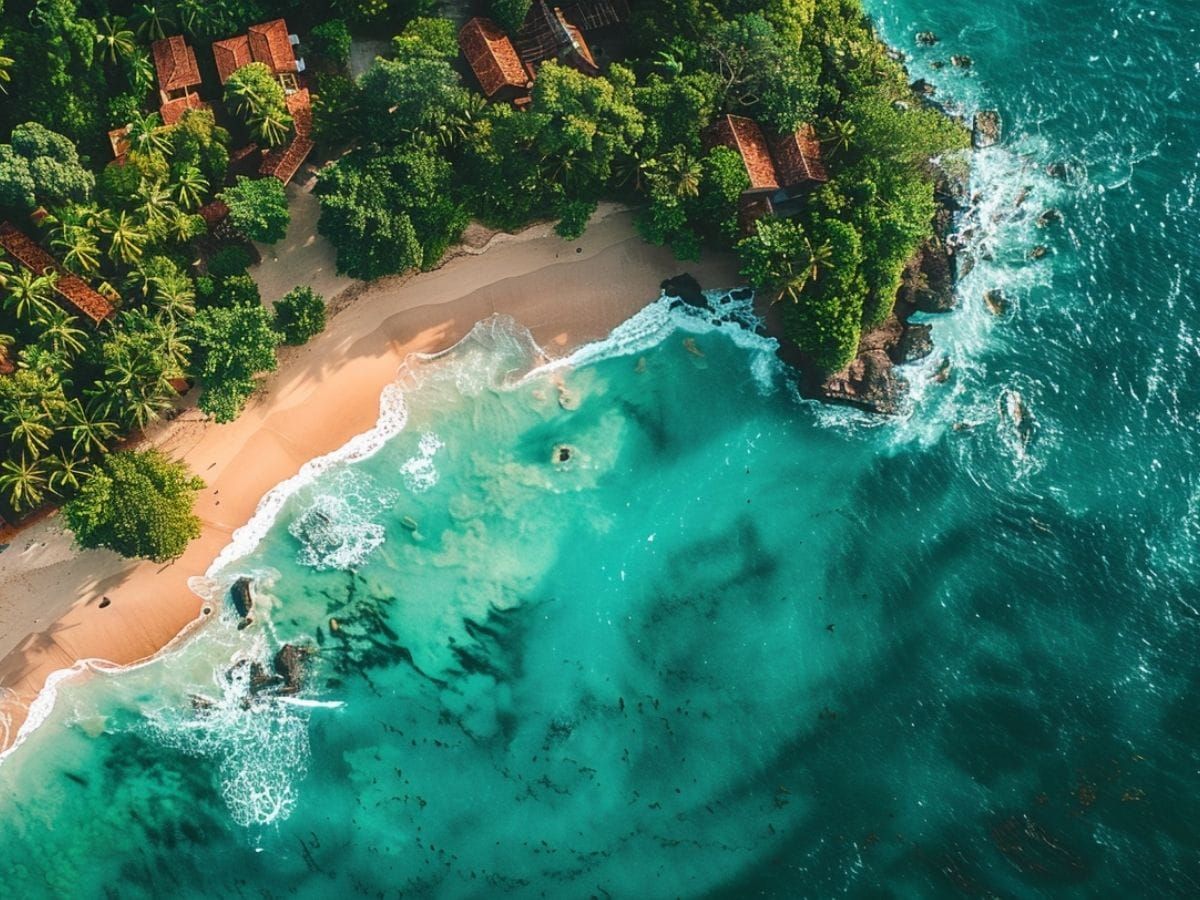
Beachfront is the most searched, most romanticized, and most misunderstood word in Costa Rica real estate. Half the listings that use it are not beachfront. Half the buyers who want it do not understand what they are actually buying. And the ones who do buy it often discover that the premium they paid comes with risks and costs that nobody mentioned during the sales pitch.
I invest on the Pacific coast. I have looked at dozens of beachfront properties and purchased none of them. That is not because beachfront is bad. It is because the math has to be exceptional to justify the premium, the regulatory complexity, and the long-term risk. Sometimes it is. Most of the time it is not.
In This Guide
- What beachfront means
- Maritime zone explained
- Concession vs titled land
- Price ranges
- Rental income premiums
- Sea level rise risk
- Salt air and maintenance
- Ocean view vs ocean front
- FAQ
What "Beachfront" Actually Means in Costa Rica (And Why Most Listings Are Not)
Walk through any Costa Rica real estate portal and you will see "beachfront" on listings that are 500 meters from the sand, up a hill, behind two other properties, or across a road. The term has been stretched so far by marketing that it is almost meaningless.
True beachfront means your property boundary touches the beach or is separated from it by nothing but the public zone. In Costa Rica, this is rare for private ownership because of the maritime zone law. Most genuine beachfront is government-controlled land available only through concessions. What most buyers call beachfront is actually "ocean view," "walking distance to beach," or "beach access" with a path or road between the property and the sand.
The distinction matters because price, legal structure, and risk are fundamentally different between a concession on the sand and a titled property on a hillside with an ocean view. Know which one you are buying before you fall in love with a listing photo.
The Maritime Zone: Why You Cannot Own Beachfront in Costa Rica
Costa Rica's Ley de Zona Maritimo Terrestre (Law 6043) establishes a 200-meter strip from the mean high tide line along both coasts as public or restricted land. This is the maritime zone, and it controls everything about coastal property ownership.
The first 50 meters from high tide is the zona publica. It belongs to the state. Nobody can own it, build on it, or restrict access to it. This is why every beach in Costa Rica is legally public, regardless of what development sits behind it.
The next 150 meters is the zona restringida. This land can be leased through concessions granted by the local municipality, but it cannot be owned as titled property. Concessions typically run 5 to 20 years and are renewable, with some municipalities granting longer terms. Foreigners can hold concessions, but with restrictions. The terms vary by municipality, and the process involves municipal approval, development plans, and ongoing compliance.
Beyond the 200-meter mark, land can be titled (propiedad en fee simple) and owned outright by foreigners with the same rights as Costa Rican citizens. This is where true private beachfront ownership begins, but at 200 meters from the water, you are not on the beach. You are near it.
For a complete guide to the land purchase process, see our guide on buying land in Costa Rica.

Concession Land vs Titled Land: What You Are Actually Buying
A concession is a lease, not ownership. You hold the right to use and develop the land for the term of the concession, subject to the conditions set by the municipality. You can build on it, live on it, and rent it. But you do not own the land underneath the building. The municipality does.
Concession risks that titled land does not carry: the concession can be revoked for non-compliance with development conditions. Transfer to a new owner requires municipal approval. Financing is harder because banks are reluctant to lend against a lease. And the long-term security depends on municipal politics and regulatory changes that you cannot control.
Titled land beyond the maritime zone carries none of these risks. You own it. You can sell it, mortgage it, pass it to heirs, and develop it without municipal concession approval. The trade-off is that titled oceanfront is farther from the water and significantly more expensive because the supply is limited and the demand is high.
My recommendation for foreign investors: titled land. The concession system works for some buyers, but the legal complexity, the transfer restrictions, and the dependency on municipal goodwill introduce risks that most foreign investors are not equipped to manage from another country.
What Beachfront and Oceanfront Property Costs in Costa Rica
Prices vary enormously by location, proximity to the water, and whether the land is titled or concession.
Concession land in the maritime zone: varies widely by municipality and terms. Some concessions trade informally for $50,000 to $200,000, but the "price" is for the improvements and the assignment of the concession, not for the land itself. Due diligence is critical.
Titled oceanfront (beyond 200m, with direct beach access): $300,000 to $800,000 for a buildable lot in Guanacaste. $150,000 to $400,000 in the Southern Zone. Premium locations with unobstructed views in Nosara, Tamarindo, or Flamingo can exceed $1 million for land alone.
Finished beachfront homes: $800,000 to $2 million or more in established markets. A finished 3-bedroom with pool and ocean view in Tamarindo or Nosara lists for $1 million to $1.5 million. The same spec in the Southern Zone lists for $500,000 to $900,000.
These numbers reflect the premium. A comparable home 1 kilometer inland costs 30 to 50 percent less. The premium is for proximity, view, and the rental income that proximity generates. For current pricing across all regions, see our guide on average house prices in Costa Rica.
Rental Income on Beachfront Properties: Where the Numbers Get Interesting
This is where the beachfront premium justifies itself, if anywhere.
A genuine beachfront or direct-ocean-view property in an established rental market commands nightly rates of $300 to $500 or more during high season. A comparable 2-bedroom property a few blocks inland in the same town rents for $150 to $250. The beachfront premium in rental income is 2 to 3 times what non-beachfront earns.
On an annual basis, a well-managed beachfront 2-bedroom in Tamarindo or Nosara can gross $80,000 to $120,000. A comparable non-beachfront property in the same town grosses $50,000 to $65,000. The rental premium is real, it is sustained by guest demand, and it makes sense. People pay for the experience and the location. Waking up to the sound of waves, walking to the sand, watching the sunset from your terrace. That experience has a price, and guests pay it willingly.
The question is whether the rental premium compensates for the purchase premium. If you pay $1.2 million for a beachfront property that grosses $100,000 per year (net $50,000 after expenses), your yield is roughly 4 percent. If you pay $600,000 for an ocean-view property that grosses $60,000 (net $30,000), your yield is 5 percent. The cheaper property produces a better return on capital. The expensive one produces more total income. The right answer depends on your capital constraints and your investment objective.
For the full rental income analysis, see our guide on Airbnb rental income in Costa Rica.
Sea Level Rise: The Risk Nobody Talks About
Climate Central's Coastal Risk Screening Tool (https://coastal.climatecentral.org/) allows you to visualize projected sea level rise for any coastal location in the world, including Costa Rica. The projections are sobering.
Under current emissions scenarios, sea levels could rise up to 1 meter by 2100. That may not sound like much until you look at what 1 meter means for low-elevation coastal properties. Beaches that tourists visit today, including Hermosa in Jacó, Dominical, Avellanas, Playa Negra, Junquillal, and Montezuma, could face significant flooding risk or partial submersion within this century.
For a property investor, this is a real risk variable that belongs in the due diligence. A beachfront lot at 3 meters elevation has a fundamentally different risk profile than a hillside lot at 30 meters elevation with the same ocean view. Both are "ocean property." Only one of them is threatened by a meter of sea level rise.
I am not saying do not buy coastal property. I am saying check the elevation. Use the Climate Central tool. Understand what your specific lot looks like under different sea level scenarios. And factor this into your long-term investment horizon. A property you plan to hold for 30 years should be evaluated against 30-year climate projections.
I know an owner whose property is currently about 150 meters from the sea. At the current rate of erosion and projected sea level rise, that property will be beachfront in 30 to 50 years. He did not buy beachfront. The beach is coming to him. Do not underestimate how quickly the coastline changes over the life of a property investment.
Salt Air, Corrosion, and the Real Cost of Living on the Beach
Every building near the ocean pays a maintenance tax that inland properties do not. Salt air corrodes metal hardware, degrades paint faster, attacks electrical connections, and shortens the life of every exposed material. The closer to the water, the more aggressive the corrosion.
The best approach for beachfront construction is concrete. Concrete block walls, concrete columns, concrete structural elements. There is only so much you can do against salt air, but concrete gives you the most durable shell. Steel frame and metal components near the ocean require aggressive corrosion protection that adds cost and maintenance indefinitely. Concrete is inert. Salt air does not attack it. For the full comparison, see our guide on steel frame construction in Costa Rica.
Even with concrete, every other component fights the salt. Marine-grade stainless steel for all exterior hardware is mandatory. Standard fixtures will pit and corrode within one to two years. Exterior paint needs reapplication every two to three years instead of five to seven. AC units near the ocean need more frequent servicing. Exterior wood requires more aggressive treatment and shorter maintenance cycles.
There are beautiful examples of this working well. In Santa Teresa, several owners have built stunning beachfront villas near Banana Beach. Beautiful properties, exceptional locations, and the kind of places that make you understand why people pay the premium. But every one of those owners will tell you the same thing: the maintenance is relentless. The salt does not stop. The beauty comes with a cost that never ends.
Budget 1.5 to 2 percent of property value annually for maintenance on a beachfront home, compared to 0.75 to 1 percent for an inland property. On a $1 million beachfront home, that is $15,000 to $20,000 per year in maintenance, compared to $7,500 to $10,000 inland. Over a decade, the cumulative difference is $75,000 to $100,000.
For more on which materials survive the coastal climate, see our guide on building materials in Costa Rica.
Why Ocean View Often Beats Ocean Front
Here is the argument I make to most investors who come to me wanting beachfront.
A property at 15 to 30 meters elevation with an unobstructed ocean view gives you 80 percent of the beachfront rental premium at 50 percent of the purchase price. The view is often better from elevation than from sea level because you see the coastline, the water, and the horizon rather than just the sand in front of you. The sea level rise risk is eliminated. The salt air corrosion is reduced. The maintenance costs are lower. The insurance is cheaper. And the titled ownership is cleaner because you are well beyond the maritime zone.
The 2-minute walk to the beach is not a meaningful deterrent for rental guests. Guests book for the view, the pool, and the experience. They walk to the beach for an hour and come back. The property that is on the sand has an advantage, but it is a smaller advantage than most people assume, and the cost of that advantage, measured in purchase premium, maintenance, and risk, is larger than most people calculate.
For the best areas to invest across Costa Rica, see our guide on the best areas to invest.
Frequently Asked Questions About Beachfront Property in Costa Rica
Can foreigners buy beachfront property in Costa Rica?
Foreigners cannot own land within the 200-meter maritime zone (first 50 meters is public, next 150 meters is concession-only). Beyond 200 meters from high tide, foreigners can buy titled land with the same rights as Costa Rican citizens. Concessions in the restricted zone are available to foreigners with restrictions that vary by municipality.
How much does beachfront property cost in Costa Rica?
Titled oceanfront lots start at $300,000 in Guanacaste and $150,000 in the Southern Zone. Finished beachfront homes range from $800,000 to $2 million or more in established markets. The premium over comparable inland properties is 30 to 100 percent depending on proximity and view quality.
Is beachfront property a good investment in Costa Rica?
It can be, if the rental income justifies the premium. Beachfront properties command nightly rates 2 to 3 times higher than inland comparables. But the higher purchase price, maintenance costs, and climate risks (sea level rise, corrosion) mean the yield as a percentage of invested capital is often lower than a well-bought ocean-view property at elevation.
What is the maritime zone in Costa Rica?
A 200-meter strip from the mean high tide line along both coasts. The first 50 meters is public (no private use). The next 150 meters is the restricted zone (concessions only, no private ownership). Beyond 200 meters, land can be titled and owned outright.
Should I worry about sea level rise when buying coastal property?
Yes. Climate Central projections show multiple Costa Rica beaches at risk under a 1-meter sea level rise scenario by 2100. Low-elevation coastal properties face the highest risk. Check your specific lot's elevation using the Climate Central Coastal Risk Screening Tool (coastal.climatecentral.org) as part of your due diligence.
---

James is a real estate investor on the Pacific coast of Costa Rica with a background in commercial real estate in Canada. He writes for Build Tropical about the numbers behind tropical property investment.