Interior Design in Costa Rica: Local Materials and What Actually Works in the Tropics
Interior design in Costa Rica requires different thinking than temperate climates. An architect's guide to materials, finishes, and design decisions that perform in a tropical environment.
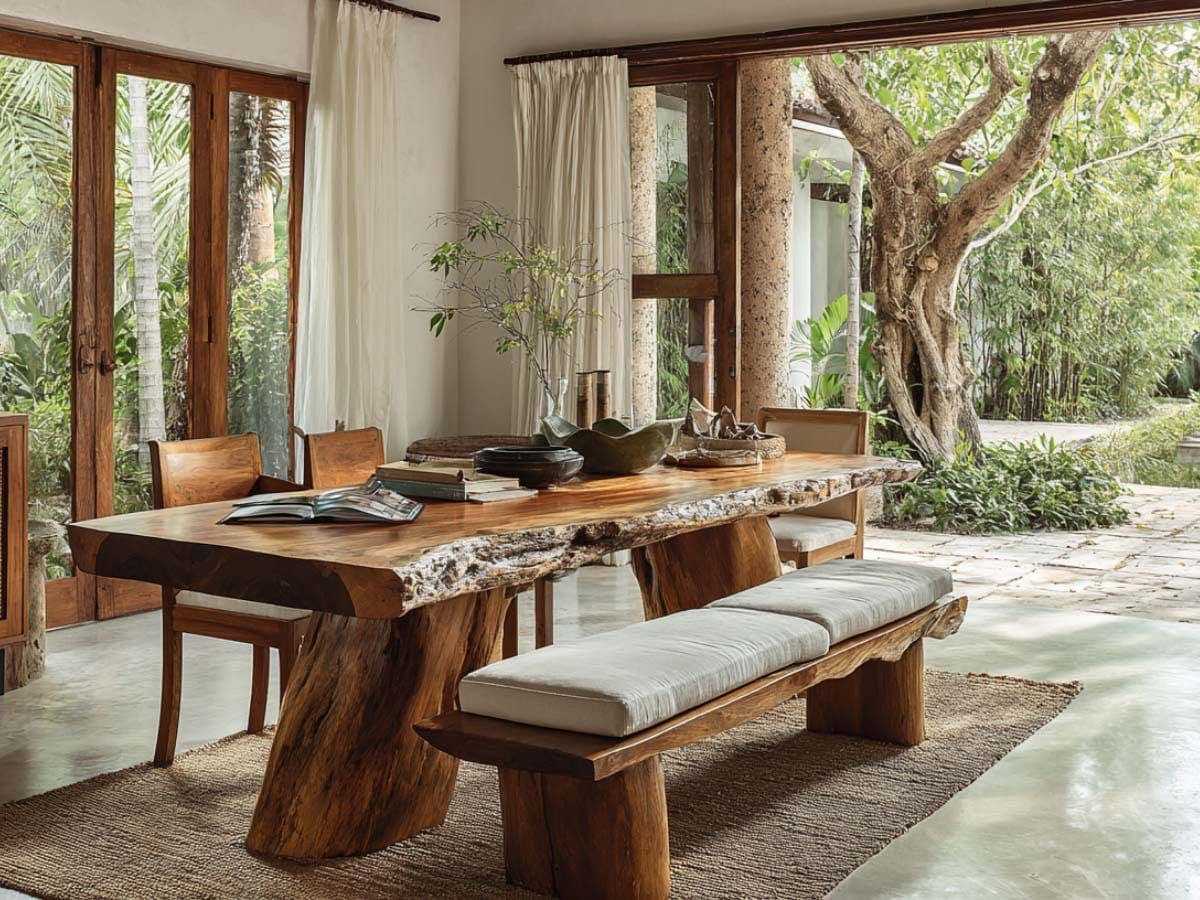
Interior design in the tropics is a different discipline from interior design in a temperate climate. The materials that photograph beautifully in a staged US or European home perform differently in an environment with year-round heat, high humidity, salt air within a few kilometers of the coast, and a rainy season that tests everything. The decisions that matter most in a tropical interior are not about aesthetics first — they are about using the right materials from the start. Choose correctly and the interior performs without drama. The challenge is knowing what works and what does not.
We have designed interiors for homes and boutique hospitality projects across Costa Rica for over a decade. What follows is the practical guide we give clients when the conversation turns to finishes and materials.
In this article
The climate challengeFlooring: what worksWalls and surfacesWood in tropical interiorsTextiles and soft furnishingsThe indoor-outdoor relationshipLocal materials worth knowingLighting in tropical spacesWorking with local craftspeopleFAQThe Climate Challenge
The Costa Rica Pacific coast operates at temperatures between 25 and 35 degrees Celsius year-round, with relative humidity frequently above 80 percent in coastal areas and higher during rainy season. Salt air within a few kilometers of the coast accelerates oxidation on metals, degradation of finishes, and mold growth on organic materials. Insects are present in ways that temperate climates simply are not.
This climate does extraordinary things to certain materials. It shortens the lifespan of others dramatically. And it means that an interior designed for a European or North American home, with its wool rugs, upholstered sofas, painted MDF cabinetry, and decorative iron hardware, will require constant maintenance to look presentable and will age quickly. The most beautiful and most livable Costa Rica interiors are the ones designed with the climate as a collaborator rather than an obstacle to overcome.

Flooring: What Works
We use a lot of tile in our projects, and for good reason. Porcelain tile is hard, impermeable, easy to clean, and available in large formats that cover floor areas with minimal grout lines. Large format rectified porcelain in lighter tones is our default recommendation for primary living spaces. It performs consistently in tropical conditions and ages well.
Parquet flooring is tricky in Costa Rica. The expansion and contraction from humidity shifts causes problems in most coastal applications, and we generally steer clients away from it. Solid hardwood is more viable in protected interior areas, but the species and the treatment matter significantly. The right hardwood from the right provider, properly dried and properly treated, can work in wall paneling, ceiling applications, and select interior floor areas. The wrong wood from the wrong supplier is a recipe for disaster. Do not buy just any wood. Work with a reputable timber supplier who can tell you exactly what the species is, how it was dried, and where it came from. This is not a purchase to make at a random hardware store.
Natural stone, particularly locally sourced volcanic stone, works well for specific applications — outdoor terraces, bathrooms, kitchen areas. It requires sealing but is a strong and genuinely local material choice.
Cabinetry and Kitchen Finishes
Imported kitchen cabinetry from a professional European or North American provider can perform very well in Costa Rica, and the majority of our clients use it. MDF-core cabinetry from a quality manufacturer with proper sealing and finish systems is a different material from budget MDF in a hardware store — the quality of the board, the thickness of the finish, and the sealing of all edges determine how it performs in humid conditions. Source it right and it holds up. Source it wrong and it does not. We recommend clients use professional kitchen suppliers rather than local carpenters working with untreated local MDF for kitchen applications specifically.
Leather on furniture does not work well in coastal tropical environments. It absorbs humidity, develops mold, and degrades quickly. We avoid specifying it.
Walls and Surfaces
The wall surfaces most common in Costa Rica residential construction, concrete block or fiber cement board on steel frame, are excellent bases for interior finishes. Microcement, a thin-coat surface applied over existing substrates, has become popular in contemporary Costa Rica interiors and performs well in interior conditions. It creates a seamless surface with a sophisticated look and is available in a range of tones.
Paint selection matters more in the tropics than in temperate climates. Quality exterior-grade or moisture-resistant interior paints resist the mold growth that standard interior paints are vulnerable to in high-humidity conditions. Budget paint in a coastal environment will show mold within two to three years. Investing in quality paint products at the outset is significantly more cost effective than repainting frequently.
Tiled walls in bathrooms and kitchen areas are standard and sensible. Large format tiles on bathroom walls read as contemporary and reduce the grout maintenance compared to traditional smaller formats. Matching floor and wall tile in bathrooms creates a clean, cohesive look that is easy to maintain.
Wood in Tropical Interiors
Wood belongs in a tropical interior and we use it regularly, but the source and species matter as much as the application. The right hardwood from a reputable, professional supplier — properly dried, properly treated, properly specified for the intended use — performs very well. The wrong wood from the wrong source is a problem regardless of the application.
Teak is the benchmark and earns its reputation. It contains natural oils that resist moisture and insects, ages well in coastal conditions, and is appropriate for a wide range of applications from ceilings to furniture frames to decking.
Locally available hardwoods can also work well in wall paneling, structural beams, ceilings, and carefully chosen interior floor areas. The critical variable is the supplier. Work with a professional timber provider who sources legally, documents species, and can tell you how the wood was dried. This is not a category to improvise in.
Pine untreated is a problem in Costa Rica. Termites find it very attractive and the damage can be significant. If pine is specified anywhere, it must be properly treated. We generally steer clients toward hardwoods rather than softwoods for this reason.
Bamboo and similar materials we do not use in our projects. Beyond the aesthetic preference, bamboo carries real pest and moisture issues in tropical coastal conditions that are not worth managing.
The applications where wood performs most reliably in tropical interiors are ceilings, structural and decorative beams, and millwork details such as door frames, window surrounds, and built-in cabinetry. Exterior decking that is fully exposed to rain and direct sun requires more careful species selection and more diligent upkeep than covered or interior applications.
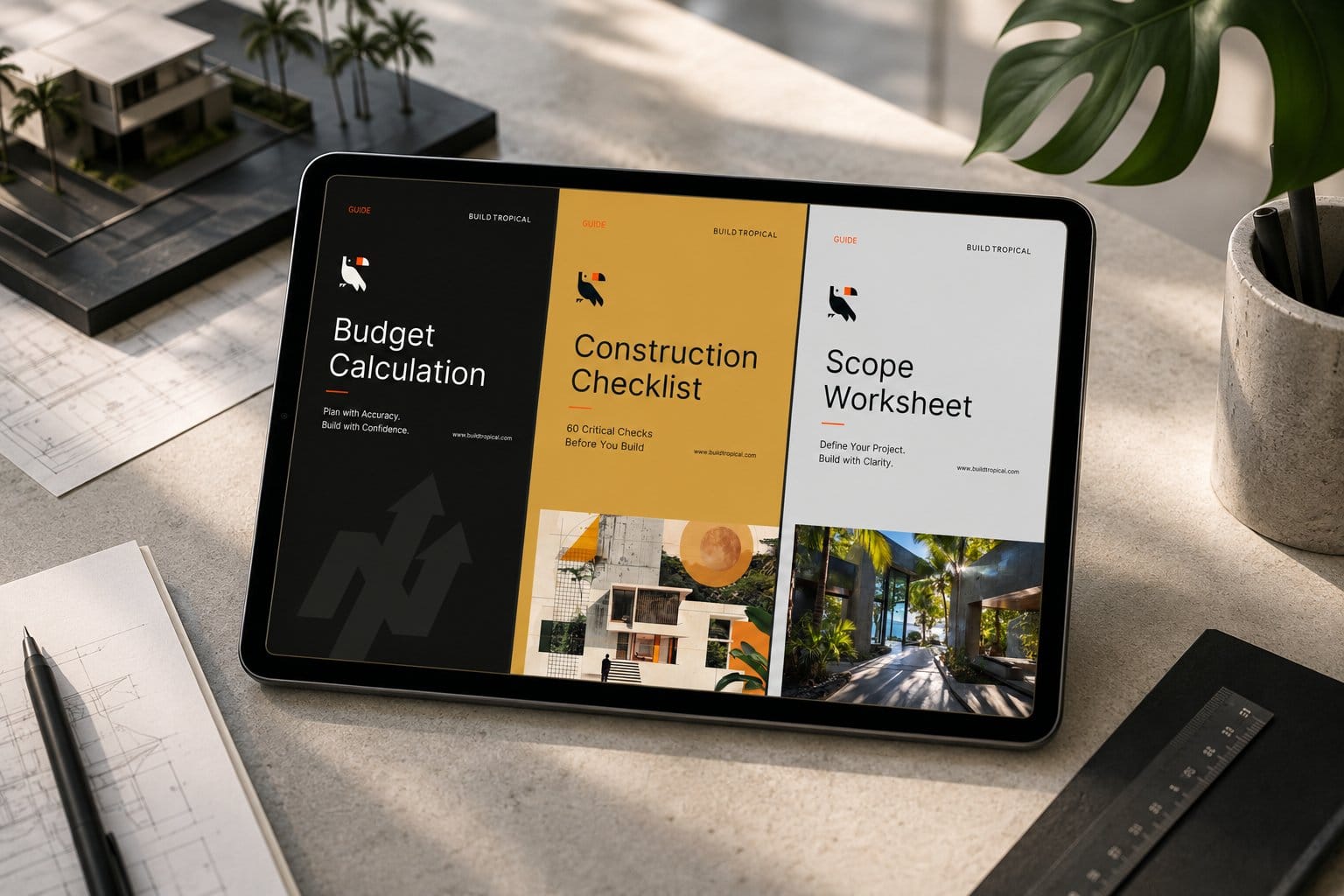
Most budget blowouts in Costa Rica are locked in long before anyone pours concrete — in the scope you never defined and the number you never pressure-tested. Build Ready is the 70-point checklist, scope worksheet and budget model I use to get that on paper before a client talks to land agents, architects or contractors.
See what is inside Build Ready →Textiles and Soft Furnishings
Textiles can absolutely work in a coastal Costa Rica interior — the key is choosing the right ones rather than avoiding them altogether. Outdoor-rated fabrics, woven from solution-dyed acrylic or polyester, perform well and have improved dramatically in comfort and aesthetic quality in recent years. But good interior textiles also work well: natural fibers including linen, cotton canvas, and performance blends handle the tropical environment fine when the fabric weight and weave are appropriate. The question is not whether to use textiles but whether the specific textile is easy to clean. That is the filter. If it can be wiped down or washed without drama, it belongs in the conversation. Heavily constructed upholstery with difficult cleaning requirements is the category to avoid, not textiles as a whole.
Area rugs work well when they are flat-woven and easy to take outside and air. Deep pile rugs accumulate moisture and are harder to manage.
The Indoor-Outdoor Relationship
The single most important opportunity in tropical interior design is the relationship between the interior and the exterior, and it is the one that most distinguishes a well-considered tropical home from a house that happens to be in the tropics. When the climate permits near-constant cross-ventilation, when the view is part of the daily experience, and when the outdoor living area is as usable as the interior, the design task is to blur that boundary rather than define it.
Sliding or folding glass wall systems that open an entire living space to a covered terrace change how the space functions. The terrace becomes an extension of the living room rather than an ancillary outdoor area. The ceiling line that runs continuously from interior to exterior under a deep overhang creates a spatial continuity that is one of the most distinctive achievements of good tropical architecture.
When this relationship is designed well, the interior reads larger, the ventilation is better, and the occupant is in continuous contact with the landscape that is the primary reason to be in Costa Rica at all.
Local Materials Worth Knowing
Several locally available materials are underused in Costa Rica interiors. Volcanic stone, quarried in the Central Valley and available in various finishes from rough to polished, is a genuinely distinctive material with deep roots in the region. It has thermal mass, a texture that photographs beautifully, and a sense of place that imported materials cannot replicate.
Local hardwoods, when legally sourced from professional suppliers and properly dried and finished, are available for millwork, furniture, and select flooring applications. The supply chain for legal timber in Costa Rica requires attention — not all wood sold locally is sustainably or legally sourced, and the species is not always what it is claimed to be. Working with professional, accountable suppliers rather than informal sources is the standard we apply to every project.
Lighting in Tropical Spaces
Lighting in a tropical interior needs to account for two things: the brightness of the exterior during daylight hours and the relative darkness of the interior at night. During the day, the challenge is often reducing glare from bright tropical light rather than adding it. Deep overhangs, translucent screens, and carefully positioned windows that bring in diffuse light rather than direct sun are more valuable than additional artificial fixtures.
At night, the tropical residential interior benefits from warm, layered lighting rather than uniform overhead brightness. The high ceilings that characterize well-designed tropical homes respond well to indirect lighting coves, pendant fixtures, and table lamps that create pools of warm light rather than a uniformly lit ceiling.
IP65 or higher rated fixtures in bathrooms and outdoor-adjacent areas are necessary, not optional. Moisture ingress into standard interior-rated fixtures in high-humidity environments produces failures, corrosion, and safety issues.
For more on tropical design principles, see our guide to tropical house design in Costa Rica and our article on passive cooling and natural ventilation.
Frequently Asked Questions About Interior Design in Costa Rica
What flooring is best for a beach house in Costa Rica?
Large format porcelain tile is the most practical and widely used option, performing well in high humidity, salt air, and heavy foot traffic. Polished concrete is a design-forward alternative that also performs well with proper sealing. Natural stone is excellent for specific applications like terraces and bathrooms. Wood flooring requires careful species selection, with teak being the most reliable option, and ongoing maintenance.
How do you prevent mold in a Costa Rica interior?
Mold prevention starts in the design phase: impermeable surfaces rather than organic materials in high-humidity zones, adequate cross-ventilation to prevent moisture accumulation, moisture-resistant or exterior-grade paint, and outdoor-rated textiles rather than natural fiber upholstery. Running air conditioning or dehumidification during extended periods of vacancy also significantly reduces mold risk.
What local materials work best for tropical interior design?
Volcanic stone for flooring and wall applications, locally sourced hardwoods including teak and guanacaste for ceilings, beams, and millwork, and natural fiber elements used selectively where ventilation and maintenance are manageable. The most successful tropical interiors use local materials that respond naturally to the climate rather than importing products designed for different conditions.
How do you design the indoor-outdoor relationship in a Costa Rica home?
The most effective approach is a covered transitional space, a deep terrace or rancho with a continuous ceiling line from the interior, with large opening systems such as folding or sliding glass walls that allow the living area to open fully to the exterior. Cross-ventilation through the main living spaces, achieved through window placement and opening design, reduces or eliminates the need for air conditioning in well-ventilated coastal environments.
What should I know about furniture for a tropical home in Costa Rica?
Choose furniture frames in teak or powder-coated aluminum for durability in coastal conditions. Cushions should be outdoor-rated, in solution-dyed acrylic or polyester fabric, or stored inside when not in use. Avoid furniture with MDF or particle board components that will absorb moisture. Area rugs should be flat-woven, synthetic, and easy to wash. Deep pile rugs and natural fiber textiles require constant attention in high-humidity coastal environments.

Matt is an architect based in Costa Rica. He designs and builds residential and hospitality projects across the country and writes for Build Tropical about tropical construction, design, and the realities of building in the tropics.