Living in Nosara: The Complete Expat Guide
Living in Nosara means active outdoor life, strong community, expensive homes, and dusty roads. An honest guide to what daily life actually looks like.

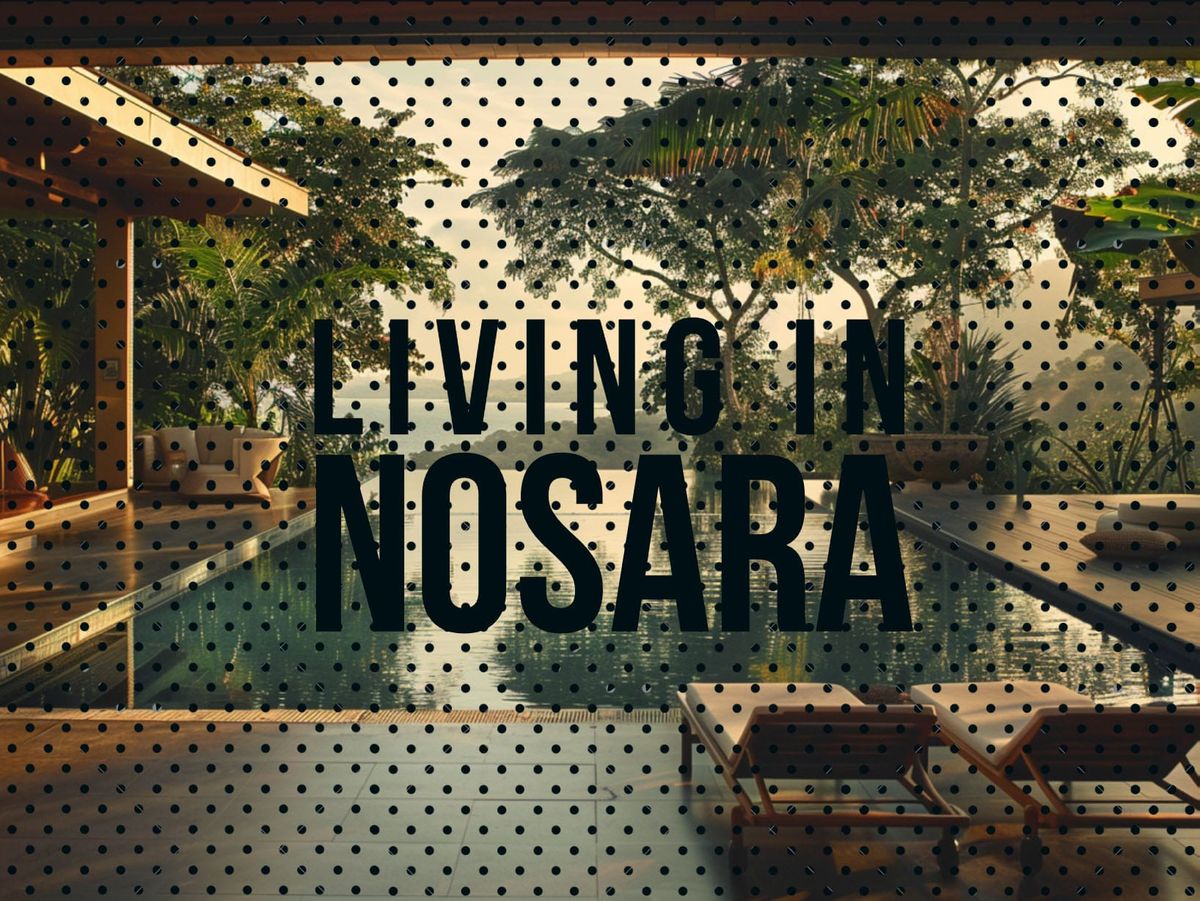
Nosara has a reputation that arrives before you do. Wellness destination, surf mecca, one of the most talked-about expat spots on the Pacific coast. Some of that is accurate. What the reputation leaves out is that it is also one of the most genuinely active, community-rooted towns in Costa Rica — a place where people are not just talking about an outdoor lifestyle but actually living it, hard, every day. And that it costs more than you probably expect. Both things are true at the same time.
I have spent enough time in Nosara to have strong opinions about it. What follows is my honest read of what daily life there actually looks like.
In this article
What Nosara actually isThe active lifeCommunity and who lives hereCost of livingGetting aroundSchools and familiesInternetWho it's right forFAQWhat Nosara Actually Is
Nosara is not a town in the way most people picture one. There is no main street, no central plaza, no concentrated commercial district. It is spread out across several distinct areas that function almost independently from each other: Playa Guiones, where the surf beach is and where most expats are concentrated; Playa Pelada to the north, quieter and more residential; the Tico town of Nosara itself, inland, where most of the year-round local population actually lives. Getting between them means driving, and the driving involves roads that range from rough to impassable in rainy season.
Guiones is the heart of expat Nosara. The beach there is wide, consistent for surfing, and backed by a protected wildlife refuge that prevents the kind of beachfront development that has changed other Costa Rica coast towns. This is part of why Nosara still feels the way it does. The tree canopy is intact because the setback requirements are enforced. What there is instead are homes set back into the vegetation — some of which are extraordinary — and a low-key commercial stretch with restaurants, yoga studios, surf shops, and a collection of services that have expanded significantly in the past five years.
The Active Life in Nosara
This is what I think gets undersold in most descriptions of Nosara. Yes, it is a surf town and a wellness destination. But the activity culture there runs deeper than yoga mats and green smoothies. There are people who wake up at 5:30 a.m. to surf before the wind comes up, people training for triathlons, people playing serious tennis, people on paddleboards and kayaks in the estuary, people running the dirt roads before the heat arrives. The community around fitness and outdoor activity is genuine and self-reinforcing.
The tennis scene in Nosara is real. Several courts exist within the area, including some that are well-maintained and used consistently by a group of regulars who play at a competitive level. Paddle courts have appeared more recently. Surf schools operate at all ability levels, and the beach at Guiones is one of the more forgiving learning waves on the Pacific coast — long rides, not too powerful, consistent. If you are the kind of person who wants to build a daily routine around physical activity and outdoor life, Nosara gives you more options than almost anywhere else in Costa Rica.
Community and Who Lives Here
Nosara is heavily gringo. That is not a criticism, just a description. The expat population — Americans, Canadians, Europeans, Israelis, a growing number of Brazilians and Argentines — makes up a significant and visible part of the Guiones area's daily life. The community is generally wealthy, health-conscious, and has often made a deliberate choice to be somewhere that aligns with those values. People talk to each other. There are social structures — events, markets, gatherings — that make it easier to meet people than in a lot of places.
It is not a party town. I want to be clear about this because people sometimes assume that a surf town on the Pacific coast of Costa Rica means nightlife and noise. Nosara is the opposite. The bars close at a reasonable hour. There is no club scene. People go to bed early because they are in the water at dawn. This is part of what makes it appeal to families — the weekend vibe is active and social, not late nights and hangovers.
The organic food scene in Nosara is genuine and has grown substantially. Several restaurants and cafés in Guiones prioritize local and organic sourcing, and the quality is high. There are farmers' markets and organic produce delivery options. If you care about what you eat and are willing to pay for it, Nosara supports that. If you are looking for cheap local food, you will find it in the Tico town, not in Guiones.
Cost of Living: Honest Numbers
Nosara is expensive by Costa Rica standards. Long-term rental for a modest two-bedroom home in the Guiones area runs $1,800 to $2,800 per month. Anything with a pool or an ocean view is more. Three-bedroom homes that would be considered mid-range by local standards rent for $3,000 to $4,500. To buy, you are looking at $400,000 and up for a livable single-family home with land, and the upper end of the market is well into the millions.
Groceries depend heavily on where you shop. There is a Super Nosara and a couple of smaller stores in Guiones. The selection is adequate for daily needs but not deep. For a wider range of products — the kind of thing you would find at a PriceSmart or an Auto Mercado — you are driving to Nicoya, which is about 45 minutes on a good day. Eating out at the better restaurants in Guiones costs what it would cost at a mid-range restaurant in a US city. A dinner for two with drinks at one of the established spots is $60 to $90.
Getting Around: The Road Situation
The roads into and within Nosara are a subject of considerable discussion in the expat community. The main road in from Samara has improved. The roads within the Guiones area are gravel and dirt, and in dry season — roughly December through April — they are deeply, persistently dusty. You close your windows. You cover your things. You accept that dust is part of the experience. A 4x4 vehicle is not optional.
Getting to Nicoya for anything the town does not have takes 45 minutes to an hour depending on road conditions and the time of year. There is a small airstrip that receives charter flights and some commercial prop service. There is no major hospital in Nosara — for anything serious, you are going to Nicoya or San José. This is a real consideration for families and for older expats who may need more frequent medical access than Nosara's local clinic provides.
Free. No spam. Unsubscribe anytime.
Schools and Families
School options in Nosara are limited. There is a small bilingual school that serves younger children and has a reasonable reputation within the community. For secondary education or for families who want a more complete academic program, the options in Nosara itself are insufficient, and families often end up making compromises — either boarding, remote schooling, or a move to somewhere with stronger school infrastructure when kids reach secondary age.
That said, Nosara is genuinely family friendly in character. The environment is safe. The community watches out for each other's kids. The outdoor life is extraordinary for children — the beach is a ten-minute bike ride, the wildlife is everywhere. I have talked to families who found the school limitations manageable because everything else about the environment was so positive. I have also talked to families who loved Nosara but left when their kids hit middle school age. Both are honest outcomes.
Internet and Remote Work
Internet in Nosara has improved significantly and is now adequate for most remote work. Fiber has reached parts of the Guiones area, and where it is available, speeds are reliable and fast enough for video calls and normal work demands. Where it has not reached, the service is more variable — cable internet works fine most of the time, with occasional interruptions during storms or after infrastructure issues. Power outages happen, and a UPS or battery backup is worth having if you are doing video-heavy work.
Nosara has a functional remote work community. Cafés with good wifi exist. The general understanding that people are working remotely is baked into the social fabric. But if you have non-negotiable uptime requirements, I would not rely on Nosara as your only base.
Who Nosara Is Right for — and Who Should Look Elsewhere
Nosara is right for people who want to organize their daily life around physical activity and outdoor access. If surfing, tennis, paddleboarding, trail running, or some combination of these is central to how you want to live, Nosara delivers more consistently than almost anywhere else in the country.
It works well for financially comfortable families with younger children who value environment and outdoor life over school infrastructure. It works well for remote workers who want community around them and can tolerate occasional internet variability. It works well for people who want to be around other health-conscious, intentional expats without the party culture that comes with some other Costa Rica beach towns.
It is probably not right for people on a tight budget — Nosara is one of the more expensive places to live in Costa Rica and the cost trajectory has been upward for years. It is not right for people who need reliable access to good healthcare, secondary schools, or urban services without wanting to drive 45 minutes regularly. And it is not right for people who want a more integrated experience with Costa Rican daily life — Guiones is an expat enclave, and while the Tico town of Nosara is nearby, the two communities have limited daily intersection.
For more on where to live in Costa Rica, see our best places to live guide and our cost of living breakdown.
Frequently Asked Questions About Living in Nosara
How expensive is it to live in Nosara compared to other Costa Rica towns?
Nosara is among the most expensive places to live in Costa Rica. Rental prices for a two-bedroom home in Guiones start around $1,800 per month and go significantly higher. The concentration of wealthy expats and the prestige of the location has driven prices up consistently over the past decade. For a direct comparison, Atenas or the Southern Pacific cost 30 to 50 percent less for comparable housing.
Is Nosara good for families with children?
Nosara is family friendly in character — safe, active, outdoors-oriented, and community-minded. The school options are limited, with a small bilingual school for younger children and very little for secondary age. Families with younger children often find the environment excellent. Families with older kids frequently face a difficult choice about whether to stay or move to a location with stronger school infrastructure.
What are the roads like getting to Nosara?
The main access road from Samara has improved and is paved for most of the route. Roads within the Guiones area are gravel and dirt — dusty in dry season, muddy in rainy season. A 4x4 vehicle is necessary. The town is about 45 minutes from Nicoya and several hours from San José by road. Charter flights use the local airstrip for those who prefer to avoid the drive.
Is there good internet in Nosara for remote work?
Internet in Nosara has improved substantially. Fiber is available in parts of Guiones and provides reliable speeds for normal remote work including video calls. Cable internet is available more broadly with reasonable but not guaranteed reliability. Power interruptions during storms can affect connectivity. For most remote workers, Nosara's internet is workable; for those with demanding uptime requirements, verify coverage at any specific property before committing.
What is the surfing like in Nosara?
Playa Guiones is one of the better learning and intermediate waves on the Pacific coast — a long, consistent beach break that is powerful enough to be interesting without being intimidating. It picks up swell reliably and the beach itself is wide and well-managed. For experienced surfers, it is a comfortable everyday wave rather than a destination spot, but it is surfable year-round.

Laura Whitfield moved to Costa Rica from the US in 2020 with her husband and two kids. She writes for Build Tropical about expat life, moving abroad, and what daily life in Costa Rica actually looks like when the honeymoon phase is over.