Can Foreigners Build a House in Costa Rica? Yes, Here's How
Foreigners can build in Costa Rica with the same rights as citizens on titled land. A contractor's guide to permits, process, managing from abroad, and taxes when you sell.

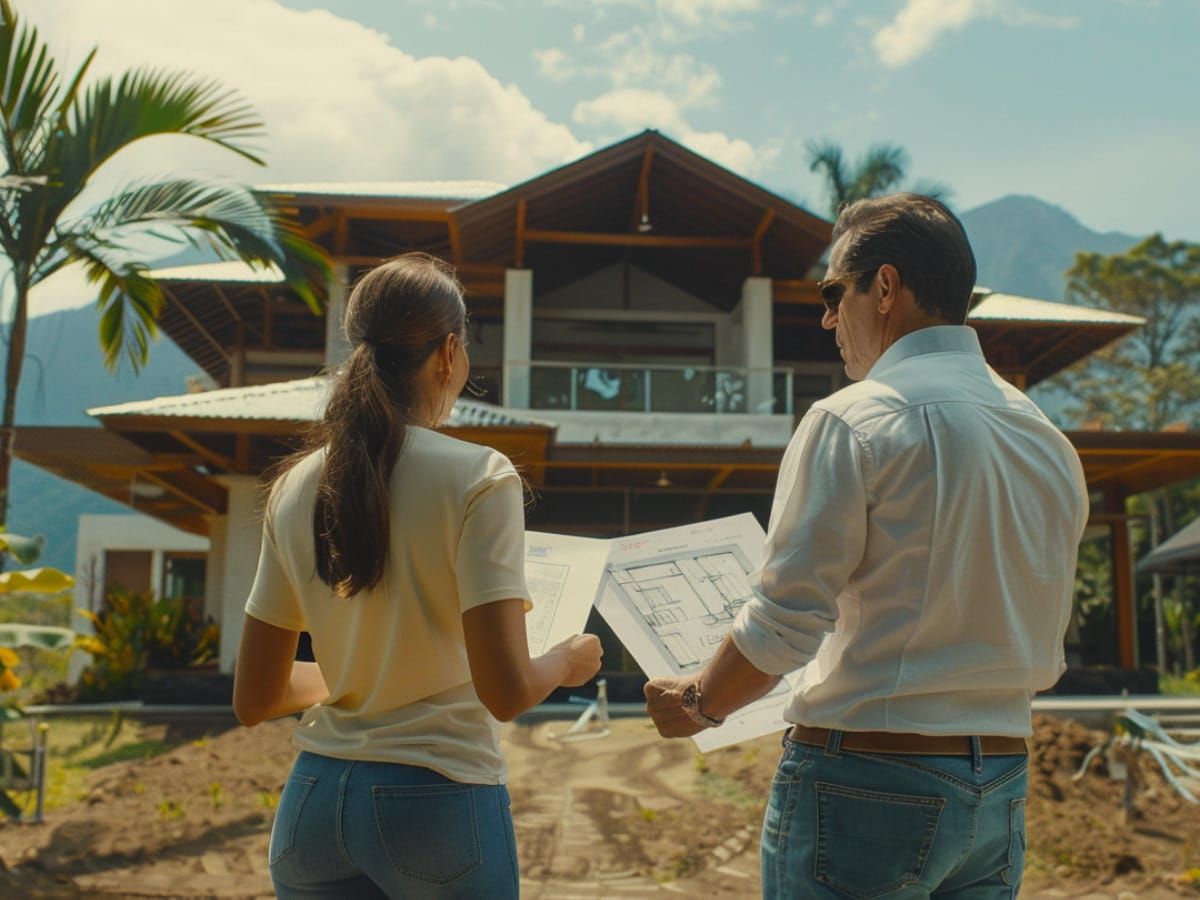
Foreigners can build in Costa Rica. On titled land, the legal rights are identical to those of a Costa Rican citizen, you can purchase, build, modify, rent, and sell with the same standing under the law. This is one of the things that makes Costa Rica unusual in Central America and a genuine destination for foreign buyers, not just renters. What is different for foreign builders is not the right to build but the process of doing it, a process that has its own sequence, its own requirements, and several places where not knowing the system adds cost and time to a project that was never in the plan.
I have managed construction projects for foreign clients for twelve years on the Pacific coast. Most of the problems I see are not legal problems. They are process problems: the wrong contractor hired too early, the soil study skipped, the permit submission missing a document because nobody told the client it was required. This article is the briefing I give clients at the start of every project.
In this article
The legal basicsWhat you need to buildThe corporation questionManaging from abroadWhere foreigners get into troubleWhat happens when you sellWhat I actually recommendFAQ
The Legal Basics: What Foreigners Can Do
On titled land, land with a registered title in the National Registry, a foreigner has the same property rights as a Costa Rican. You can buy it, build on it, modify it, rent it, and sell it. There is no requirement to be a resident, no minimum ownership period, no restriction on repatriating sale proceeds. This is one of the structural reasons Costa Rica attracts foreign real estate buyers at the volume it does.
Concession land is a different conversation. Maritime zone concessions, the land within 200 meters of the high tide line on Costa Rica's beaches, are governed by the Maritime Zone Law, which restricts concession ownership to Costa Rican citizens and corporations with a majority of Costa Rican shareholders. Foreigners can hold concession rights through a qualifying structure, but this requires specific legal advice and is not the same as titled land ownership. If you are buying near the beach, the distinction between titled and concession land is the first thing your lawyer should clarify. Never assume that proximity to the beach means concession, some beachfront land is titled, and never assume that concession land is straightforwardly purchasable as a foreigner without the right structure in place.

What You Actually Need to Build
A building permit in Costa Rica is not a single document. It is a package submitted to the municipalidad that brings together approvals from multiple agencies. The core components: architectural plans stamped by a CFIA-registered architect, structural plans and calculations stamped by a CFIA-registered structural engineer, a certified uso de suelo confirming the property is zoned for residential construction, and sign-off from AyA or the local ASADA on water and sewer service. Depending on the municipality and project, you may also need SETENA environmental viability for larger projects and documentation from other agencies with jurisdiction in specific areas.
CFIA registration is non-negotiable. Every architect and engineer who stamps a set of plans in Costa Rica must be registered with the Colegio Federado de Ingenieros y Arquitectos. If a contractor offers to build without stamped plans or tells you the permit can be obtained informally, that is a legal exposure, not a cost-saving measure. Unpermitted construction in Costa Rica cannot be legally sold and can be subject to demolition orders.
The timeline for permit approval varies by municipality and project complexity. A straightforward residential permit in a cooperative municipality can take three to six months from submission. Complex projects, environmentally sensitive sites, or projects in municipalities with backlogs can take longer. If you need to break ground by a specific date, work backward from permit submission and leave adequate margin.
The Corporation Question
Most foreign buyers hold Costa Rican property through a sociedad anónima, an SA, a Costa Rican corporation, rather than in their personal name. The reasons are practical: liability protection, estate planning, ease of transfer (you can sell the corporation rather than the property itself), and the ability to add partners or investors. Your lawyer sets this up at the time of purchase and manages its annual maintenance requirements.
From a construction permit standpoint, the corporation matters because it is the legal owner of the property and the entity that signs the permit application. The SA needs a legal representative, typically a Costa Rican national or resident with a cédula, who can sign on behalf of the corporation. Your architect will ask who the legal representative is early in the permit process. Make sure your lawyer has designated one and that they are reachable when signatures are needed. I have seen permits stall for weeks because the legal representative was unreachable and could not sign a document.
Managing a Build When You're Not Here
It is possible to manage a Costa Rica build remotely and do it well. It requires the right people on the ground and a communication structure that actually works. The minimum setup I recommend to foreign clients who cannot be on site regularly: a trusted local project manager or architect representative who visits the site weekly, a contractor with a track record of working with foreign clients, and a regular reporting cadence, weekly photo updates, bi-weekly video calls, and clear decision protocols so the project does not stall waiting for client input.
The payment structure matters more in a remote scenario than in a supervised one. I use milestone-based payments tied to verifiable site progress, foundation complete, framing complete, rough-in complete, rather than calendar-based draws. This gives the client a concrete progress marker for each payment and prevents overpayment relative to work completed.
What remote management cannot replace is the judgment call on site. A material arrives that is different from what was specified. A subcontractor proposes a detail change that seems minor but affects the design. A weather event damages work that needs to be assessed for repair scope. These situations require someone on the ground with the authority and knowledge to make decisions.
Where Foreigners Consistently Get Into Trouble
The most common mistake is hiring a contractor before the design is complete. A contractor hired on a concept sketch rather than a complete set of construction documents is being asked to quote a project that is not yet designed. The quote will be wrong, the scope will change, and the contract will not protect either party because the project it describes does not fully exist yet.
The second most common mistake is paying too much upfront. Advance payments are normal in Costa Rica, materials need to be purchased, crew mobilization has a cost. But a contractor requesting 30 to 40 percent of the total contract before any work starts is asking for more money than the early phases of a project consume. I work with advance payments of 10 to 15 percent of the contract value for standard residential builds, and up to 20 to 25 percent for larger or more complex projects where material procurement is more substantial upfront, with the remainder in milestone-based draws.
Buying land without confirming utilities and water access is a third consistent problem. A lot that looks buildable may not have an available water connection, and drilling a well is not guaranteed to produce usable water on every site. Confirm water availability before purchase, not after.
What Happens When You Sell: Taxes to Know
If you eventually sell the property, Costa Rica has taxes that apply to the transaction. I am a contractor, not a tax attorney, verify current figures with your lawyer and accountant before making decisions based on them.
Capital gains tax in Costa Rica applies to the profit on a property sale at a rate of 15 percent of the gain. The gain is calculated as the difference between the registered purchase price and the registered sale price, adjusted for documented improvements. This is a significant consideration for properties that have appreciated substantially: a property purchased for $200,000 and sold for $500,000 generates a taxable gain of $300,000, resulting in a capital gains tax obligation of $45,000. Planning the ownership structure and the documented cost basis from the beginning of the investment is considerably more effective than trying to optimize at the point of sale.
The transfer tax on a property sale is 1.5 percent of the registered property value, typically paid by the buyer in a standard transaction. Stamp duties and notary fees add another 1 to 2 percent of the transaction value. If you are selling a corporation that holds the property rather than the property itself, the tax structure is different and needs specific legal analysis.
The annual property tax, impuesto sobre bienes inmuebles, is 0.25 percent of the registered property value. Properties above a threshold also pay a luxury home tax (impuesto solidario) on the amount above the threshold. These are modest ongoing costs compared to property tax in most US states, but they are part of the full ownership cost picture.
What I Actually Recommend Before Breaking Ground
Confirm titled ownership and boundary clarity with a registered plano catastrado before anything else. Verify water access, ASADA connection, AyA availability, or well viability, before purchasing the land. Commission a topographic survey and soil study before starting the design. Hire an architect with CFIA registration and a portfolio of completed builds in Costa Rica before engaging a contractor. Complete the full design before signing a construction contract. Structure payments as milestone-based draws. Have your legal representative identified and reachable before the permit submission process begins.
None of this is complicated. All of it requires planning that most foreign clients have not done when they first call me. Starting in the right order is the closest thing to a guarantee of a manageable project.
For the full permit process, see our building permits guide. For how to hire the right contractor, see our contractor hiring guide. For a vetted list of architecture firms experienced with foreign clients, see our guide to the best architects in Costa Rica.
Frequently Asked Questions About Foreigners Building in Costa Rica
Can a foreigner build a house in Costa Rica without being a resident?
Yes. On titled land, foreigners have the same property rights as Costa Rican citizens regardless of residency status. You can buy, build, rent, and sell without being a resident. Residency affects other aspects of life in Costa Rica, healthcare access, driving rights, CAJA enrollment, but it does not affect property ownership or the right to construct on titled land.
What is the difference between titled land and concession land in Costa Rica?
Titled land has a registered title in the National Registry and can be owned outright by anyone, including foreigners. Concession land in the Maritime Zone, within 200 meters of the high tide line on most beaches, is regulated by a separate law that restricts direct concession ownership to Costa Rican citizens and qualifying corporations. Foreigners can access concession land through a properly structured entity, but this requires specialized legal advice. Always verify with a lawyer and a title search before purchasing land near a beach.
How long does it take to get a building permit in Costa Rica?
Three to six months is a realistic range for a standard residential permit from submission to approval, assuming the permit package is complete and the municipality is functional. Complex projects, environmentally sensitive sites, or municipalities with backlogs can take longer. The permit package itself, CFIA-stamped plans, uso de suelo, water and sewer approvals, takes one to two months to assemble after the design is complete.
What taxes apply when selling a property in Costa Rica?
A capital gains tax of 15 percent applies to the profit on a property sale. Transfer taxes and stamp duties add approximately 1.5 to 2.5 percent of the transaction value. Annual property tax is 0.25 percent of the registered property value. Properties above the luxury home tax threshold pay an additional annual tax on the amount above the threshold. Verify current rates and your specific situation with a Costa Rican tax attorney before making decisions.
Do I need a Costa Rican corporation to buy and build in Costa Rica?
Not legally required, but common practice and generally advisable for foreigners. Holding property through a Costa Rican SA provides liability separation, estate planning flexibility, and the ability to transfer ownership by selling the corporation rather than the property itself. The corporation has annual maintenance costs and regulatory requirements. Your lawyer advises on the right structure based on your specific ownership, financing, and tax situation.
Carolina Vargas is a general contractor based in Guanacaste, Costa Rica. She has built residential and hospitality projects on the Pacific coast for over twelve years. She writes for Build Tropical about the realities of construction from the contractor's side of the table.