Questions to Ask Your Contractor in Costa Rica Before You Sign Anything
The questions that protect foreign buyers before signing a contractor agreement in Costa Rica. What to ask, what the answers should sound like, and what to walk away from.

Most of the problems I see on construction projects in Costa Rica were visible before the contract was signed. Not always, but often. A contractor who cannot answer a straightforward question about how he manages subcontractors, or who gets defensive when you ask to see references, or who quotes a price with no line-item breakdown, is giving you information before construction starts. The problem is that most foreign clients do not know which questions to ask.
This article is the list I give people when they ask me what they should find out before committing to a contractor. It is based on twelve years of watching what goes wrong and when.
In this article
Credentials and legal questionsExperience and portfolio questionsProcess and team questionsFinancial and payment questionsCommunication questionsRed flags to watch forFAQCredentials and Legal Questions
The first category of questions is not negotiable. A contractor building in Costa Rica without the proper legal structure is exposing you to liability you do not want.
Ask whether the contractor operates as a legal entity, either a sociedad anónima or another registered business, and request the company's cedula juridica number. This lets you verify registration with the Ministerio de Hacienda. An individual working without a legal entity is not necessarily dishonest, but the legal protection in a dispute is significantly weaker.
Ask who will stamp the construction plans. A permit-eligible build in Costa Rica requires stamped plans from a CFIA-registered architect and structural engineer. If the contractor proposes to start without these, or claims the permit can be obtained informally, stop the conversation and do not proceed.
Ask whether they have experience working with the specific municipality where your project will be permitted. Different municipalities have different requirements, different processing times, and different relationships with the technical departments that review permit submissions. A contractor who has built ten houses in a different region is not the same as a contractor who has built five houses in your specific area and knows the local permit office.

Experience and Portfolio Questions
Ask to see a portfolio of completed projects that resemble yours in type, scale, and location. Completed. Not renders, not photos of foundations, not projects under construction. Buildings that are finished and occupied, where you can see the quality of the work and where past clients can be reached.
Ask for three client references from the past two years and call them. Ask each reference the same set of questions: did the project finish on the agreed schedule, did the final cost land within the quoted range, how did the contractor handle problems when they arose, and would you hire them again? The answers to those four questions tell you more than any portfolio photo.
Ask how many projects the contractor is currently running alongside yours and who will be managing each of them. A contractor who takes on more work than their management capacity allows will stretch attention across projects in ways that consistently show in quality and schedule. One lead person managing six simultaneous builds is not the same as one lead person managing two.
Process and Team Questions
Ask how the contractor structures their team. Do they employ a permanent crew or do they work with rotating day labor? A permanent crew builds consistency, accountability, and accumulated skill. Rotating labor is cheaper in the short term and riskier in terms of quality control. Neither is automatically disqualifying, but the answer tells you how the site is actually managed.
Ask who will be the point of contact on site day to day, and what their experience and authority level is. Will the maestro de obras have authority to make decisions when you are not available, or will every question wait for the contractor to appear? A well-run site needs a capable person present and empowered. Ask to meet the maestro before you sign.
Ask how the contractor handles design changes mid-construction. The honest answer is that they are expensive and to be avoided. A contractor who says "no problem, we can adjust as we go" is not doing you a favor. Changes to a concrete structure mid-build are significantly more expensive than changes made on paper during the design phase.
Financial and Payment Questions
Ask for a line-item breakdown of the quote. Not a single number or a cost-per-square-meter estimate. A real breakdown that shows materials, labor, subcontracted trades, site management, and profit margin separately. A contractor who cannot or will not provide this is asking you to trust a number you cannot verify.
Ask what the payment schedule looks like and how it is tied to verified progress. Milestone-based payments, where each payment is released against a specific, inspectable phase of work, protect you better than calendar-based draws. Reasonable advance payments for standard residential projects run 10 to 15 percent of the contract value. For larger or more complex builds, 20 to 25 percent may be appropriate for upfront material procurement. A contractor asking for 35 to 40 percent before any work begins is asking for more than the early project phases require.
Ask how material substitutions are handled. If the specified tile is unavailable, what is the process for selecting a replacement? Who approves it, how is the cost difference calculated, and how is the change documented? This question reveals how organized the contractor is about scope and documentation.
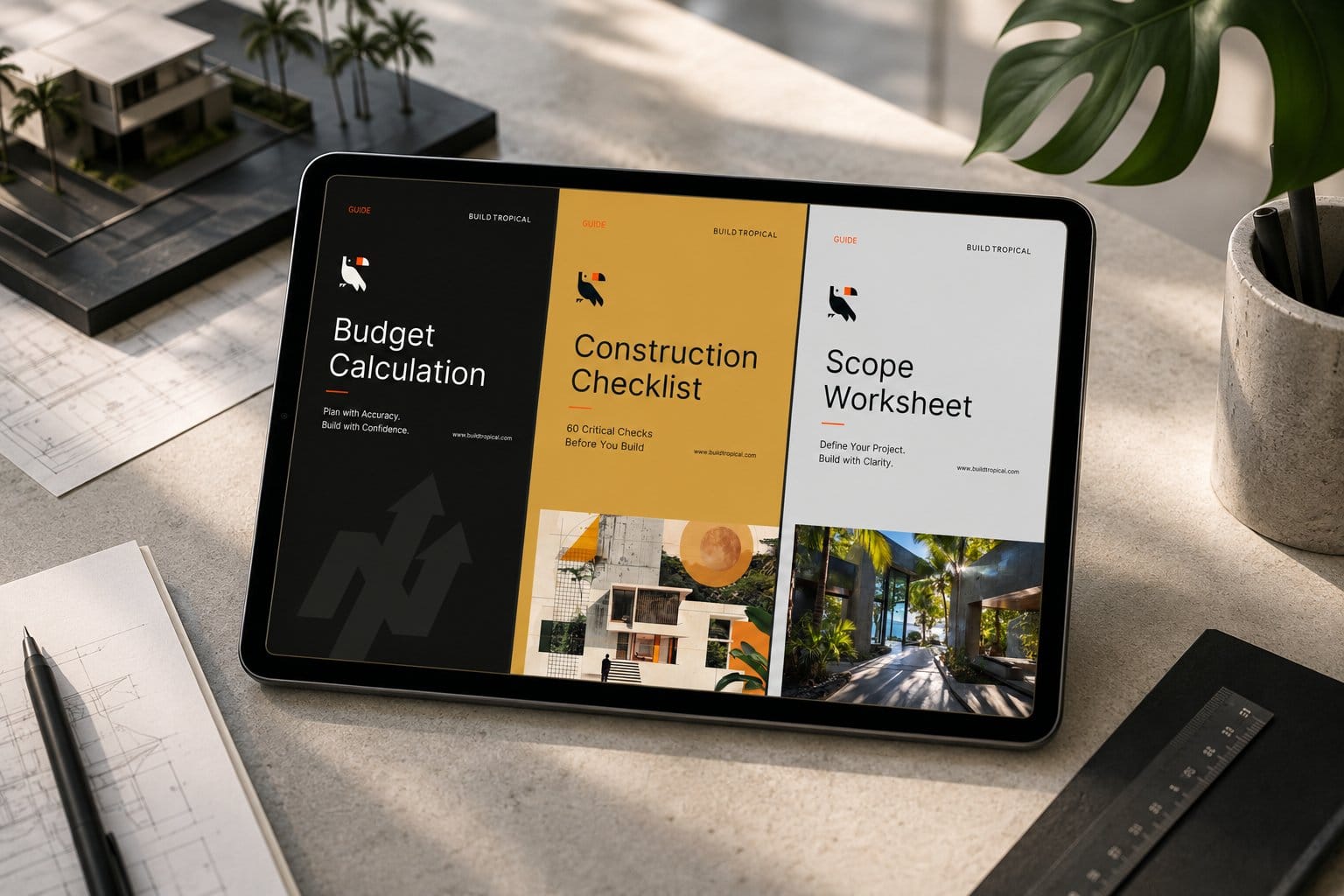
Most budget blowouts in Costa Rica are locked in long before anyone pours concrete — in the scope you never defined and the number you never pressure-tested. Build Ready is the 70-point checklist, scope worksheet and budget model I use to get that on paper before a client talks to land agents, architects or contractors.
See what is inside Build Ready →Communication Questions
For foreign clients managing a build remotely, communication is not a secondary concern. It is a primary one. Ask how the contractor reports progress to clients who are not on site. What is the cadence, what format does reporting take, and who sends it? A contractor who has built for foreign clients before will have a system. A contractor who has not will give you a vague answer about WhatsApp.
Ask what happens when you are unreachable and a decision needs to be made on site. Who has authority to make it, what categories of decisions require client approval, and how is the decision documented afterward? A clear answer to this question tells you the contractor has thought through the remote management scenario. A vague answer tells you they have not.
Ask for a point of contact who is available in your time zone, or a communication protocol that accounts for the time difference. Small delays in decision-making on a construction site compound into real schedule and cost impacts. A contractor who has managed this for other foreign clients will have a workable solution.
Red Flags to Watch For
A contractor who pushes you to decide quickly, citing other interested clients or a limited construction calendar, is using pressure where information and trust should be doing the work. Take the time you need.
A contractor who cannot provide a single client reference from a completed project similar to yours is not yet qualified to build your project.
A contractor who proposes to start construction before the permit is obtained is either inexperienced or deliberately cutting corners. The permit is not optional and it is not a formality.
A contractor who is offended by your questions has told you something important about how the relationship will function when there is a real disagreement on site.
A contract that has no provision for dispute resolution, no clear description of the scope, and no milestone-based payment structure is a document that protects the contractor, not you. Have your lawyer review any contract before signing.
For more on the construction process, see our guides on how to hire a contractor in Costa Rica and the construction timeline and permit process.
Frequently Asked Questions About Hiring a Contractor in Costa Rica
What credentials should a contractor in Costa Rica have?
A contractor should operate as a registered legal entity with a cedula juridica, have experience in projects similar to yours in type and location, and work with CFIA-registered architects and engineers to obtain proper permits. They should be able to provide client references from completed projects and a clear line-item cost breakdown.
How much should I pay upfront to a contractor in Costa Rica?
Advance payments of 10 to 15 percent of the total contract value are reasonable for standard residential projects. For larger or more complex builds with significant upfront material procurement, 20 to 25 percent may be appropriate. A contractor requesting 30 to 40 percent before any work begins is asking for more than early project phases typically require.
Can a contractor start building before the permit is approved in Costa Rica?
No. A construction permit is legally required before breaking ground. Any contractor who proposes to start without one is either building illegally or obtaining permits through informal channels. Unpermitted construction in Costa Rica cannot be legally sold and may be subject to demolition orders.
How do I manage a contractor remotely from the US or Canada?
Establish a clear communication protocol before signing the contract: weekly photo reports, bi-weekly video calls, and a milestone-based payment schedule tied to inspectable progress rather than calendar dates. If you cannot visit the site regularly, hire a local project manager or appoint your architect to that role. Decisions deferred because of remote management add cost and schedule to every project.
What should a construction contract include in Costa Rica?
A complete scope of works with specifications, a line-item budget breakdown, a milestone-based payment schedule, a clear change order process with required approvals, a timeline with key milestone dates, provisions for dispute resolution, and identification of who is responsible for obtaining permits. Have a Costa Rican lawyer review the contract before signing.
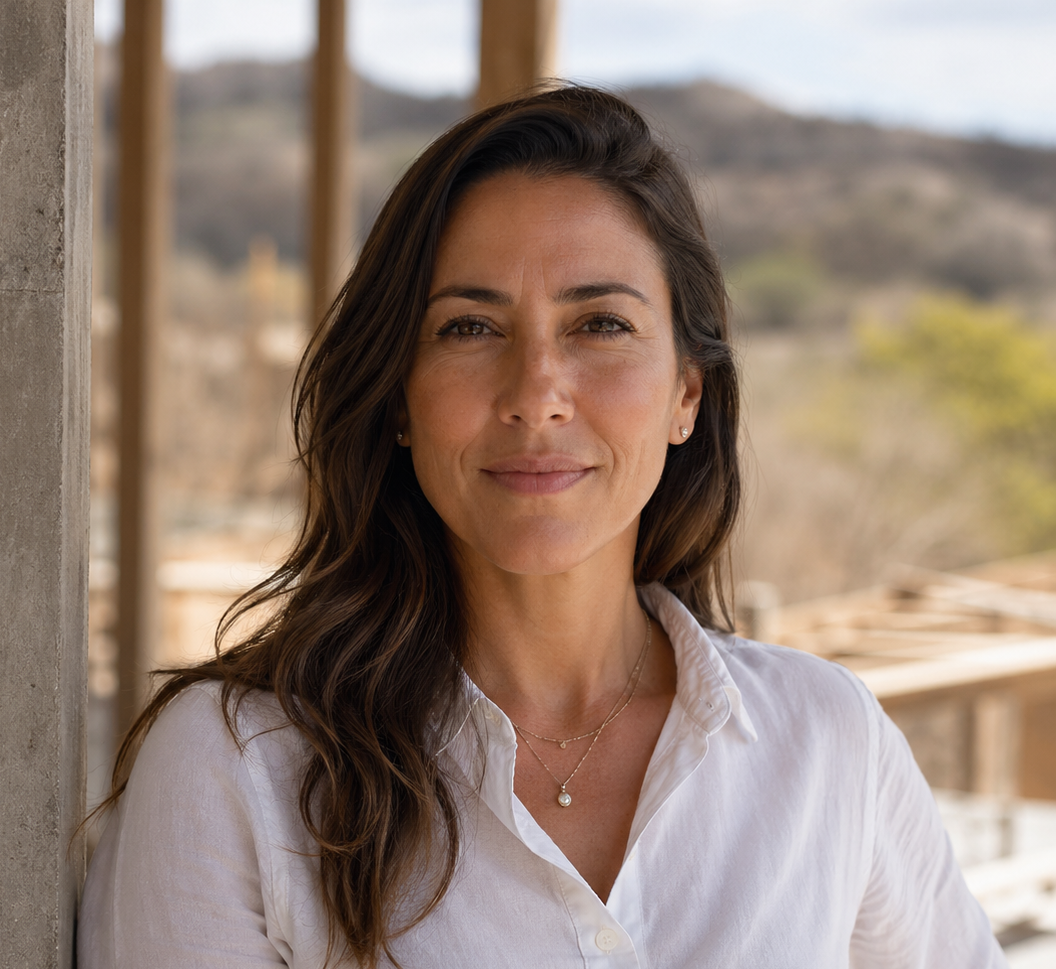
Carolina Vargas is a general contractor based in Guanacaste, Costa Rica. She has built residential and hospitality projects on the Pacific coast for over twelve years. She writes for Build Tropical about the realities of construction from the contractor's side of the table.