How to Hire a Contractor in Costa Rica (And Avoid Construction Scams)
A Costa Rican contractor with 12 years on the Pacific coast explains how construction scams work, what red flags to watch for, and what a good builder actually looks like.

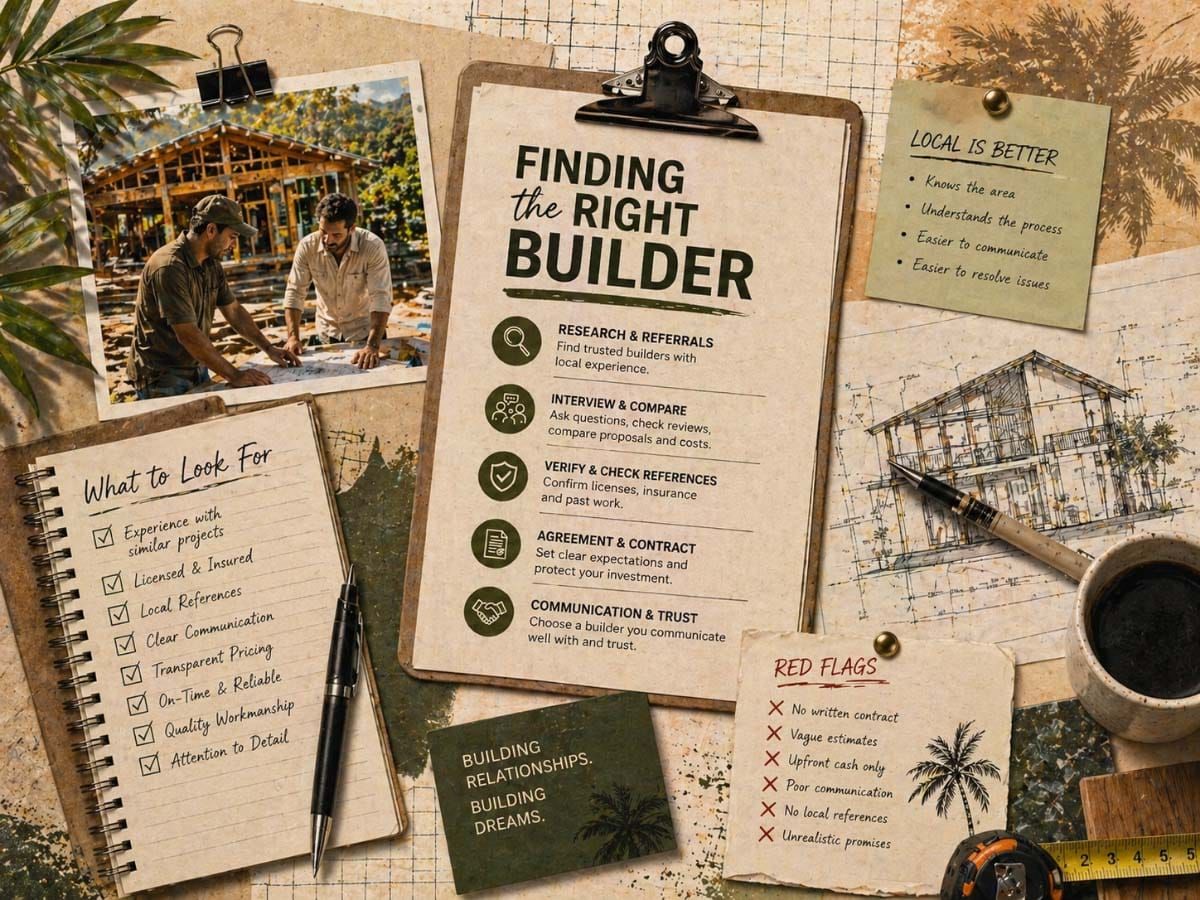
A few times a year I hear the same story. Someone at a dinner, a neighbor, a friend of a friend — a foreigner who paid a contractor $30,000 or $40,000 and has nothing to show for it. The most recent one was about a couple in Esterillos who sent a "reservation fee" to lock in a builder before other lots in the development started construction. The builder never started. The money never came back. The pattern is always the same: urgency, pressure, a wire transfer before a proper contract, and nobody checking whether the builder was even registered.
I have been a general contractor in Guanacaste for twelve years. This guide explains how to tell the difference between a contractor who will deliver your home and one who will take your deposit and disappear — from the contractor's side of the table.
In This Guide
- Construction scams in Costa Rica
- Red flags when hiring a builder
- What to look for in a contractor
- Turnkey vs administration contracts
- What a good proposal looks like
- Payment structures
- Insurance and warranties
- FAQ
How Construction Scams Work in Costa Rica
Most construction projects that go wrong in Costa Rica are not scams in the criminal sense. Fraud — a con artist taking money and vanishing — happens, but it is rare. What is far more common is incompetence that produces the same outcome for the client.
The FOMO Scam: Reservation Fees and Manufactured Urgency
This is one of the most unbelievable patterns to fall for, and yet I keep hearing about it. A builder tells you that multiple lots in a development are starting construction, that their schedule is filling up, and that if you do not reserve your spot now with a deposit, the price goes up or they will not be available for eighteen months. The client, nervous about losing out, wires $30,000 or $40,000 before signing a proper contract, before verifying credentials, before getting a written scope of work.
There is no shortage of competent contractors in Costa Rica. You will always find a good one. Maybe not the cheapest. But the cheapest is almost certainly not the best, and the one pressuring you to wire money before signing a contract is not someone you want building your house. Never let urgency override due diligence.
Incompetence Disguised as Construction Fraud
This is the pattern that actually causes the most damage. A maestro de obras — a site foreman — who does excellent small work, a kitchen remodel or a boundary wall, takes on a $300,000 custom home he does not have the systems, crew, or management capacity to deliver. He is not trying to steal from you. He is in over his head.
These projects almost always run on an administration contract — cost-plus — where the client pays materials and labor as the work goes with no fixed total. Without a clear budget ceiling, costs drift upward week by week. The builder does not track spending in any organized way, so nobody realizes the budget is blown until it is too late.
It gets worse if the client did not hire a good architect. Without proper construction drawings and an architect inspecting the work, nobody knows what the finished product is supposed to look like. The builder makes decisions on the fly — wall heights, window placements, electrical layouts — based on what is easiest, not what was designed. The client visits the site and sees something different from what they imagined but cannot point to a drawing that proves it. Misunderstandings compound. Money gets spent without clear results. By the time the relationship breaks down, the house is half-finished, the budget is blown, and there is no documentation to resolve the dispute.
Builders Who Cut Corners on Insurance and Registration
The third pattern is the contractor who is competent enough but operates informally. No CFIA registration on the plans. No INS construction insurance. No CCSS planilla for the workers. This builder might finish your house. But if a worker gets injured on site, you as the property owner are legally exposed. If the structure has a defect, there is no professional liability attached to anyone. The client saved 15 percent on the quote and bought a set of risks they did not understand.

Red Flags When Hiring a Contractor in Costa Rica
After twelve years in this industry, the warning signs are obvious to me. They should be obvious to the client too.
No CFIA Registration
Every construction project in Costa Rica requires a responsible professional — an architect or engineer — registered with the CFIA. If the builder cannot provide the CFIA registration number for the project, the work is being done outside the legal framework. This is the mechanism that ties a licensed professional to the structural adequacy of your home.
No INS Construction Insurance
The poliza de riesgo del trabajo is mandatory. It covers workers against injury on site and provides a minimum level of project protection. If a builder tells you insurance is not necessary or that they will "handle it later," stop the conversation.
No CCSS Planilla for Workers
The planilla is the social security registration for each worker. If the crew is not on planilla, they are working informally. This is illegal, it is common, and it exposes the property owner to liability. The cost is roughly 26 percent on top of base wages. When a competitor's labor cost looks impossibly low, this is usually why.
Quoting Without a Site Visit
Any builder who gives you a price without walking the lot, checking the access road, looking at the slope, and asking about water and electrical connections is guessing. A site visit takes half a day. If the builder will not invest that time, they are not serious about getting the number right.
Asking for More Than 15 Percent Upfront
A reasonable advance is 10 to 15 percent of the contract value. Anything above that means you are financing the contractor's cash flow, and the money is ahead of the work. On a $400,000 project, a 50 percent advance is $200,000 sitting in someone else's account before a single foundation is poured.
Pressure to Commit Fast
There is no construction emergency in Costa Rica. A competent contractor with a healthy pipeline does not need to manufacture urgency. Walk away from anyone who tells you they have "only two spots left" or that the price goes up next week.
Proposals Full of Description but No Individual Numbers
This one is becoming more common. You receive a proposal that reads beautifully — professional language, detailed descriptions of each phase, impressive scope — but when you look for actual line-item costs, there are none. No individual price for the foundation, the walls, the roof, the electrical, the plumbing. Just a grand total and paragraphs of polished text. These proposals are often generated by AI tools, and they look convincing until you try to compare them against another quote or hold the builder accountable for a specific cost. A real proposal breaks the budget into individual items with individual prices. If the document reads like a brochure instead of a spreadsheet, the builder either does not have the numbers or does not want you to see them.
What to Look For in a Costa Rica Construction Contractor
Why the Backoffice Matters More Than the Portfolio
Here is something most clients never think to evaluate, and it might be the most important thing I can tell you: the difference between a contractor who delivers and one who does not is usually not their construction skill. It is their backoffice.
Can they manage purchasing — tracking what has been ordered, what has arrived, what is still pending? Can they maintain a running budget the client can review? Do they have a system for scheduling subcontractors so the electrician does not show up before the walls are ready? Can they issue a weekly progress report that describes what happened and what is coming next?
A one-person operation — even a talented one — is almost always terrible at communication and management. The builder is on site laying block when you call. He forgets to order the window frames because he was solving a plumbing problem. He cannot give you a budget update because he does not track one. Finding a solo operator who is also good at administration is possible. But it is rare.
The Contractor-Architect-Backoffice Triangle
What you want is a firm with at least a dedicated maestro de obras running the site AND a separate person handling orders, scheduling, budgets, and client communication. That separation is what makes a project run.
When this kind of contractor works with a good architect, they create something very smooth. The architect designs and inspects. The contractor manages the build sequence, procurement, and crew. The backoffice keeps materials arriving on time and the budget visible. That triangle — architect, contractor, backoffice — is the structure that produces good buildings without drama. For more on the architect's role and how to evaluate one, see our guide on architect fees in Costa Rica.
Turnkey vs Administration Contracts in Costa Rica
There are two main ways to structure a construction contract in Costa Rica, and understanding the difference matters because it changes who carries the risk.
Turnkey Contracts (Llave en Mano)
A turnkey contract is a fixed price for the complete project. I quote a total, the client agrees, and I deliver the finished home at that price. If my costs run over, I absorb them. The trade-off is that I price the risk into the quote — typically 15 to 25 percent above what the project would cost under an administration model. That premium is the price of certainty.
Administration Contracts (Por Administración)
An administration contract means the client pays for materials and labor at cost, plus a management fee of 10 to 20 percent. The client sees every invoice, approves every purchase, and pays as the work progresses. If the project comes in under budget, the client saves. If it runs over, the client pays the difference.
Which Contract Type Is Best for Foreign Clients
For foreign clients building from abroad who cannot visit the site regularly, I almost always recommend turnkey. The predictability is worth the premium. You know your number. You do not need to approve every rebar purchase. Administration works well for clients who are on-site, comfortable reviewing invoices, and have a strong relationship with the builder. For a first-time builder in another country, the overhead of managing an administration contract from a different time zone is usually more stress than it is worth.
Why Experienced Builders Fall Into Cost-Plus Traps
And here is something that surprises people: the clients who get hurt worst by administration contracts are not the first-timers. It is the ones who have built before — in the US, in Canada, in Europe — and believe they know exactly how construction works. They choose cost-plus because they are confident they can manage the process and save the turnkey premium. But construction in Costa Rica does not work the way it works in North America. Material pricing is different. Labor productivity is different. The supply chain is different. The regulatory process is different. Nearly every experienced builder I have worked with who chose administration came in with cost expectations based on their home country and discovered that the reality here looks nothing like their spreadsheet. They do not save the 15 to 20 percent they expected. They spend it — and sometimes more — on surprises they did not see coming because they were applying the wrong frame of reference. The ones who think they know exactly what they are doing are, in my experience, the ones most likely to fall into serious cost traps.
What a Good Contractor Proposal Looks Like in Costa Rica
I have written hundreds of construction proposals. The difference between a professional proposal and a problematic one is usually obvious within the first page.
Anatomy of a Professional Proposal
A professional proposal includes a detailed scope of work broken down by phase and by trade — not a single line that says "complete construction of house." It includes a payment schedule tied to specific milestones: 10 percent advance, then payments at foundation completion, walls complete, roof on, MEP rough-in, finishes, and handover. It includes a construction timeline with realistic durations for each phase. It lists exclusions clearly — what is NOT included, such as appliances, furniture, landscaping, or utility connections. And it includes the contractor's CFIA-associated professional, the INS insurance policy number, and CCSS compliance documentation.
What a Bad Proposal Looks Like
A problematic proposal is a single page with a round number — "$250,000 for a three-bedroom house, everything included" — no line items, no timeline, no exclusions, no insurance documentation. When I see this, I know the builder either does not have the systems to produce a proper scope or does not want the client to know what they are paying for.
How to Structure Contractor Payments in Costa Rica
The payment schedule is the most important clause in your construction contract. It determines who is at risk at any given point in the project.
The Milestone Payment Structure
On my projects, the standard structure is 10 to 15 percent as an advance upon contract signing. This covers initial material purchases — rebar, cement, block — and the cost of mobilizing the crew. That percentage can go higher depending on the project timeline, the type of build, and the materials involved — a steel frame project that requires factory fabrication upfront has a different cash flow profile than a concrete block build where materials are purchased in stages. After that, every payment is tied to a completed milestone: foundation done, walls up, roof installed, electrical and plumbing roughed in, finishes complete, handover. I never ask for payment ahead of the work. The client never has more money with me than the value of what has been built.
Why Contractors Need an Advance
I understand why clients are nervous about the advance. You are sending money to someone in another country for work that has not started. A 10 to 15 percent advance on a properly contracted project with CFIA registration, INS insurance, and milestone documentation is standard practice throughout Costa Rica. Any builder asking for significantly more should explain exactly why, in writing, before you agree.
Construction Insurance and Warranty Protections in Costa Rica
Costa Rica has real protections for property owners, but they only work if the project is set up correctly from the start. For the full permit process, see our guide on building permits in Costa Rica (coming soon).
INS Construction Insurance
The poliza de riesgo del trabajo is mandatory on every construction project. It covers workers against injury and death on site. The cost is approximately 4 to 5 percent of the declared construction value. If a contractor does not carry it and a worker is injured, the property owner is directly liable. I have seen owners face claims of $30,000 to $50,000 for worker injuries on uninsured projects.
CCSS Planilla Compliance
Every worker on the project must be registered with the Caja Costarricense de Seguro Social. The employer pays roughly 26 percent on top of base wages. When a contractor's labor costs look suspiciously low, this is almost always why.
Construction Warranty Standards in Costa Rica
A construction warranty in Costa Rica is not standardized by law, but industry practice is one year on finishes — paint, tile, fixtures — and five years on structural elements — foundation, columns, beams, roof structure. Get this in writing as part of your contract. A verbal promise is worth nothing when you discover a crack in the foundation two years after handover.
What to Do When a Construction Project Goes Wrong
When things go wrong, the architect serving as construction inspector is your first line of protection. This is why having an independent architect — one who does not work for the contractor — matters. The CFIA complaint process and civil courts are available as last resorts, but they are slow. The best protection is hiring correctly in the first place. For more on construction costs and what to budget, see our cost of building guide. For how different construction methods compare, see our guide on the best construction method for Costa Rica (coming soon).
What Makes Good Contractors Decline a Project
Not every construction problem starts with the contractor. The best builders I know — the ones with full schedules and good reputations — will decline a project before it starts if the plans lack detail, if the client has no architect involved, or if the budget expectations are clearly unrealistic. They will also push back during construction if the client changes plans repeatedly after the walls are going up, buys materials without consulting the builder (wrong specs cost more than the savings), or micromanages from a different time zone via WhatsApp at 11 p.m. Comparing a professional, fully insured quote to the cheapest number from a Facebook group is the surest way to end up in the situation I described at the beginning of this article.
Frequently Asked Questions About Hiring Contractors in Costa Rica
How much should I pay a contractor in Costa Rica?
That depends on the project size, finish level, site conditions, and which contract type you choose. Under a turnkey contract, the contractor's margin is built into the total price. Under administration, you pay a management fee of 10 to 20 percent on top of materials and labor. The more important question is not how much you pay — it is what you get for it. A detailed proposal with individual line items, proper insurance, and milestone-based payments is worth more than the cheapest number you can find. For a full breakdown of construction costs, see our cost of building guide.
Can I build in Costa Rica without an architect?
No. Every construction project requires a responsible professional registered with the CFIA. Some builders will tell you they can "handle the plans" without one — this is illegal, it voids your insurance protections, and it means nobody is independently checking the quality of the work being done on your home.
How do I verify a contractor's registration?
Ask for the CFIA registration number of the project's responsible professional — the architect or engineer whose name is on the plans. You can verify it through the CFIA website. If the contractor cannot provide this number, do not proceed. Beyond registration, ask to see their INS insurance policy and proof of CCSS planilla compliance for their workers.
What is the difference between turnkey and administration contracts?
Turnkey means the contractor quotes a fixed price and absorbs cost overruns. Administration means you pay materials and labor at cost plus a management fee, and carry the risk if costs run over. Turnkey costs more upfront but gives you certainty. Administration can save money in theory but requires hands-on involvement, a good architect, and realistic cost expectations — which most foreign clients underestimate.
Should I hire a foreign or Costa Rican contractor?
Hire the one who is licensed, insured, properly staffed, and can show you finished projects that have aged well in the climate. Nationality is not a qualification. What matters is their systems, their team, their documentation, and their track record.
What construction warranty is standard in Costa Rica?
Industry practice is one year on finishes and five years on structural elements. Get it in writing as part of your contract with clear terms about what is covered, how to report a deficiency, and the timeline for the contractor to respond. A verbal warranty is not a warranty.
---
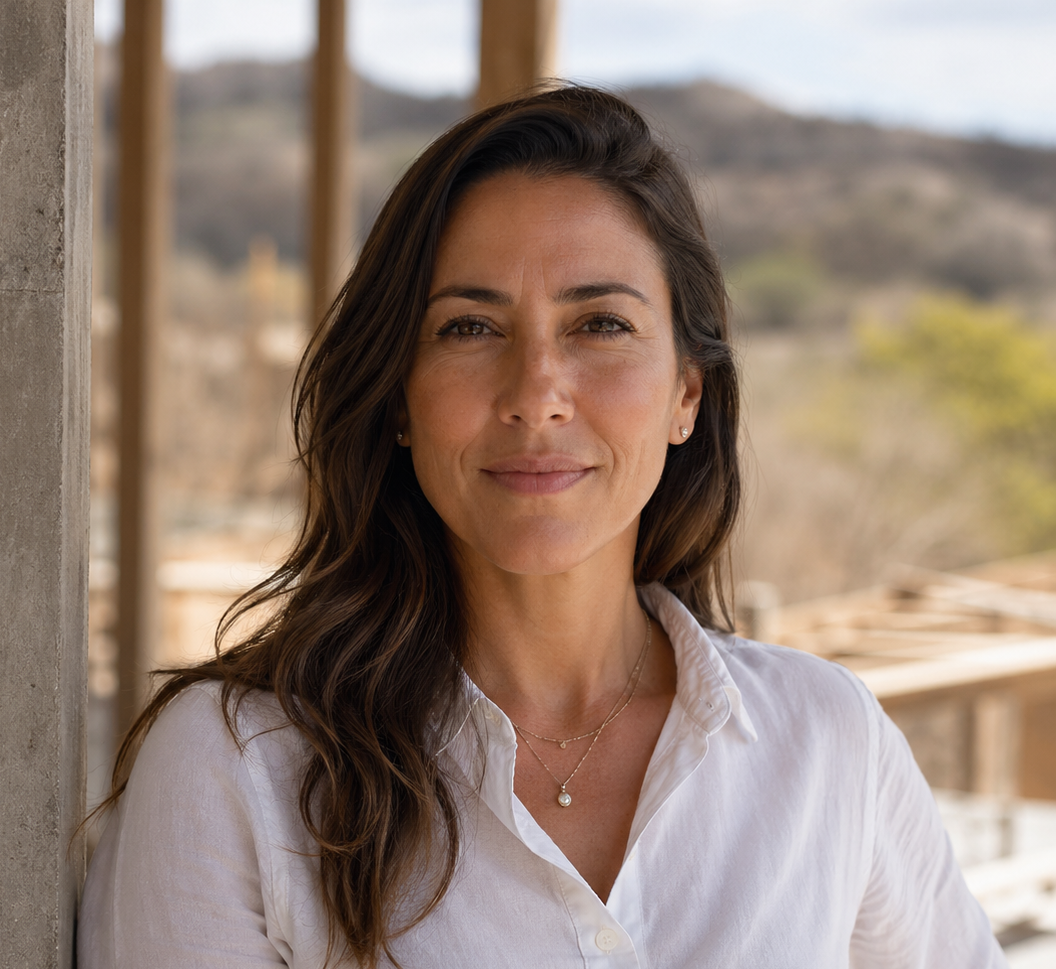
Carolina is a general contractor based in Guanacaste, Costa Rica. She has built residential and hospitality projects on the Pacific coast for over twelve years. She writes for Build Tropical about the realities of construction from the contractor's side of the table.