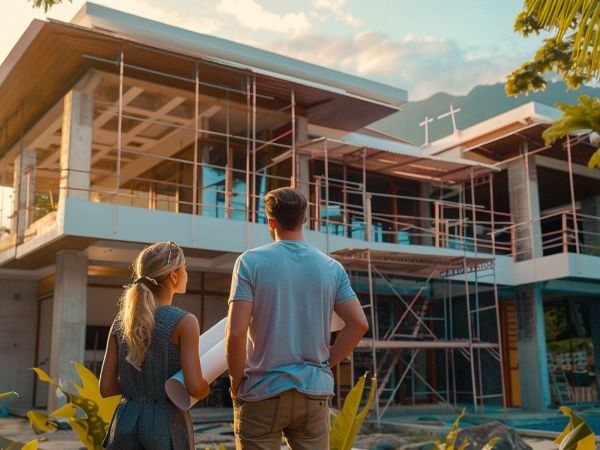
How Much Does an Architect Cost in Costa Rica? (And How to Choose the Right One)
You can find an architect in Costa Rica who will do your plans for $5,000. You can also find one who will charge $150,000. The difference in what those drawings produce is enormous.
You can find an architect in Costa Rica who will do your plans for $5,000. You can also find one who will charge you $150,000. Both are CFIA-registered. Both will hand you a set of construction drawings. The difference in what those drawings produce — in how your house performs in the tropics, how your budget holds during construction, and whether anyone actually shows up to check that the builder is following the plans — is enormous. And it is almost entirely invisible to the client at the moment they are choosing.
The architecture industry in Costa Rica has a pricing problem that nobody talks about openly. The CFIA sets minimum professional fees at 9 to 12 percent of construction cost, but enforcement is inconsistent and the market is full of architects who undercut the minimums by reducing their scope to almost nothing — they sign the plans, register them, and disappear. On the other end, firms charge premium fees and deliver premium service. Most clients have no framework for understanding what they are actually buying at either price point, so they default to the number. That is almost always a mistake.
In This Guide
- CFIA fee structure
- What each phase of service includes
- What fees don't cover
- Why cheap architects cost more
- How to choose the right architect
- Architecture vs design-build
- Using a foreign architect
- FAQ
How Architect Fees Work in Costa Rica (CFIA Fee Structure)
The CFIA — the Colegio Federado de Ingenieros y Arquitectos — sets minimum professional fees for architects and engineers in Costa Rica. These are not suggestions. They are legally mandated minimums, and charging below them is considered unfair competition. Architects can and do charge above these minimums depending on the scope and complexity of the project.
The Official CFIA Arancel Breakdown
The official CFIA arancel breaks fees into two phases, each with specific percentages of the construction value:
Phase 1 — Design and Documentation: estudios preliminares at 0.5 percent, anteproyecto at 1 percent, planos de construcción y especificaciones (the full construction drawing set) at 4 percent, presupuesto (cost estimate) at 0.5 to 1 percent, and asesoría para licitación (bid support) at 0.5 percent.
Phase 2 — Construction Control: inspección at 3 percent, or dirección técnica (full technical direction) at 5 percent.
Add those up and the total CFIA minimum for a standard project with full service — from preliminary studies through construction inspection — runs 9 to 12 percent depending on which Phase 2 service you contract and whether you include all Phase 1 elements.
Why These Numbers Are Dated — And How Architects Actually Charge
A word of context: these percentages date from a different era of practice. The arancel was written when expectations around design process, client collaboration, and documentation were very different from what a serious residential project demands today. The numbers establish a legal floor, but they do not reflect how most architects who are actually producing architecture — working closely with the client, developing a design that responds to the site, the climate, and the way people want to live — structure their fees in practice.
In our office, we charge differently. Not always more, but differently. The distribution of effort across phases does not match the arancel's assumptions. We spend significantly more time in the design phase than 1 percent of the construction value would cover, and our construction administration scope is structured around the specific needs of each project rather than a flat percentage. Most architects I know who produce thoughtful, site-specific residential work — as opposed to stamping a plan set and moving on — have evolved their fee structures beyond the arancel framework. The total may land in a similar range, but the scope and the distribution of costs reflect what the work actually requires.
Fees for Complex and High-End Projects
For more complex projects — high-end custom homes, challenging hillside sites, projects with extensive custom detailing, or hospitality work — fees run 13 to 15 percent. The design requires more iterations and more detailed documentation. The construction inspection demands more frequent site visits and more specialized oversight. These are above the CFIA minimums, which is permitted and normal.
Additional Scope Beyond the Building
Beyond the base fee, many projects require additional design scope. Driveway design, site infrastructure, retaining walls, pool integration, and landscape grading are part of the project but not part of the house, and they require their own design and engineering work. On a property with significant site work — a long access road, multiple retaining structures, a pool on a slope — this additional scope can add 1 to 3 percent on top of the base fee.
What Architect Fees Look Like in Actual Dollars
In actual dollars, here is what that means on three different project sizes.
A 120-square-meter home built at $1,500 per square meter — a basic to mid-range project in the San José area — has a construction cost of roughly $180,000. Professional fees at 9 to 11 percent run $16,000 to $20,000.
A 220-square-meter home at $2,000 per square meter — a solid mid-range build on the Pacific coast with good finishes — comes to roughly $440,000 in construction. Fees run $40,000 to $53,000.
A 350-square-meter high-end home at $2,200 per square meter — quality materials, custom detailing, covered terraces, pool — comes to roughly $770,000. At 13 to 15 percent for the higher complexity, fees run $100,000 to $115,000.
These numbers vary. Some architects offer discounts on larger projects where the percentage yields a substantial absolute fee. Others charge a premium on very small projects where the percentage alone would not cover the time the work actually requires. The scope of what is included also differs between firms — always confirm in writing what is and is not part of the fee before signing.
These numbers include architecture, structural engineering, and construction inspection. They do not include interior design, landscape design, site infrastructure beyond the building footprint, or specialized consultants like geotechnical or environmental engineers. Those are additional scopes.
The CFIA registration is the legal baseline. Every architect practicing in Costa Rica holds it. But the CFIA number on someone's business card tells you they are registered, not that they are good. What matters more is what they actually deliver — and that depends on their team, their process, and how they practice.
What Is Included in Costa Rica Architect Fees
Most clients think they are paying for drawings. They are paying for decisions.
Schematic Design
Schematic design is the first phase — site analysis, floor plan exploration, massing studies, orientation for sun and wind, climate response strategy. This is where the fundamental character of the house is established: how it sits on the land, how the rooms relate to each other, how light and air move through the space. A good schematic design package gives you enough to understand what the house will feel like. A bad one gives you a floor plan with room labels and nothing else.
Construction Drawings
Construction drawings are the technical translation of the design into buildable information. A complete set includes architectural plans, structural engineering, electrical layout, mechanical systems, plumbing, and details for every condition where materials meet — window to wall, roof to beam, floor to foundation. These drawings are the contract between you and the builder. If something is not on the drawings, the builder is not obligated to build it. If the drawings are incomplete or ambiguous, the builder fills in the gaps with whatever is fastest and cheapest. Bad drawings produce bad buildings. There is no shortcut here.
Permit Processing
Permit processing is the bureaucratic phase — filing plans with the CFIA for professional registration, submitting to the municipalidad for the building permit, filing the INS construction insurance. The architect handles the coordination and the filings. The owner handles the payments. This takes four to eight weeks in most municipalities. For the full permit breakdown, see our guide on building permits in Costa Rica (coming soon).
Construction Inspection
Construction inspection is the phase that separates architects who build well from architects who sign plans. This is the on-site work: visiting the project at critical milestones, verifying that the construction matches the drawings, checking materials against specifications, reviewing the work before it gets covered up by the next layer. Foundation rebar before the pour. Wall reinforcement before the render. Roof structure before the ceiling goes in. An architect who inspects thoroughly catches problems when they cost hundreds to fix. An architect who does not inspect leaves problems to compound until they cost tens of thousands.

What Costa Rica Architect Fees Do NOT Cover
Clients consistently underestimate the gap between hiring an architect and having everything they need to build. The architecture fee covers the building design, the engineering, the permits, and the construction inspection. It does not cover several other things you will need.
Interior design is sometimes included in the architecture scope and sometimes not — it depends on the firm and the contract. Some architecture firms offer interior design as part of a full-service package, handling furniture plans, material palettes, lighting design, and fixture selection alongside the architectural work. Others treat it as a separate engagement entirely. If interior design is not included, expect it to add 3 to 5 percent of construction cost on top of the architecture fee, or a flat fee negotiated separately. Ask explicitly whether it is in or out before you sign — this is one of the most common sources of misunderstanding between clients and architects.
Landscape design is separate. So is furniture specification and procurement. So is any specialized engineering beyond the structural scope — geotechnical studies for difficult soil, environmental assessments for SETENA permitting, or acoustic engineering for hospitality projects.
Understand what you are buying before you sign the contract. Ask the architect for a detailed scope of services in writing. If it does not list construction inspection as a line item, ask why. If it does not specify how many site visits are included, ask how many. The scope is the document that defines your relationship. Read it carefully.
Why the Cheapest Architect in Costa Rica Is the Most Expensive Decision
I get called in to fix projects where things went wrong. Not frequently, but enough that I can see the patterns. The most common pattern is this: the client hired the cheapest architect available. The architect signed the plans, registered them with the CFIA, and was never seen again. The builder built whatever he wanted, however he wanted, with nobody checking the work against the drawings.
The result, typically, is a house that is structurally adequate but poorly detailed. Water infiltration at window openings because the flashing was not installed as drawn — or was never drawn in the first place. Thermal discomfort because the roof insulation was omitted to save money and nobody noticed. Cracking render on block walls because the expansion joints were not specified. Plumbing that leaks at unions because nobody checked the work before the walls were closed.
The remediation cost on these projects is usually two to five times what the professional fees would have been if the architect had actually done the inspection work. On a $350,000 project, skipping or minimizing the inspection saves maybe $15,000 to $20,000 in fees. The problems it creates cost $40,000 to $80,000 to fix — if they are fixable.
The architect is the only independent advocate the owner has during construction. The builder works for the builder. The architect works for you. That relationship — someone with the technical knowledge to evaluate the work, the authority to direct changes, and the professional liability if something fails — is the most important thing you buy when you hire an architect. Removing it to save 3 to 5 percent of project cost is the most expensive economy I have seen in twelve years of practice.
How to Choose the Best Architect in Costa Rica
This is the question behind the question. "How much does an architect cost" is really "how do I find the right one and what should I expect to pay." The fee is the same across almost all architects because the CFIA sets the minimum. The difference is in what you get.
Why Team Size Matters More Than Credentials
Team size and structure matter more than most clients realize. A large firm — ten or more architects — has resources: specialists in structural detailing, energy modeling, permit management. But on a single residential project, you may find that the principal you met at the first meeting hands your project to a junior designer and you do not see them again until the presentation. Your house gets the firm's production capacity but not its best thinking.
A solo practitioner or a very small office has the opposite problem. The principal is hands-on — they are designing your house personally, which is what you want. But they are also answering the phone, managing permits, visiting three other job sites, and trying to keep the books current. Capacity becomes an issue. Response times slip. You also tend to see the same design vocabulary across their projects because one person's creative range, no matter how talented, is limited.
The sweet spot, in my experience, is a firm with enough people to have real specialization — design, technical documentation, construction administration — but small enough that the lead architect is genuinely involved with your project from schematic design through construction. That usually means three to twelve people.
How to Evaluate an Architect's Work and Process
Look at completed projects — in person if you can, but at minimum through detailed photos and video that show how the building has aged in the tropical climate, not just how it looked at handover. Ask the architect to walk you through a few finished projects and pay attention to whether they understood the environment: Are the roof overhangs generous enough to protect walls and windows from rain? Are the exterior materials holding up or showing premature deterioration? Does the house work with natural ventilation, or does it rely entirely on air conditioning? A building that performs well at age five tells you more than any portfolio rendering.
Ask about their construction supervision process. How often do they visit the site? What specifically do they inspect? Do they issue written reports after each visit? Do they have the authority to stop work if something is being built incorrectly? The answers to these questions will tell you whether the architect treats inspection as a real service or a formality.
Ask who does the structural engineering and whether it is in-house or subcontracted. Both arrangements can work well. But you should know which one you are getting, and you should be able to talk to the structural engineer directly if you have questions about foundation design or seismic detailing.
Design-Build vs Independent Architect in Costa Rica
Some firms in Costa Rica offer design-build — they design the house and build it under one roof. This is presented as a convenience: one contract, one point of contact, no coordination between separate parties. For simple projects with a clear scope and a reputable firm, design-build can work fine.
For anything with design ambition or budget complexity, I have a strong opinion: keep architecture and construction separate.
The reason is straightforward. You need people checking each other's work. When the architect and the builder are the same company, you lose the independent oversight that produces a better building. The architect-builder has a financial incentive to simplify the design, reduce material specifications, and accelerate the schedule. Those incentives save the company money. They do not necessarily serve your interests.
With separate entities, the architect designs the building and inspects the construction. The builder executes the work. They hold each other accountable. The architect pushes for quality. The builder pushes for efficiency. The tension between those two pressures — managed professionally — is what produces good buildings. Remove one side of that equation and the building suffers.
I have seen the results from both models over hundreds of projects. The buildings produced by independent architects with separate builders are, on average, measurably better — better detailed, more durable, more responsive to the climate, and ultimately less expensive to own over time because the maintenance costs are lower. That is not a universal rule, and I know design-build firms that do excellent work. But as a structural tendency, separation produces better outcomes. For more on what to look for when hiring the builder, see our guide on hiring a contractor in Costa Rica.
Can You Use a Foreign Architect in Costa Rica?
Yes, with significant caveats.
A foreign architect cannot stamp plans for CFIA submission. Costa Rica requires a locally licensed architect or engineer of record on every project. If you hire a foreign designer, you will also need a Costa Rican architect to serve as the representative professional — meaning you are paying two architecture fees.
My firm handles these arrangements regularly. A client falls in love with a foreign designer's work and wants them to lead the design. We serve as the architect of record — reviewing the design for local code compliance, adapting the engineering for Costa Rica's seismic requirements, preparing the permit documents, and handling construction inspection. It works. But it is expensive, and it only makes practical sense when the client wants to work with someone very specific.
The design fees for internationally recognized firms start at $350 per square meter or more — before the local architect's fee. On a 200-square-meter house, that is $70,000 in design alone. The local architect of record does not necessarily charge the full standard fee on top of that — it depends on the level of involvement. If we are only reviewing for code compliance and handling permits, the fee is lower. If we are adapting the design for local construction methods, coordinating the engineering, and running full construction inspection, it approaches a standard engagement. Either way, the total architecture cost on a project with a foreign designer and a local architect of record will be significantly higher than hiring a Costa Rican architect directly. That math works for clients with a specific design vision and the budget to realize it. For most residential projects, a Costa Rican architect who understands the climate, the seismic code, the local materials, and the construction methods will produce a better-adapted result for substantially less money.
The other concern with foreign architects is climate adaptation. I have inherited projects where the design was beautiful on paper — clean lines, dramatic cantilevers, floor-to-ceiling glass — and profoundly wrong for Costa Rica. No thermal strategy for the roof. No cross-ventilation. Insufficient overhangs for a climate that dumps 2,500 millimeters of rain per year. Glass walls facing due west with no solar control. The house looked stunning in the rendering and was uninhabitable without running the air conditioning at full capacity around the clock.
A Costa Rican architect with experience in tropical residential design will not make these mistakes because they have lived inside the climate they are designing for. That is worth more than any portfolio of international awards. For a full breakdown of what construction costs in Costa Rica, see our cost of building guide.
Frequently Asked Questions About Architect Fees in Costa Rica
How much does an architect charge in Costa Rica?
Professional fees run 9 to 12 percent of construction cost for straightforward residential projects, and 13 to 15 percent for complex, high-end, or architecturally challenging builds. Additional scope like driveway design, site infrastructure, and interior design can push the total higher. On a $350,000 mid-range build, expect roughly $32,000 to $42,000. On a $770,000 high-end project, fees can exceed $100,000. These are based on CFIA-mandated minimums.
Do I need an architect for a small house in Costa Rica?
Yes. Every construction project in Costa Rica requires a responsible professional registered with the CFIA — an architect or engineer whose name is on the plans and who is legally liable for the structural adequacy and code compliance of the building. There is no minimum project size exemption. On a small project, the professional fees are proportionally the same — 9 to 12 percent — but the absolute dollar amount is lower, and the value of having competent design and inspection is just as high.
Can I use house plans from the internet?
You can use them as inspiration, but you cannot build from them. Any plans used for construction in Costa Rica must be adapted to local seismic code, stamped by a CFIA-registered professional, and filed for permits through the municipalidad. A set of plans downloaded from a US house plan website will not meet Costa Rica's structural requirements, will not account for the tropical climate, and will not be accepted by the CFIA. You will still need a local architect to adapt, engineer, and register the design — at which point you are paying most of the architecture fee anyway.
What is the difference between an architect and an engineer in Costa Rica?
Both can serve as the responsible professional on a construction project and both are registered with the CFIA. The practical difference is in training and emphasis. Architects focus on design — spatial planning, aesthetics, climate response, material selection, and the integration of all building systems into a coherent design. Engineers focus on structural calculation, material specification for load-bearing elements, and technical compliance. Most residential projects benefit from an architect leading the design with a structural engineer handling the engineering. On simpler projects — boundary walls, small additions, basic structures — an engineer can serve as the sole professional. On anything where design quality matters to the outcome, hire an architect.
How do I verify an architect's credentials in Costa Rica?
Ask for their CFIA registration number. Every practicing architect and engineer in Costa Rica is registered with the CFIA and has a unique membership number. You can verify this directly through the CFIA website or by contacting their office. Beyond the registration — which is the legal minimum — ask to see completed projects, request client references, and evaluate their team structure and construction supervision process. The registration confirms they are licensed. The rest confirms they are good.
---
Matt is an architect based in Costa Rica who designs and builds residential and hospitality projects. He writes about construction, design, and the realities of building in the tropics at Build Tropical.

Matt is an architect based in Costa Rica who designs and builds residential and hospitality projects. He writes about construction, design, and the realities of building in the tropics at Build Tropical.