Building a Rental Property in Costa Rica: Design for Maximum Returns
The difference between a rental that earns $55,000 a year and one that earns $35,000 is rarely the location. It is the layout, the spec, and a dozen decisions locked in before the first block was laid.

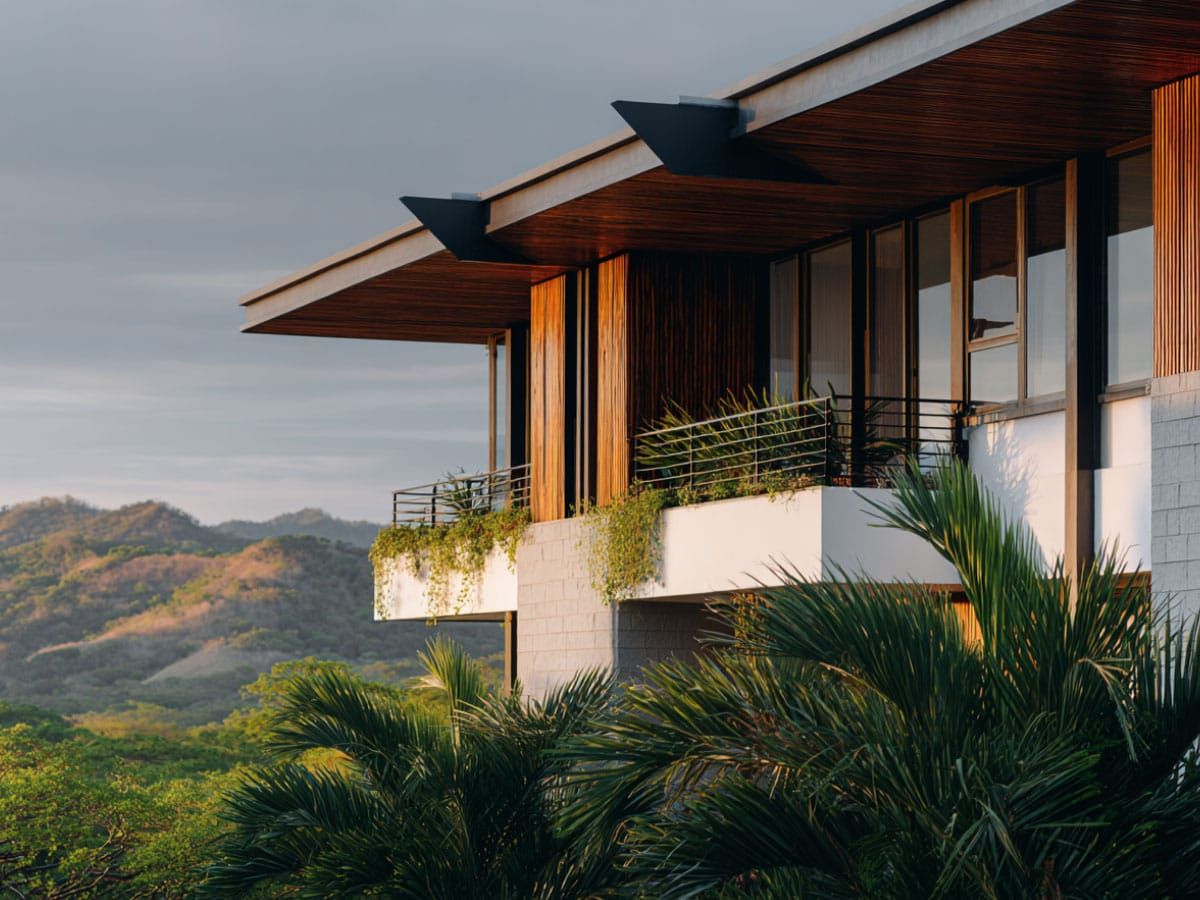
Most foreign investors in Costa Rica buy turnkey. They find a listing, run some numbers against the asking price, and close on a property that someone else designed for someone else's taste. The investors I know who consistently earn the strongest net yields built their properties from scratch — not because building is cheaper, but because they designed for the guest, not for themselves.
The difference between a rental property that grosses $55,000 a year and one that grosses $35,000 is rarely the location. The gap is in the spec. And the spec is locked in before the first block is laid.
In This Guide
- Build vs buy for rental
- Bedroom count math
- Outdoor living ROI
- Pool economics
- Layout decisions
- Finish level and durability
- Full cost stack
- Managing the build from abroad
- FAQ
Why Build a Rental Property Instead of Buying Turnkey in Costa Rica
Building gives you control over the three variables that drive rental income: layout, finish level, and operational design. When you buy turnkey, you inherit someone else's answers to those questions. Some of those answers might be wrong for the market — a formal dining room in a surf town, an interior-only kitchen in a climate where people want to cook outside, three bedrooms when the average guest is a couple.
Building also eliminates the developer's margin. A purpose-built rental on the Pacific coast typically costs 15 to 20 percent less than a comparable turnkey because you are paying construction cost, not construction cost plus developer profit plus real estate commission. On a $500,000 property, that gap is $75,000 to $100,000 — meaningful capital that either stays in your pocket or gets deployed into better finishes and amenities.
The trade-off is time. A build takes 12 to 18 months from breaking ground to first guest. During that period, your capital is deployed and earning nothing. If you need income immediately, buy. If you can wait, building almost always produces a better asset for the money. For the full comparison, see our guide on whether to build or buy in Costa Rica.

Best Bedroom Count for Airbnb Rentals in Costa Rica
This is the single most consequential design decision for rental income, and most investors get it wrong by defaulting to more.
A well-located two-bedroom villa in Nosara books at $350 to $425 per night in high season and $160 to $200 in green season, with a blended annual occupancy of 65 to 75 percent. A three-bedroom in the same area books at $400 to $500 in high season and $180 to $250 in green season, but occupancy typically runs 5 to 10 percentage points lower because the average booking on the Pacific coast is a couple, not a family.
Run the numbers. The three-bedroom costs 30 to 40 percent more to build — an additional 40 to 60 square meters of enclosed space plus another bathroom, another closet, another set of finishes. Call it $70,000 to $100,000 in additional construction cost. But it earns only 15 to 20 percent more per booked night, and it books fewer nights.
On yield percentage — net income divided by total capital deployed — the two-bedroom almost always wins. The three-bedroom wins on absolute dollars if occupancy holds, which in most markets it does not.
There are exceptions. Family-oriented markets like Manuel Antonio and parts of Uvita skew toward larger group bookings where a third bedroom gets used. If the data in your specific market shows three-bedroom occupancy matching or exceeding two-bedroom rates, the larger unit makes sense. But do not assume this. Check the actual occupancy data on comparable listings before committing to the larger build.
Outdoor Living Space ROI in Costa Rica Rentals
In a tropical rental, the outdoor space is not an amenity. It is the product.
Guests book Costa Rica because they want to be outside. A covered terrace with a proper dining table, lounge seating, and a view is what makes someone choose your listing over the ten others in the same price range. The outdoor living photos are usually the second or third image in the listing — right after the hero shot — and they drive more booking decisions than the kitchen or the master bedroom.
The cost math is compelling. A well-finished covered terrace with polished concrete or tile floor, ceiling fan, built-in bench seating, and outdoor kitchen counter adds roughly $800 to $1,200 per square meter to your build cost. Enclosed interior space runs $1,500 to $2,200 per square meter. A 30-square-meter covered terrace — roughly the size of a comfortable outdoor dining and lounge area — costs $24,000 to $36,000. A 30-square-meter enclosed room costs $45,000 to $66,000. The terrace delivers more impact per dollar on nightly rate and booking conversion than almost any interior upgrade.
On every rental project I have evaluated that performs above market average, the outdoor living space is generous, well-furnished, and photographed extensively. On every underperformer, the outdoor space is either missing, undersized, or an afterthought.
Do You Need a Pool for a Costa Rica Vacation Rental?
Pools cost money to build, money to maintain, and money to insure. They are also, in most Costa Rica vacation rental markets, non-negotiable.
The reason is not just the rate premium a pool adds — though it does add $30 to $50 per night in most coastal markets. The reason is visibility. On Airbnb and VRBO, guests filter by pool. If your property does not have a pool, a large segment of your potential guest pool never sees your listing. You are not competing at a lower rate. You are invisible.
Build cost for a standard residential pool in Costa Rica runs $25,000 to $50,000 depending on size, shape, and whether you are building on flat ground or a hillside. Infinity-edge pools on slopes cost more — $45,000 to $70,000 — but photograph exceptionally well and can justify the premium in rate uplift.
Operating costs are real. Pool maintenance runs $200 to $400 per month — chemicals, cleaning, pump maintenance, and the occasional equipment replacement. On the coast, salt air accelerates corrosion on pool equipment, so budget for replacements more frequently than you would in a temperate climate.
The math: a pool adds $30 to $50 per night in rate premium. At 200 booked nights per year, that is $6,000 to $10,000 in incremental revenue against $2,400 to $4,800 in annual maintenance. The pool pays for itself in four to seven years and generates positive return after that.
The only scenario where I would skip the pool is a property with direct beach access — walking distance, not driving distance — where the guest profile is specifically beach-oriented. Even then, a plunge pool or dip pool at $15,000 to $20,000 gives you the filter checkbox without the full maintenance load.
Rental Property Layout and Design Decisions That Affect Occupancy
The floor plan of a rental property should be designed for the guest experience, not for how the owner would live in it. These are different things.
Open-plan living that flows directly to outdoor space is the layout that books. The kitchen, dining, and living area should read as one continuous space with a wide opening — sliding doors, folding doors, or a full open wall — to the covered terrace. This creates the visual and spatial experience that guests associate with tropical living, and it photographs dramatically.
Every bedroom should be en-suite. In a rental, shared bathrooms between bedrooms are a dealbreaker for many guests, particularly couples traveling together. Two en-suite bedrooms that each feel private will outperform three bedrooms sharing two bathrooms.
Include a proper laundry room — not just hookups in a closet. Long-stay guests and families use the washer and dryer. Covered parking or a carport protects rental vehicles from sun damage and afternoon rain. Built-in storage for surf gear, beach equipment, and luggage is a small cost that solves a real friction point for arriving guests.
What not to build: hallways that consume square footage without creating usable space. Formal dining rooms that no vacation guest uses. A fourth bedroom that books fewer than 30 additional nights per year and costs $50,000 to $70,000 to build. Interior-only kitchens that disconnect the cooking space from the social space.
Construction Finish Level: Spend for Durability in Costa Rica
The most expensive mistake in a tropical rental is going cheap on materials. Not because the guest notices the difference between $25 and $55 per square meter tile underfoot — most do not. Because the cheap materials fail faster, and replacements are expensive in every dimension: the cost of the material, the cost of the labor to remove and replace it, the logistics of sourcing a match or acceptable substitute, and the lost bookings while the property is offline for repairs.
Salt air, humidity, and UV radiation destroy cheap materials on the Pacific coast. Exterior paint that lasts five years in Colorado lasts eighteen months in Tamarindo. Galvanized steel corrodes within two to three years near the coast — anodized aluminum or stainless steel lasts decades. Cheap bathroom fixtures pit and discolor within a year. The $200 faucet that lasts ten years is less expensive than the $60 faucet you replace three times.
Spend on the kitchen. Guests photograph it and review it. Solid countertops, decent appliances, functional layout. Spend on bathroom fixtures — guests notice hardware more than tile. Spend on outdoor furniture that withstands salt and UV — cheap wicker sets disintegrate in one rainy season on the coast. Spend on quality ceiling fans — they run sixteen hours a day and cheap motors burn out. Spend on stainless steel hardware for everything exterior.
Save on interior paint — basic white walls photograph clean and are easy to touch up between guests. Save on closet systems — simple open shelving works better than doors that warp in humidity. Save on decorative tile accents — they date faster than neutral finishes and limit your ability to update the property's look over time.
The furnished rental cost stack on a 150-square-meter two-bedroom: furniture at $200 to $300 per square meter runs $30,000 to $45,000. Kitchen equipment — cookware, dishes, glasses, small appliances — adds $3,000 to $5,000. Linens, towels, and operational supplies add $2,000 to $4,000. Total furnishing budget: $40,000 to $60,000. This is not where you cut corners. The furnishing package is what the guest actually lives with, and it is what shows up in reviews.
How Much Does It Cost to Build a Vacation Rental in Costa Rica?
Here is what a representative purpose-built two-bedroom rental looks like at current prices on the Pacific coast — Guanacaste, Nosara corridor, or the Southern Zone.
Land: $80,000 to $120,000 for a buildable lot with road access, water, and electrical connection in a mid-range location. Not beachfront, not mountaintop — the kind of lot that is five to fifteen minutes from the beach with some elevation and a view.
Construction on 150 square meters total — two bedrooms, two bathrooms, open-plan living, kitchen, and covered terrace. At a blended rate of roughly $2,200 per square meter including contractor fees, contingency, and tax: approximately $330,000 total construction cost.
Professional fees — architecture, engineering, construction inspection — at 9 to 12 percent of construction cost: $30,000 to $40,000.
Infrastructure beyond the house itself: pool at $18,000 to $25,000, driveway and parking at $4,000 to $6,000, perimeter fence or wall at $4,000 to $6,000, landscaping at $5,000 to $8,000, site drainage and utility connections at $3,000 to $4,000. Infrastructure subtotal: $34,000 to $49,000.
Furnishing: $30,000 to $45,000.
Permits, legal, surveys, and soft costs: $6,000 to $9,000.
Total all-in: approximately $450,000 to $550,000.
At current vacation rental rates — $55,000 to $65,000 gross annual income on a well-managed two-bedroom in this price range — and a realistic expense ratio of 48 to 55 percent (property management, utilities, insurance, HOA if applicable, maintenance reserve, taxes, and accounting), net yield lands at roughly 5 to 7 percent on all-in capital.
That is comparable to what a well-bought turnkey produces, but with a newer asset, a market-optimized spec, and a longer useful life before major capital expenditure is needed. The trade-off is the 12 to 18 months of build time during which the capital is deployed and not earning. For a detailed breakdown of construction costs, see our cost of building guide. For realistic rental income numbers, see our guide on Airbnb income in Costa Rica.
Managing a Costa Rica Construction Project From Abroad
Most foreign investors building rental properties in Costa Rica are not on-site during construction. The property is being built in Guanacaste while they are living in Toronto or Houston or London. This is normal, and it works — with the right structure.
The most effective remote management setup I have seen is a competent architect handling construction inspection and serving as the owner's on-site representative. The architect understands the design intent. They can make judgment calls about material substitutions, detail execution, and finish quality that protect the owner's interests because they designed the building and know what it is supposed to look like. A weekly photo and video update from the architect, combined with milestone-based payments that only release when the architect signs off, gives you meaningful oversight without requiring you to be on a plane every month.
A dedicated project manager can work for more straightforward, operational tasks — coordinating schedules, taking progress photos, flagging basic delays. But for design quality decisions and construction quality calls, the architect is who you want in that role. They have the training and the design context to catch problems a project manager would not recognize.
The contractor should be on a turnkey contract with payments tied to completed milestones. You should have a formal change-order process — any modification to the scope after construction starts gets documented with a cost and timeline impact before anyone proceeds. And you should have a clear communication cadence agreed in advance — weekly updates at a minimum, with a standing video call if the timezone allows. For more on how to vet and hire a contractor, see our guide on hiring a contractor in Costa Rica.
Frequently Asked Questions About Building Rental Properties in Costa Rica
How much does it cost to build a rental property in Costa Rica?
A purpose-built two-bedroom vacation rental on the Pacific coast — including land, construction, professional fees, pool, infrastructure, and furnishing — runs approximately $450,000 to $550,000 all-in at 2026 prices. The construction cost alone runs roughly $330,000 for 150 square meters at a blended rate of $2,200 per square meter. These numbers assume a mid-range finish level in a mid-range location. Beachfront lots, luxury finishes, or complex hillside sites push the total higher.
Is it better to build or buy a vacation rental in Costa Rica?
Building produces a market-optimized asset at a lower cost basis than turnkey, but requires 12 to 18 months before income starts. Buying gets you income immediately but locks you into someone else's design decisions. For investors with time and capital, building almost always produces a better long-term asset. For investors who need income within 90 days, buying turnkey from a reputable builder with documented construction quality is the practical choice.
What bedroom count is best for Airbnb in Costa Rica?
Two bedrooms in most Pacific coast markets. The average booking is a couple, and two-bedroom properties consistently show higher occupancy rates than three-bedroom properties at comparable locations. Three bedrooms can work in family-oriented markets like Manuel Antonio or Uvita where group bookings are more common, but verify with actual occupancy data on comparable listings before committing to the larger and more expensive build.
Do I need to be in Costa Rica during construction?
No, but you need someone competent on the ground. The best structure is a qualified architect handling construction inspection and acting as your representative, combined with a turnkey contractor on milestone-based payments. Weekly photo and video updates, plus a formal change-order process, give you meaningful control without requiring physical presence. Plan to visit at two or three key milestones — foundation complete, structure closed up, and near-completion walkthrough — if your schedule allows.
How long does it take to build a rental property in Costa Rica?
From permit approval to handover, a well-managed 180 to 220 square meter home on the Pacific coast takes five to eight months. Add two to four months for design and permitting before construction starts. Total timeline from engaging the architect to receiving the keys: roughly ten to fourteen months. Delays happen — weather, material supply, client changes — and building in a realistic buffer of two to three months beyond the contractor's estimate is prudent.
---

James is a real estate investor on the Pacific coast of Costa Rica with a background in commercial real estate in Canada. He writes for Build Tropical about the numbers behind tropical property investment.