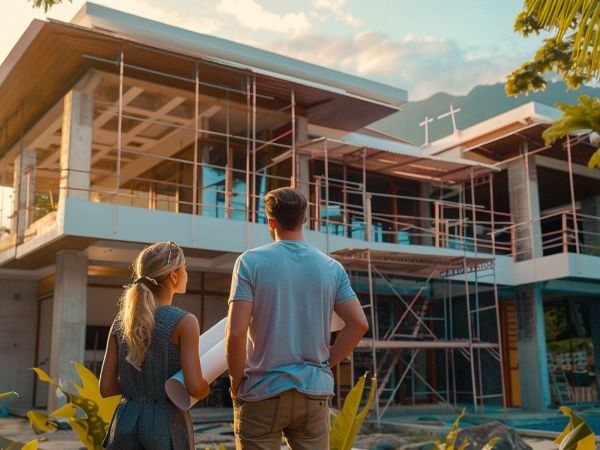
How Much Does It Cost to Build a House in Costa Rica in 2026
The real cost of building a home in Costa Rica in 2026 — from $850 to $5,000 per square meter, with a full breakdown of what the construction quote covers, what it does not, and how costs layer from raw materials to move-in ready.
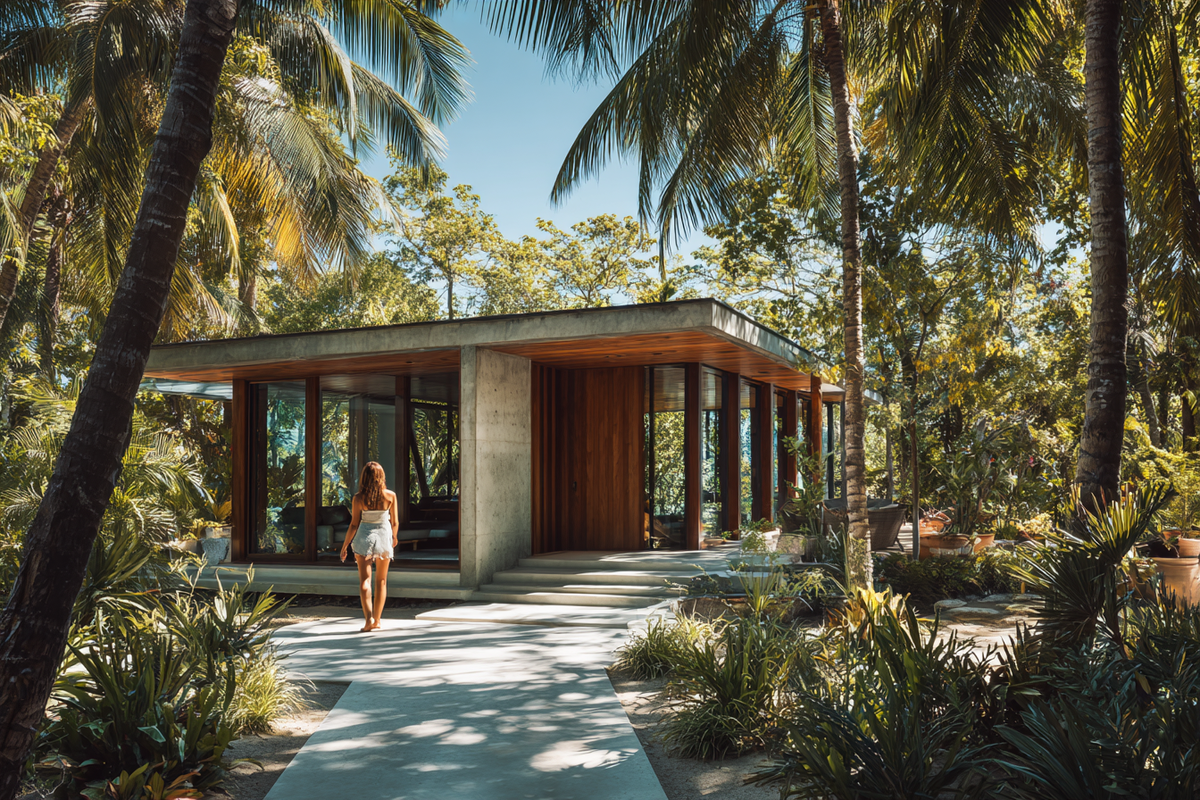
Every architect in Costa Rica has heard the same opening line from a new client: "I read online that you can build for $100 per square foot." That number is from 2018 and it was misleading even then. Here is what building a home in Costa Rica actually costs in 2026, based on projects I have designed and supervised over the past several years.
The short answer: $1,000 to $2,200 per square meter ($93 to $204 per square foot) for a well-built home, depending on location, finish level, construction method, and site conditions. But that range is so wide it is almost useless without context. The real answer requires understanding what drives cost up and down, and what is included — and excluded — from the numbers people throw around.
In This Article
- Construction Cost Per Square Meter: 2026 Prices
- What Is Included in a Construction Quote — and What Is Not
- What Drives Construction Costs Up
- Architect and Engineering Fees
- Turnkey vs Administration Contracts
- How to Create a Realistic Construction Budget
- Frequently Asked Questions
Construction Cost Per Square Meter in Costa Rica: 2026 Prices
Basic Quality: $850 to $1,100 Per Square Meter
This is a simple concrete block home with cement floors or basic ceramic tile, aluminum windows, basic electrical (no smart home, limited outlets), simple plumbing fixtures, and minimal cabinetry. This is the standard for locally built homes in the Central Valley and rural areas. It is livable and structurally sound but spare. Most foreigners building in Costa Rica are not building at this level, but it is the baseline and very rough.
Low-End: $1,100 to $1,500 Per Square Meter
This is where some of the expat-built homes land. Ceramic or porcelain tile floors, painted concrete block or steel frame walls, better quality aluminum or PVC windows, granite or quartz countertops, mid-range bathroom fixtures, reasonable cabinetry, ceiling fans throughout, and a properly designed electrical system. At this level you get a probably still uncomfortable, but ok-ish finished home that holds up to the climate.
Mid-Range: $1,500 to $2,000 Per Square Meter
Wood ceilings and tile floors, large-format windows and sliding doors, imported fixtures, custom cabinetry, proper insulation, architectural lighting design, covered outdoor living areas with finished surfaces, and higher-grade AC systems. This is the level where the home starts to feel designed rather than just built.
High-End: $2,000 to $2,500 Per Square Meter
Custom everything. High-end design features that are cozy, spacious, and well equipped. Imported materials, infinity pools, imported kitchens and quality appliances, specialty woodwork, custom metalwork, excellent insulation, large roof eaves, and high-quality windows, sometimes with solar-control glass. At this level, you are building a home that comes close to being featured in an architecture magazine — if you make good decisions as an owner.
Luxury Construction: $2,500 to $5,000 Per Square Meter
This is for projects where you want a true luxury standard: tall ceilings, imported high-performance windows, a well-designed smart home system, and top-tier detailing throughout. Homes at this level are often elevated off the ground when site conditions require it, and they rely on wood paneling, custom carpentry by the best craftspeople, and contractors who run a clean, low-drama jobsite.
It also applies to very remote builds that still need to feel high-end. Expect premium logistics, robust infrastructure, and redundancy: battery storage, solar, backup power, water storage, and the kind of "everything you can think of" planning that keeps a remote home comfortable and reliable year-round.
Concrete block, cement floors, aluminum windows, basic electrical. Structurally sound but spare.
Porcelain tile, quartz counters, mid-range fixtures, ceiling fans, proper electrical. Livable but basic.
Wood ceilings, large-format windows, custom cabinetry, insulation, architectural lighting, outdoor living areas.
Imported materials, infinity pool, quality appliances, specialty woodwork, solar-control glass. Magazine-worthy.
Tall ceilings, high-performance windows, smart home, top-tier detailing. Battery, solar, full redundancy for remote sites.

What Is Included in a Construction Quote — and What Is Not
This is where people lose money. A construction quote — the per-square-meter number a builder gives you — covers the hard costs of building the habitable structure. Understanding exactly where that number stops is the difference between a project that stays on budget and one that runs 30 to 50 percent over.
What the Construction Quote Covers
The quote typically includes the structure itself (foundation, walls, roof, structural steel or concrete), all MEP systems (mechanical, electrical, plumbing — both rough-in and finish), doors and windows, floor and wall finishes, paint, built-in cabinetry, and basic fixtures. It also includes the builder's indirect costs: contractor administration fees (typically 11 to 17 percent of hard costs), an exchange rate buffer (around 4 percent for dollar-denominated projects), and the cost of site supervision by the architect and engineers during construction.
On a recent 360-square-meter project on the North Pacific coast, the labor and materials came to roughly $722,000. Add indirect costs — contractor administration, exchange rate buffer, and site supervision — at around $122,000, and the construction subtotal before tax was approximately $844,000. With IVA, the total hard cost reached roughly $953,000. That is the construction quote.
What the Construction Quote Does Not Cover
Everything outside the built structure is additional. These are not small numbers, and they are almost never included in the per-square-meter figure a builder quotes.
On that same project, here is what fell outside the construction quote: appliances (fridge, oven, stove) at $18,000, furniture at $89,750, landscaping at $12,000, solar panels at $35,000, entry gate with motor and columns at $15,000, perimeter fencing at $10,000, paved driveway at $8,000, site infrastructure (underground drainage, electrical connections) at $3,500, topographic survey at $900, and soil survey at $900. That infrastructure and extras subtotal came to $218,147 including IVA.
Then there are the soft costs: architectural design, permit drawings, construction drawings, interior design, contractor tendering, landscape concept, site visits, and permits including CFIA registration, municipal permits, and INS construction insurance — totaling almost $100,000 including IVA.
How the Costs Stack Up Per Square Meter
On that 360-square-meter project, the costs layer like this.
The raw construction cost — labor and materials for the house, terraces, pool, and outdoor structures — came to roughly $2,004 per square meter. That is the number before anyone takes a fee or the government takes a cut.
Add contractor administration, exchange rate buffer, and site supervision, and the cost reaches approximately $2,343 per square meter before tax.
With IVA, the hard construction cost hits roughly $2,648 per square meter. That is the construction quote — the number your builder gives you.
Add infrastructure and extras — appliances, furniture, landscaping, solar, gate, fencing, driveway, site work, and surveys — and the cost climbs to approximately $3,254 per square meter.
Add design services, site visits, and permits at almost $100,000, and the all-in project cost lands at roughly $3,532 per square meter. Budget accordingly.
This is obviously a quite luxurious build, but it still shows how quickly prices per square meter can layer.
What Drives Construction Costs Up in Costa Rica
Location and Regional Price Differences
Coastal and remote areas cost 15 to 30 percent more than the Central Valley. Materials cost more to transport. Workers cost more to house and feed if the site is far from population centers. In Nosara and Santa Teresa, you are paying a premium for everything — concrete, steel, labor, even water delivery during dry season.
Terrain, Slope, and Soil Conditions
A flat, accessible lot with good soil is the cheapest to build on. A hillside lot with a 20-degree slope, limited access, and clay soil can add $30,000 to $60,000 in foundation work, retaining walls, and site preparation before a single wall goes up. I worked on a project where the topographic survey revealed that the building pad needed $45,000 in site work. The lot had been marketed as "ready to build" by the owner.
Design Complexity and Floor Plan Shape
Rectangular footprints with standard spans are efficient. L-shapes, multi-level split plans, cantilevered sections, double-height volumes, and curved walls all add cost. Every non-standard angle means custom formwork, additional structural steel, and more labor hours. A 200-square-meter home with a simple rectangular plan can cost 15 to 20 percent less than the same square footage in a complex layout.
Material and Finish Level Choices
The difference between basic aluminum windows and thermally broken imported window systems is $15,000 to $30,000 on a typical home. The difference between local ceramic tile and imported large-format porcelain is $8,000 to $15,000. These choices compound across every surface and system in the house.
Building During Rainy Season
Building through the rainy season (May through November) adds cost through slower concrete curing, weather delays, muddy site conditions, and potential rework. Many builders price in a 5 to 10 percent contingency for rainy season projects. If you can time your build to start in December and get the structure closed up before May, you save money. However don't stress about it too much, I would say it has less real world effect than all other aspects I mentioned before.
Architect and Engineering Fees in Costa Rica
How CFIA Professional Fees Work
Architects and engineers in Costa Rica charge based on CFIA guidelines. The standard breakdown is approximately 4 percent of construction cost for architectural design, 3 percent for structural engineering, and 3 to 5 percent for construction inspection and technical direction. Total professional fees run 10 to 12 percent of the construction cost.
Why Skipping Professional Fees Is a False Economy
On a $200,000 home, that is $20,000 to $24,000 in professional fees. Clients sometimes try to save money here by hiring the cheapest architect available or skipping the inspection phase. This is almost always a false economy. I have been called in to fix problems on projects where the architect signed the plans but never visited the site. The remediation cost more than the professional fees would have.
The CFIA fees are not optional. Every construction project in Costa Rica requires a responsible professional registered with the CFIA. The architect or engineer is legally liable for the structural adequacy and code compliance of the project. This is actually a strong consumer protection mechanism, even if it feels like an added cost.
Turnkey vs Administration Contracts in Costa Rica
There are two main contract structures for building in Costa Rica, and they have very different cost implications.
Turnkey Contracts (Llave en Mano)
The builder quotes a fixed price for the complete project and takes responsibility for delivering it at that price. The builder absorbs cost overruns (in theory). You know your total cost upfront. The trade-off is that builders pad turnkey quotes by 15 to 25 percent to cover their risk. You pay for certainty.
Administration Contracts (Por Administracion)
The builder works on a fee basis — typically 10 to 20 percent of actual construction cost — and you pay for materials and labor at cost. You save money if the project goes well. You carry the risk if it does not. This model requires more involvement from the owner and more trust in the builder.
Which Contract Type Is Better for Foreign Builders?
For most foreign clients building from abroad, I recommend turnkey with a clearly defined scope of work. The higher upfront cost is worth the predictability. For clients who are on-site and comfortable with construction management, administration can save 10 to 15 percent.
How to Create a Realistic Construction Budget for Costa Rica
Take the per-square-meter construction cost your builder quotes. That number covers the house itself — structure, finishes, and MEP. Then add the categories that are always separate.
A Simple Budget Formula
Multiply your construction quote total by 1.25 to 1.40 to account for infrastructure (driveway, fence, gate, site drainage, surveys), design services (architecture, engineering, interior design), and permits. If you are also furnishing and equipping the home, add furniture at roughly $200 to $300 per square meter and appliances at $15,000 to $25,000 depending on kitchen spec.
For a 200-square-meter home at $1,800 per square meter, the construction quote would be $360,000. Add 30 percent for infrastructure, design, and permits: $468,000. Add furniture and appliances: roughly $520,000 to $540,000 all in.
What to Do If the Numbers Do Not Fit Your Budget
If that number does not match your budget, you have three options: build smaller, lower your finish level, or find a more affordable location. What you should not do is assume you will be the exception who builds a high-quality home for the low-end price. In twelve years of practice, I have not seen it happen once.
Frequently Asked Questions
How much does it cost to build a house in Costa Rica in 2026?
A well-built home in Costa Rica costs $1,000 to $2,200 per square meter for the construction quote, depending on finish level and location. But the construction quote is not your total budget. Add 25 to 40 percent for infrastructure, design services, permits, and furnishing to get your real all-in number.
What is the cheapest way to build in Costa Rica?
The cheapest structurally sound construction is concrete block at $850 to $1,100 per square meter. But at this level the finishes are minimal — cement floors, basic aluminum windows, no insulation, no cabinetry worth mentioning. Most foreign buyers building in Costa Rica target the $1,500 to $2,000 per square meter range, which delivers a home that actually feels finished.
Are construction costs in Costa Rica going up?
Yes. Construction costs have increased roughly 15 to 25 percent since 2020, driven by global material price increases, local labor shortages in skilled trades, and increased demand from foreign buyers in coastal areas. The rate of increase has slowed since the 2021-2022 spike, but costs are not coming back down.
Is it cheaper to build or buy in Costa Rica?
It depends on what you are comparing. A well-documented turnkey home from a reputable builder can be a better deal than building from scratch when you factor in the 12 to 18 months of construction time, holding costs, and project management effort. Building makes sense when the existing inventory does not match what you need, or when you want full control over climate-specific construction decisions.
Do I need an architect to build in Costa Rica?
Yes. Every construction project in Costa Rica requires a CFIA-registered architect or engineer as the responsible professional. This is a legal requirement, not a suggestion. Professional fees run 10 to 12 percent of construction cost. Skipping this or hiring the cheapest option available is a false economy that consistently leads to problems.
How long does it take to build a house in Costa Rica?
Traditional concrete block and rebar construction takes 10 to 14 months for a typical single-family home. Steel frame prefab can cut that to 3 to 5 months. Add 2 to 4 months for permits before construction begins. The total timeline from first architect meeting to move-in is typically 14 to 20 months for a traditional build.

Matt is an architect based in Costa Rica specializing in residential and hospitality projects. He writes for Build Tropical about the realities of designing and building in the tropics.