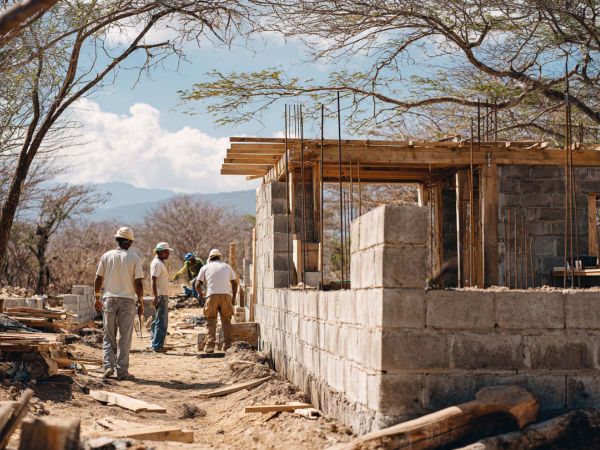
Container Homes in Costa Rica: Cost, Reality, and Why Most Don't Work
I am not anti-container. I am anti-container when the motivation is saving money, because the savings are smaller than expected and the compromises are significant.
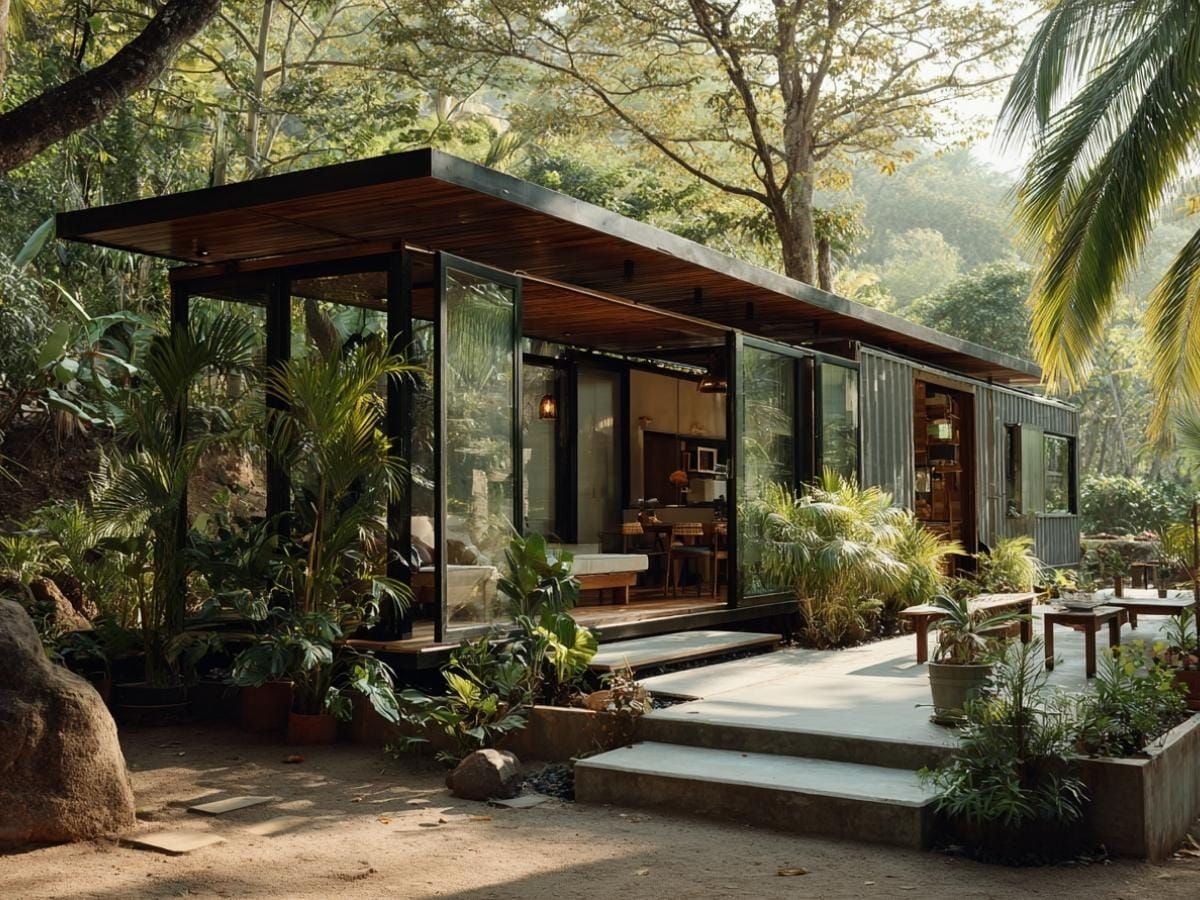
Container homes are the most asked-about construction concept in Costa Rica that almost nobody actually builds. The idea is seductive: a sturdy steel box, manufactured to survive ocean crossings, repurposed as an affordable, quick-to-deploy building. The internet is full of beautiful container home renderings, clean lines, industrial aesthetic, the promise of a house for $50,000.
The reality is different. I have been asked to design container homes roughly two dozen times in my career. I have recommended against it in most of those conversations. Not because containers cannot be used as buildings (they can) but because the cost savings that motivate most clients do not survive contact with the actual engineering, modification, and climate adaptation required in Costa Rica.
For a full comparison of all construction methods available in Costa Rica, see our best construction method guide.
This is the honest assessment. Where containers work, where they do not, and why the math almost never delivers what the client expects.
In This Guide
- The cost myth
- The heat problem
- Corrosion
- Modifications that add up
- Permitting
- When containers actually work
- When they don't
- Container vs conventional comparison
- FAQ
The Cost Myth: Why Container Homes Are Not Cheap
A used 40-foot shipping container (high cube) costs $2,500 to $4,500 delivered to a site in Costa Rica. That is 30 square meters of enclosed space for under $5,000. The math looks incredible.
Then the modifications start.
The container needs windows and doors cut into the steel walls. Each opening requires structural reinforcement. you are cutting through a load-bearing shell, and every opening weakens the structure. A structural engineer must calculate and specify the reinforcement. Cutting and welding runs $3,000 to $8,000 per container depending on the number of openings.
The container needs insulation. Without it, the interior is an oven. Spray foam insulation at 75 to 100 millimeters thickness runs $2,000 to $4,000 per container. Add interior wall finishing (drywall or panels) at $1,500 to $3,000.
The container needs a roof extension or shade structure. The flat container roof in direct tropical sun is an enormous heat load even with insulation. A secondary shade roof over the container (typically a metal roof on a steel frame) adds $3,000 to $6,000. Without it, the insulation is fighting a losing battle.
The container needs plumbing, electrical, and mechanical systems. These are comparable in cost to conventional construction, roughly $5,000 to $10,000 per container for a habitable unit with a bathroom and kitchen.
The container needs a foundation. Despite what YouTube suggests, you cannot just set a container on the ground. It needs a level, engineered foundation (either concrete piers or a slab) to distribute the load and prevent settling. Foundation cost: $2,000 to $5,000 depending on site conditions.
The container needs exterior treatment against corrosion, especially on the coast. Marine-grade paint or coating systems run $1,500 to $3,000 per container and need reapplication every three to five years.
Add it up. A single 40-foot container, modified into a habitable studio or one-bedroom unit: $20,000 to $40,000. That is $670 to $1,330 per square meter. Conventional construction in Costa Rica runs $1,500 to $2,200 per square meter for a mid-range home. The container is cheaper. but not by the margin most people imagine. And the conventional home has full-height ceilings, no width restriction, no structural limitations on window placement, and a proven 50-year track record in the climate.
For a full breakdown of conventional construction costs, see our cost of building guide.

The Heat Problem: Steel Boxes in Tropical Sun
This is the issue that kills most container home projects in Costa Rica, and it is the one that the Instagram renderings never show.
A shipping container is a steel box. Steel conducts heat efficiently. In direct equatorial sun, the steel skin of an uninsulated container reaches surface temperatures of 60 to 70 degrees Celsius. The interior air temperature in an uninsulated container on a sunny afternoon in Guanacaste can exceed 50 degrees Celsius. This is not an exaggeration. I have measured it.
Insulation helps. Spray foam at 75 to 100 millimeters reduces interior temperatures significantly. But insulation alone does not solve the problem because the container has minimal thermal mass. it heats up fast and cools down fast, which means the insulation is fighting new heat load constantly throughout the day. A concrete block wall stores heat slowly and releases it slowly, providing a natural temperature buffer. A steel wall with foam insulation behind it transfers heat rapidly whenever the foam's resistance is overcome.
The solution that works is a combination: insulation inside the container, plus a shade roof over the container with a ventilated air gap between the secondary roof and the container roof. The shade roof blocks direct solar radiation. The air gap allows hot air to escape. The insulation handles the residual heat. This assembly works. but it adds the cost of the secondary roof structure and effectively means you are building two roofs.
For a deeper dive on how heat management works in tropical design, see our guide on tropical house design in Costa Rica.
Corrosion: Containers on the Coast
Shipping containers are built with corten steel. a weathering steel that forms a protective rust layer when exposed to the elements. This works well in temperate climates. In a tropical coastal environment with salt air, high humidity, and daily temperature cycles that create condensation, corten steel corrodes aggressively.
The floor framing is particularly vulnerable. the cross members beneath the container are exposed to ground moisture and salt air from below. I have seen container floors with structural corrosion within five to seven years on coastal sites that were not properly treated and elevated.
Corrosion protection for a coastal container home requires sandblasting the container to bare metal, applying a marine-grade primer and topcoat system (not hardware store paint), elevating the container on piers to allow air circulation beneath the floor frame, and maintaining the coating system every three to five years.
This is manageable but it is not free, and it is not optional. A container that is not properly treated on the coast will develop structural corrosion that compromises the building. For more on how corrosion affects steel construction broadly, see our guide on steel frame construction in Costa Rica.
Permitting a Container Home in Costa Rica
Container homes can be permitted in Costa Rica, but the process is not straightforward.
The CFIA requires structural engineering drawings for any building. A modified shipping container (with openings cut, reinforcement added, and loads redistributed) must be engineered and certified by a CFIA-registered structural engineer. Not every engineer is willing to do this because the standards for container modification are not codified in Costa Rica's building code the way conventional construction methods are. You need an engineer who has experience with container structures and is comfortable certifying the modified design.
The municipalidad reviews container home permits the same as any other construction permit. There is no prohibition on containers as buildings. but the plans must meet all standard requirements for structural adequacy, setbacks, height limits, and zoning compliance.
In practice, the permitting process for a container home takes longer than for conventional construction because the structural review is less routine. Budget extra time and expect questions from the municipal review office.
When Container Homes Actually Make Sense in Costa Rica
I am not anti-container. I am anti-container when the motivation is saving money, because the savings are smaller than expected and the compromises are significant. There are scenarios where containers genuinely make sense.
Temporary or Semi-Permanent Structures
Construction site offices, temporary worker housing during a larger build, pop-up retail or food service. Containers excel at this, fast to deploy, relocatable, and the thermal and aesthetic compromises matter less for temporary use.
Remote Sites With No Road Access
If your lot cannot be reached by a concrete mixer truck, conventional construction becomes extremely expensive because materials must be carried in by hand or small vehicle. A container can be delivered by crane (or in extreme cases, by helicopter) to sites where conventional material delivery is impractical. The container arrives as a pre-fabricated shell, and the interior work requires only hand-portable materials and tools.
Design Concept Where the Container Is the Point
Some architects (myself included) have designed projects where the container aesthetic is integral to the design concept. The industrial look, the modularity, the visible origin of the material. In these cases, the container is not a budget strategy. it is a design choice with a specific visual and conceptual intent. The budget is comparable to conventional construction, and the client understands that.
Accessory Structures
A container as a detached home office, an art studio, a workshop, or a pool house. a secondary structure where the thermal compromises are more acceptable because you are not sleeping there, and the compact format fits the function. These are often the most successful container applications I have seen.
When Container Homes Do Not Make Sense
Primary Residences for Budget-Motivated Clients
If you are building a container home because you want to save money, you will be disappointed. By the time you insulate, add a shade roof, install systems, treat for corrosion, and finish the interior, the cost per square meter is 60 to 80 percent of conventional construction, with a narrower space (2.35 meters interior width), lower ceilings (2.59 meters in a high cube), restricted window placement, and a building that requires more maintenance than a concrete block house.
Coastal Homes Without a Serious Corrosion Strategy
A container home on the Pacific coast without proper sandblasting, marine-grade coating, and elevation on piers will develop structural corrosion. This is not a theoretical risk. it is a measured outcome. If you are not willing to budget for the corrosion protection upfront and the maintenance every three to five years, do not build with containers near the ocean.
Multi-Bedroom Family Homes
The interior width of a standard shipping container is 2.35 meters. That is narrow. A bedroom with a queen bed, nightstands, and a closet does not fit comfortably in 2.35 meters of width. Multi-container configurations (stacking or joining containers) solve the width problem but add significant structural engineering, connection detailing, and cost. At that point, you are spending more than conventional construction for a more complex building with more maintenance requirements.
Container vs Conventional Construction: The Honest Comparison
For a 60-square-meter habitable unit (two 40-foot containers modified and joined):
Container route: two containers at $3,500 each, modifications at $25,000 to $35,000 per container, shade roof at $8,000 to $12,000, foundation at $5,000 to $8,000, corrosion treatment at $4,000 to $6,000. Total: roughly $75,000 to $100,000, or $1,250 to $1,670 per square meter.
Conventional construction: 60 square meters of concrete block or steel frame at $1,600 to $2,200 per square meter. Total: $96,000 to $132,000.
The container is cheaper, by roughly 20 to 30 percent in this comparison. But the conventional home has 2.7 to 3-meter ceiling heights instead of 2.59. It has no width restriction. It has flexible window placement. It has thermal mass for passive temperature regulation. It has a 50-year structural track record in the climate. And it requires less specialized maintenance.
The savings are real but they come with real trade-offs. Whether those trade-offs are acceptable depends on the specific project, not on a general principle.
Frequently Asked Questions About Container Homes in Costa Rica
How much does a container home cost in Costa Rica?
A modified, insulated, finished shipping container costs roughly $20,000 to $40,000 for a single 30-square-meter unit, or $670 to $1,330 per square meter. A multi-container home runs $1,250 to $1,670 per square meter when fully finished. This is 60 to 80 percent of conventional construction costs, not the 30 to 50 percent savings most people expect.
Can you get a building permit for a container home in Costa Rica?
Yes, but the process requires a CFIA-registered structural engineer willing to certify the modified container design. Not all engineers do this work. The permit process takes longer than conventional construction due to the non-standard structural review. There is no prohibition on containers as buildings.
Do container homes get hot in Costa Rica?
Extremely. An uninsulated container in direct sun can reach interior temperatures of 50 to 60 degrees Celsius. Insulation plus a shade roof with a ventilated air gap is mandatory for any habitable container in the tropics. Even with proper treatment, the thermal performance is inferior to concrete block construction, which provides passive temperature regulation through thermal mass.
How long does a container home last in Costa Rica?
With proper corrosion treatment and maintenance, 20 to 30 years. Without treatment (particularly on the coast) structural corrosion can develop within five to seven years. The floor framing is the most vulnerable element. Regular inspection and coating maintenance every three to five years is essential.
Is a container home or conventional home better in Costa Rica?
For most residential projects, conventional construction (concrete block or steel frame) is the better choice. it costs a similar amount when you factor in all container modifications, performs better thermally, requires less maintenance, and has a longer track record. Containers make sense for temporary structures, remote sites with no road access, design-concept projects, and accessory structures like home offices or pool houses.
---

Matt is an architect based in Costa Rica who designs and builds residential and hospitality projects. He writes about construction, design, and the realities of building in the tropics at Build Tropical.