Steel Frame Construction in Costa Rica: Cost, Benefits, and What You Need to Know
Steel frame and concrete block are not better or worse than each other. They are different tools for different situations.
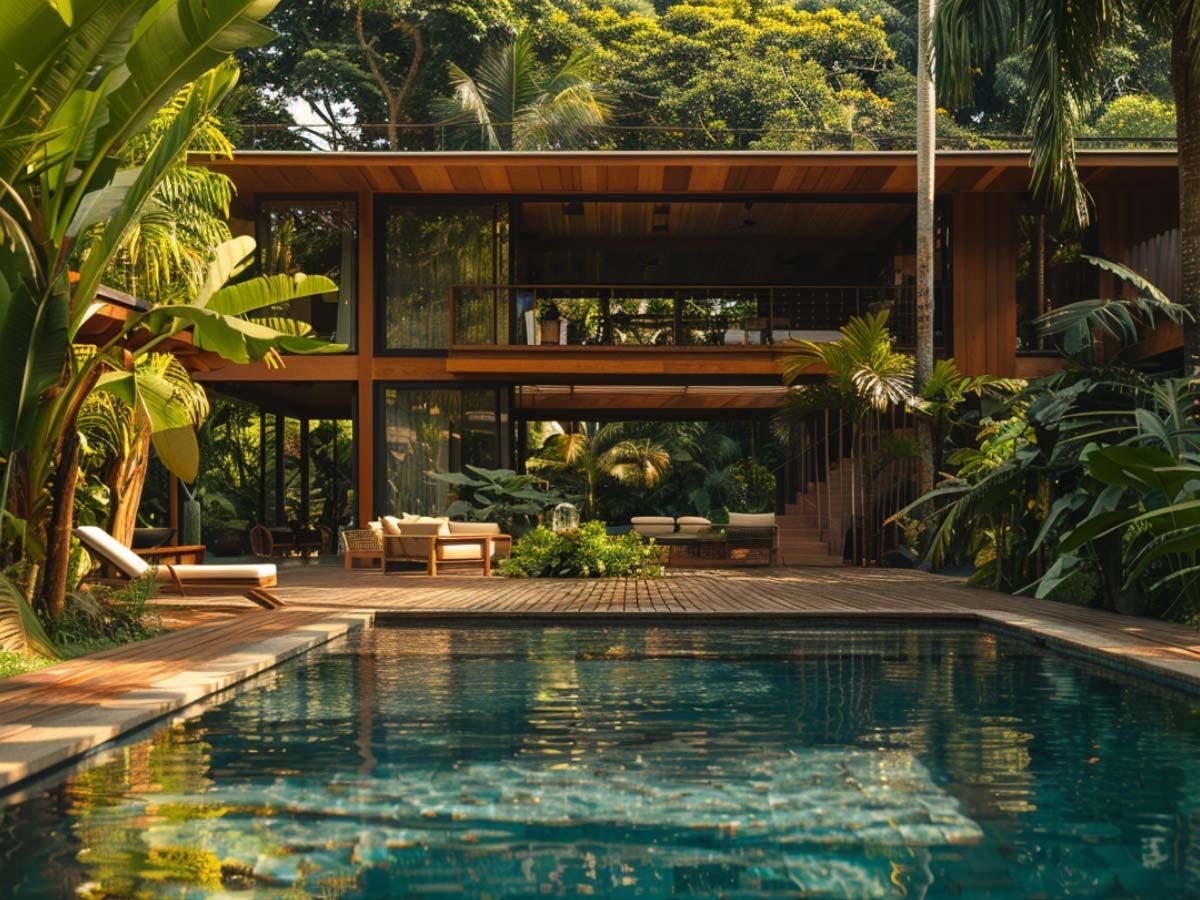
Steel frame construction in Costa Rica has gone from niche to mainstream in about five years. The marketing has been aggressive — faster builds, lighter foundations, earthquake resistance, lower costs. Some of that is true. Some of it is oversimplified. And some of it is a sales pitch from manufacturers who have a financial interest in making steel sound like it has no drawbacks.
I design with both steel and concrete. I do not have a material loyalty. What I have is experience watching both systems perform in the Costa Rican climate over time, and a clear view of where each one works and where it does not. This article is an architect's assessment, not a manufacturer's brochure.
In This Guide
- What steel frame construction is
- Cost comparison
- Speed advantage
- Seismic performance
- Corrosion risk
- Where steel works and where it doesn't
- Concrete vs steel
- Choosing a contractor
- FAQ
What Steel Frame Construction Actually Is
Steel frame construction uses cold-formed galvanized steel studs and tracks as the structural skeleton of the house, replacing the concrete block walls and reinforced concrete columns of traditional Costa Rican construction. The steel frame carries the structural loads — roof, floors, walls — while the wall surfaces are finished with fiber cement board, drywall, or a combination of both on the interior and exterior.
The system is not new globally. It has been the standard method for light commercial construction and multi-story residential in the US, Australia, and parts of Europe for decades. In Costa Rica, it arrived more recently and has gained traction primarily through manufacturers and builders who imported the technology and the framing materials.
The key difference from traditional construction: steel frame walls are hollow. The space between the studs can be filled with insulation, run with electrical conduit and plumbing, and finished on both sides — similar to wood-frame construction in North America but with steel studs instead of timber. This is fundamentally different from a concrete block wall, which is solid, heavy, and requires chasing (cutting channels) to run any services through it.
Steel Frame vs Concrete Block Construction Cost in Costa Rica
The cost comparison is less dramatic than the marketing suggests.
Construction Cost Per Square Meter
The honest answer on cost is that steel frame and concrete block often land at roughly the same total price for a comparable finish level. The material cost breakdown is different — steel framing costs more per unit than block and rebar, but the labor is faster, the foundations can be lighter, and the mechanical trades (electrical, plumbing) are cheaper to install in hollow walls. When you balance material and labor across the whole project, the totals tend to converge.
Some builders will quote steel frame lower because they are promoting the system. Some will quote it higher because they are less experienced with it and pricing in their learning curve. The construction method matters less to the bottom line than the builder's familiarity with it and the specifics of your site.
Where Steel Actually Saves Money
The real savings from steel frame construction show up in three specific situations, and they are not about the framing cost itself.
Difficult sites — hillsides, poor soil, remote lots with limited access. Steel framing is significantly lighter than concrete block, which means the foundation can be smaller and less expensive. On a hillside where a concrete block house requires deep pilings and massive retaining walls, a steel frame house might reduce the foundation cost by 20 to 30 percent.
Speed-sensitive projects — when faster occupancy or rental income matters. A steel frame structure goes up in 3 to 4 months compared to 6 to 8 months for concrete block. If you are building a rental property and every month of delay is a month of lost income, the time savings has real dollar value.
Service integration — electrical, plumbing, and HVAC installation is faster and cheaper in hollow steel walls than in solid block. No chasing. No patching. Clean runs through the stud cavities. This can save 10 to 15 percent on the MEP (mechanical, electrical, plumbing) trade costs.

Construction Speed: Steel Frame's Clearest Advantage
Speed is where steel frame construction genuinely outperforms concrete block, and it is not close.
A steel frame structure — walls, roof structure, and floor system — can be erected in 3 to 4 weeks on a prepared foundation. The complete house, from foundation to handover, takes 4 to 6 months for a well-managed project. A comparable concrete block house takes 6 to 10 months.
The speed comes from the manufacturing process. Steel frames are fabricated off-site — cut, punched, and labeled in a factory — and delivered to the site as a kit. Assembly is a mechanical process: bolt the tracks to the foundation, stand the wall panels, fasten the connections. It does not require the wet trades (masonry, plastering) that slow concrete block construction, and it is not affected by rain in the same way — you can work in conditions that would shut down a block crew.
For investors building rental properties, this speed advantage translates directly to earlier income. A property that opens three months sooner generates three additional months of rental revenue in its first year. On a property grossing $55,000 annually, that is roughly $14,000 in additional first-year income — money that is real, not theoretical. For the full rental property investment analysis, see our guide on building a rental property in Costa Rica.
Seismic Performance: Why Steel Frame Works in Costa Rica
Costa Rica sits on the Pacific Ring of Fire. Earthquakes are a fact of life, and building codes reflect this. Every structure must be engineered for seismic loads — this is non-negotiable regardless of construction method.
Steel frame performs well in earthquakes for a fundamental reason: it is flexible. When seismic forces move through a building, a steel frame flexes and absorbs the energy. A concrete block structure, by contrast, is rigid — it resists movement until it cracks. Well-reinforced concrete block performs adequately in most seismic events, but steel's inherent flexibility gives it a structural advantage under high seismic loads.
This does not mean steel is "earthquake proof" — no building is. It means that a properly engineered steel frame house, designed to current Costa Rican seismic code, performs very well under the seismic conditions this country experiences. The structural engineering must be done correctly. The connections must be specified and installed properly. This is not a DIY system — it requires an engineer who understands steel behavior under dynamic loads.
The Corrosion Question: Steel Frame on the Coast
This is the section the manufacturers spend the least time on, and it is the most important consideration for anyone building with steel near the ocean.
Salt Air and Steel
Standard galvanized steel corrodes in salt air. Within 5 kilometers of the Pacific coast — and even further in areas with strong onshore winds — untreated or single-galvanized steel framing is exposed to a corrosive environment that will degrade the structural members over time. This is not theoretical. I have seen steel frame houses less than ten years old on the Guanacaste coast with visible corrosion at connections and fastener points.
What Protects Against Corrosion
Double-galvanized or aluminum-zinc (AZ) coated steel framing is essential for any coastal application. The AZ coating provides significantly better corrosion resistance than standard hot-dip galvanizing. Some manufacturers in Costa Rica now offer framing with AZ150 or AZ185 coatings specifically for coastal construction.
Beyond the framing itself, the fasteners matter. Every screw, bolt, and connector in the system must be rated for the same corrosive environment. A single carbon steel screw in an otherwise well-protected frame creates a corrosion point that can compromise the connection over time. Specify stainless steel fasteners throughout.
The wall cavity must be properly sealed to prevent moisture-laden salt air from reaching the steel. This means appropriate vapor barriers, sealed penetrations, and a ventilation strategy that manages humidity without exposing the frame to salt-laden air.
Thermal Performance and Condensation
Steel is a thermal conductor — it transfers heat efficiently. In a tropical climate, this means steel studs can create thermal bridges that transfer heat from the exterior wall surface to the interior, potentially causing condensation inside the wall cavity. Condensation on steel framing in a humid climate is a corrosion accelerator.
The solution is thermal break detailing — insulation positioned to interrupt the thermal path through the stud, preventing the interior surface of the steel from reaching dew point. This is standard practice in cold-climate steel construction but is sometimes overlooked in tropical applications because designers assume condensation is only a cold-weather problem. It is not. Any time hot humid air meets a cooled surface, condensation occurs. In an air-conditioned room with uninsulated steel studs in the exterior wall, that surface is the back of the steel stud.
That said, Costa Rica is not building with North American or European budgets, and the full thermal break assembly that would be specified in a US project is often not realistic here. The practical reality is that if the walls are well plastered and the steel structure is properly encased — sealed from moisture exposure on both sides — the protection is often sufficient. I recently opened up the walls of a five-year-old steel frame house on the coast to inspect the framing. Not a hint of corrosion. The structure was well plastered, the wall cavity was dry, and the steel looked like it was installed last month. Good detailing and quality plaster work can compensate for the absence of a formal thermal break system, particularly in naturally ventilated homes where the AC is not running constantly and the condensation risk is lower.
Where Steel Frame Makes Sense in Costa Rica
Steel frame construction is a strong choice in several specific scenarios.
Hillside and difficult-access sites where the lighter weight reduces foundation costs and the prefabricated components are easier to transport and assemble than heavy block and rebar.
Speed-sensitive projects like rental properties or homes where the owner needs to move in by a specific date. The 3 to 4 month construction timeline is a genuine advantage.
Multi-story construction where the lighter frame reduces the structural demands on the lower floors and the foundation.
Projects with complex mechanical systems where the hollow walls simplify service routing and future maintenance access.
Interior Central Valley locations where corrosion risk is minimal due to distance from the coast and lower humidity.
Where Concrete Block Still Wins
Concrete block is not obsolete and it is not inferior. It remains the best choice in several situations.
Thermal mass — concrete block stores and releases heat slowly, which helps regulate interior temperatures in a climate with large daily temperature swings. In the Central Valley, where nights are cool and days are warm, a concrete block house stays comfortable with no mechanical cooling because the thermal mass buffers the temperature. A steel frame house with lightweight walls does not have this property — it heats up and cools down quickly, which can increase the need for air conditioning.
Coastal applications where corrosion risk is highest. A well-built concrete block house near the ocean has no corrosion concerns with the primary structure. The rebar inside the block is encased in concrete. The block itself is inert. There is nothing in the structural system that salt air can attack.
Sound isolation — concrete block provides superior sound attenuation compared to lightweight steel walls. For properties near roads, in dense developments, or where privacy between bedrooms matters, block walls are significantly quieter.
Long-term proven track record — concrete block construction has a 50+ year performance history in Costa Rica. We know how it ages, how it behaves in earthquakes, how it performs in the climate. Steel frame in Costa Rica has a much shorter track record. The oldest steel frame houses in the country are roughly 15 years old. We are still learning how the system ages in this specific climate. For a full comparison of construction methods, see our guide on the best construction method for Costa Rica (coming soon).
For a full breakdown of construction costs across methods, see our cost of building guide.
How to Choose a Steel Frame Contractor in Costa Rica
Not every contractor in Costa Rica has experience with steel frame construction. Many builders have spent their careers working with concrete block and do not understand the specific requirements of steel — the connection details, the fastener specifications, the vapor barrier requirements, the thermal break detailing.
Hiring a concrete block contractor to build a steel frame house is one of the most expensive mistakes I have seen in this market. The system looks simple — stand the panels, screw them together — but the engineering details that make it perform correctly are different from block construction in ways that an inexperienced builder will not recognize.
Ask for steel-frame-specific references. Visit completed steel frame projects by the contractor, ideally ones that are at least three to five years old so you can see how they are aging. Ask about their corrosion protection strategy — if they cannot explain their approach to coastal corrosion, fastener specification, and thermal bridging, they are not qualified to build in steel near the coast.
Your architect should have experience designing steel frame houses and should be involved in specifying the framing system, the connection details, and the corrosion protection strategy. This is not a system where you hand generic plans to a builder and expect good results. The details matter, and they need to be on the drawings. For more on choosing the right architect and what the fees cover, see our guide on architect fees in Costa Rica.
Frequently Asked Questions About Steel Frame Construction in Costa Rica
How much does a steel frame house cost in Costa Rica?
Steel frame and concrete block construction often land at roughly the same total cost for a comparable finish level. The material and labor breakdown is different — steel framing costs more in materials but saves on labor time and foundation weight — but when balanced across the whole project, the totals tend to converge. The real savings from steel show up on difficult sites (lighter foundations), speed-sensitive projects (faster timelines), and in mechanical trade costs (easier service integration in hollow walls).
Is steel frame better than concrete block in Costa Rica?
Neither is universally better. Steel frame offers speed, lighter weight, easier service integration, and good seismic performance. Concrete block offers thermal mass, superior corrosion resistance on the coast, better sound isolation, and a proven 50-year track record in Costa Rica. The right choice depends on your site, your location relative to the coast, and your project priorities.
How long does it take to build a steel frame house in Costa Rica?
A well-managed steel frame house takes 4 to 6 months from foundation to handover. The steel structure itself goes up in 3 to 4 weeks. A comparable concrete block house takes 6 to 10 months. The speed advantage is one of steel's clearest benefits.
Does steel frame rust in Costa Rica?
Standard galvanized steel can corrode in coastal environments within 5 to 10 years. Double-galvanized or aluminum-zinc (AZ) coated framing with stainless steel fasteners is essential for any project within 5 kilometers of the coast. In the Central Valley and inland areas, corrosion risk is minimal with standard galvanized framing.
Can I build a steel frame house near the beach?
Yes, with proper corrosion protection. Use AZ150 or AZ185 coated framing, stainless steel fasteners throughout, properly sealed wall cavities, and thermal break detailing to prevent condensation. The specification must be explicit in the construction drawings, and the contractor must have documented experience with coastal steel frame construction.
---

Matt is an architect based in Costa Rica who designs and builds residential and hospitality projects. He writes about construction, design, and the realities of building in the tropics at Build Tropical.