Protecting Your Construction Project in Costa Rica: Theft, Security, and What Your Contractor Should Be Doing
The difference between a project that loses $500 in materials and one that loses $15,000 is not luck. It is systems.

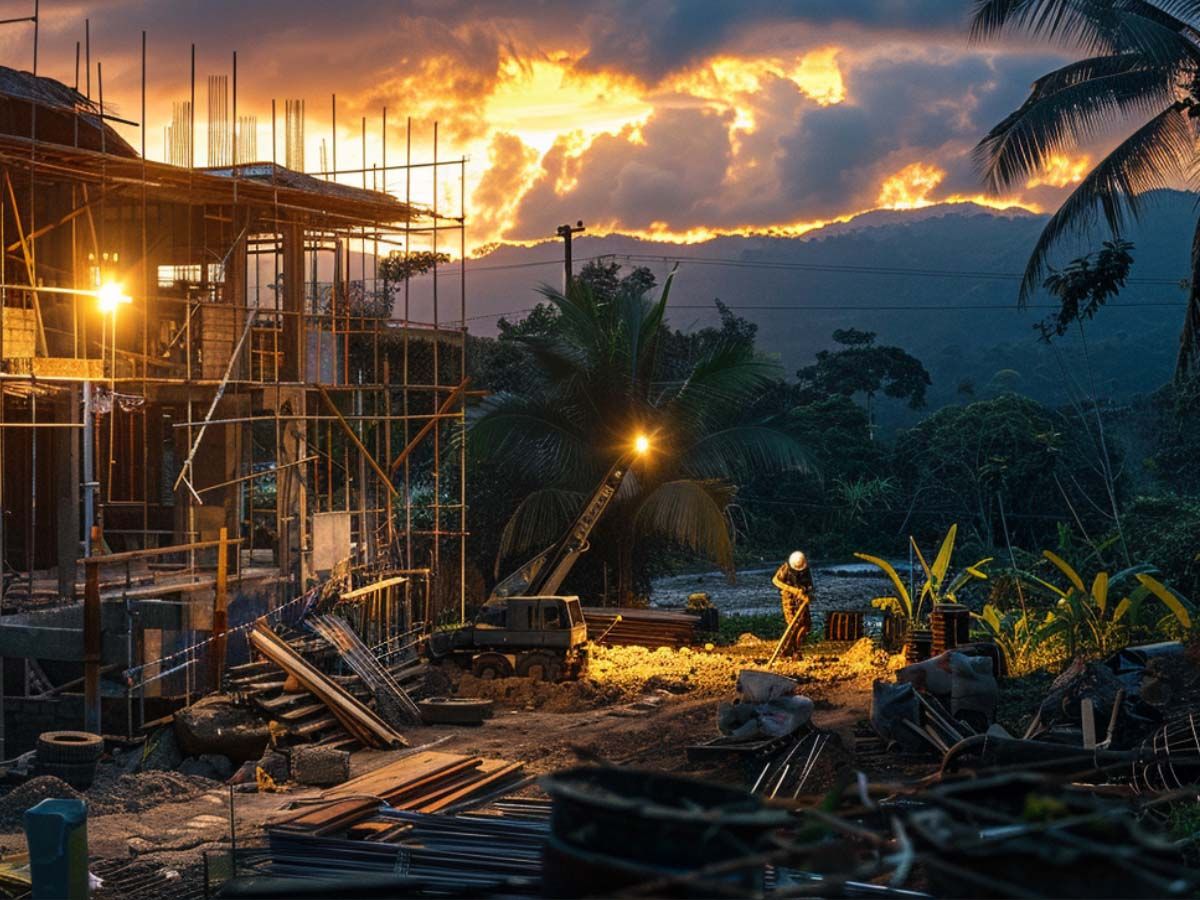
Materials disappear from construction sites. This is not unique to Costa Rica — it happens everywhere in the world where valuable materials sit on an open lot with limited supervision. What is specific to Costa Rica is how it happens, who is responsible for preventing it, and what you as the owner should expect your contractor to be doing about it.
I have been running construction projects in Guanacaste for twelve years. I have dealt with theft. I have dealt with the aftermath of projects where nobody was dealing with it. The difference between a project that loses $500 in materials and one that loses $15,000 is not luck. It is systems.
In This Guide
- How material theft happens
- What your contractor should be doing
- The bodega and inventory system
- Night security
- Remote vs urban sites
- The architect's role
- What INS insurance does and does not cover
- FAQ
How Material Theft Happens on Costa Rica Construction Sites
The most common pattern is not dramatic. It is not someone driving up with a truck and loading rebar at midnight, though that has happened. The typical pattern is smaller, slower, and harder to detect.
The Slow Leak
Materials walk off the site in small quantities over time. A few lengths of rebar. A spool of electrical wire. Copper pipe fittings. Hand tools. These items are small, valuable, and easy to carry. They disappear during the day, often taken by workers or by people who pass through the site when the crew is at lunch or has left for the day. No single incident is large enough to trigger alarm. But over a six-month project, the cumulative loss can reach $5,000 to $10,000 on a mid-size residential build if nobody is tracking inventory.
The Delivery Discrepancy
Materials are ordered, delivered, and signed for — but the quantity that arrives is less than the quantity on the invoice. The driver delivers 80 bags of cement and the receipt says 100. If nobody is counting at delivery, the shortage goes unnoticed until the materials run out early and a reorder is needed. This is not always theft — it can be a supplier error. But it costs the project money regardless, and the only defense is someone counting every delivery against the purchase order.
The Weekend and Holiday Hit
Construction sites in Costa Rica shut down on weekends and holidays. On urban or suburban sites, this is usually fine — there are neighbors, foot traffic, and natural surveillance. On remote coastal lots — a hillside in Nosara, a plot outside Uvita, an undeveloped area in Santa Teresa — the site is completely unattended for two to three days. This is when larger thefts occur: tools, power equipment, stacked lumber, bags of cement, and sometimes even fixtures that have been installed but not yet secured.

What Your Contractor Should Be Doing to Secure the Site
Site security is the contractor's responsibility. It is part of what you pay for when you hire a professional builder. If your contractor does not have a security plan, they are not managing your project properly.
The Bodega
Every professional job site has a bodega — a locked storage structure on the lot where tools, power equipment, fixtures, and high-value materials are stored when not in active use. On my projects, the bodega is one of the first things we build. It is not expensive — a basic structure with a padlocked door costs $1,000 to $2,000 and protects tens of thousands of dollars in tools and materials over the life of the project.
The bodega is the maestro de obras' responsibility. He locks it at the end of every day. He controls who has access. Tools go in when the crew leaves and come out when the crew arrives.
Material Inventory Tracking
On my projects, we maintain a running inventory of materials received versus materials used. Every delivery is counted against the purchase order at the moment it arrives. The numbers go into the project tracking system. If we ordered 100 bags of cement and 95 arrived, I know about it on delivery day — not three weeks later when we run short.
This is part of the backoffice function I described in our guide on hiring a contractor in Costa Rica. A contractor with a functioning administrative system catches discrepancies in real time. A contractor without one discovers them when the budget is already blown.
Night Security on Remote Sites
On remote coastal projects — the ones most vulnerable to weekend theft — I bring in a night watchman (guarda) for the duration of construction. The cost is roughly $400 to $600 per month for a part-time watchman who covers evenings and weekends. On a $350,000 project, that is less than 1 percent of the total cost and it protects against losses that can easily exceed $10,000.
Some clients prefer cameras — a solar-powered camera system with cellular connectivity runs $500 to $1,500 to install and provides remote monitoring. This works as a deterrent and gives the owner visibility from abroad. But a camera records theft. A person on site prevents it. For high-risk sites, I recommend both.
Crew Accountability
This is the part nobody likes to talk about. Most material theft on a construction site is internal — workers or subcontractors taking small quantities. The defense is not suspicion. It is systems. When materials are counted in and counted out, when tools are tracked, when the bodega is locked, when the maestro de obras runs a tight site — the opportunity for theft drops dramatically. A well-managed crew does not steal because the systems make it visible and the culture makes it unacceptable.
I have had to let workers go for theft over the years. It is never pleasant. But maintaining accountability on the site protects the project, the client, and every honest worker on the crew.
The Architect's Role in Construction Site Security
Your architect is not responsible for site security — that is the contractor's job. But the architect provides an important secondary check.
During construction inspections, a competent architect verifies that the materials specified in the construction drawings are actually in the building. If the plans call for No. 4 rebar at 15-centimeter spacing in the foundation and the architect sees No. 3 rebar at 20-centimeter spacing, that is a problem — whether it is due to theft, substitution, or error.
The architect also verifies quantities. If the structural engineering calls for a certain volume of concrete in a foundation pour, the architect can cross-check the delivery receipts against the volume actually placed. Significant discrepancies — more concrete paid for than appears to be in the structure — indicate either a problem with the pour or a problem with the procurement.
This is another reason why independent architecture and construction matter. An architect who works for the contractor has less incentive to flag irregularities. An independent architect working for you has every incentive. For more on why this separation matters, see our guide on architect fees in Costa Rica.
What INS Construction Insurance Does and Does Not Cover
Clients sometimes assume that their INS poliza de riesgo del trabajo covers material theft from the job site. In most cases, it does not.
The standard INS construction policy covers worker accidents and injuries. It is mandatory and it is essential — but it is an occupational safety policy, not a property protection policy. Material theft, vandalism, and damage to stored materials are typically not covered unless the contractor has purchased an additional property coverage rider, which is available but not standard.
If theft protection is important to you — and on a remote coastal project it should be — ask your contractor whether their INS policy includes a coverage extension for materials and equipment on site. If it does not, the security measures I described above become your primary protection.
The cost of additional property coverage varies by project size and location but typically runs $500 to $1,500 for the duration of a standard residential build. On a $350,000 project, that is a modest cost for meaningful protection. For more on how construction insurance works, see our guide on building permits in Costa Rica.
Beyond Theft: Other Security Concerns During Construction
Unauthorized Access and Liability
Construction sites are dangerous places. Open foundations, exposed rebar, stacked materials, power tools — any of these can injure an unauthorized person who wanders onto the site. In Costa Rica, the property owner can be held liable for injuries to trespassers on an active construction site if the site is not properly secured.
Basic perimeter fencing, clear signage (prohibido el paso), and a locked gate after hours are minimum requirements. The INS worker insurance covers your employees but does not cover random people who walk onto the site. Proper perimeter control protects against liability as much as theft.
Weather and Material Protection
This is Guanacaste. It rains heavily from May through November. Unprotected materials — bags of cement, stacked lumber, drywall, electrical components — deteriorate rapidly in the rain. Cement hardens. Wood warps. Electrical components corrode. None of this is theft, but it costs the project money in the same way.
A professional contractor protects materials from weather as seriously as from theft. Covered storage. Elevated pallets so materials are not sitting in puddles. Tarps over anything that cannot go in the bodega. Scheduling deliveries so materials arrive close to when they will be used, not weeks in advance.
Frequently Asked Questions About Construction Site Security in Costa Rica
How common is theft from construction sites in Costa Rica?
It is common enough that every professional contractor plans for it. Small-scale material theft — rebar, wire, tools, fittings — occurs on a significant percentage of projects where site security is not actively managed. Large-scale theft is less common and almost always occurs on remote, unattended sites during weekends or holidays.
Who is responsible for site security during construction?
The contractor. Site security — including the bodega, material tracking, crew accountability, and night security on remote sites — is part of the contractor's scope. If your contractor does not have a clear security plan, ask for one before signing the contract.
Does construction insurance cover theft in Costa Rica?
The standard INS construction policy (poliza de riesgo del trabajo) covers worker injuries, not material theft. An additional property coverage rider is available from INS and covers materials and equipment on site. Ask your contractor whether their policy includes this coverage, especially on remote coastal projects.
How much does a night watchman cost for a construction site?
A part-time night watchman covering evenings and weekends runs $400 to $600 per month. A full-time watchman runs $800 to $1,200. On a project lasting six months, the total cost of part-time security is $2,400 to $3,600 — a fraction of the potential theft losses on an unsecured remote site.
Should I install cameras on my construction site?
Cameras are a useful supplement to on-site security, especially for remote monitoring if you are building from abroad. A solar-powered system with cellular connectivity costs $500 to $1,500 to install. Cameras deter casual theft and give you visibility. But they record problems — they do not prevent them. On high-risk sites, combine cameras with a physical watchman.
---

Carolina is a general contractor based in Guanacaste, Costa Rica. She has built residential and hospitality projects on the Pacific coast for over twelve years. She writes for Build Tropical about the realities of construction from the contractor's side of the table.