Building Permits in Costa Rica: The Complete Process Explained
The permit process in Costa Rica is not difficult. It is slow. Understanding the sequence saves you months.
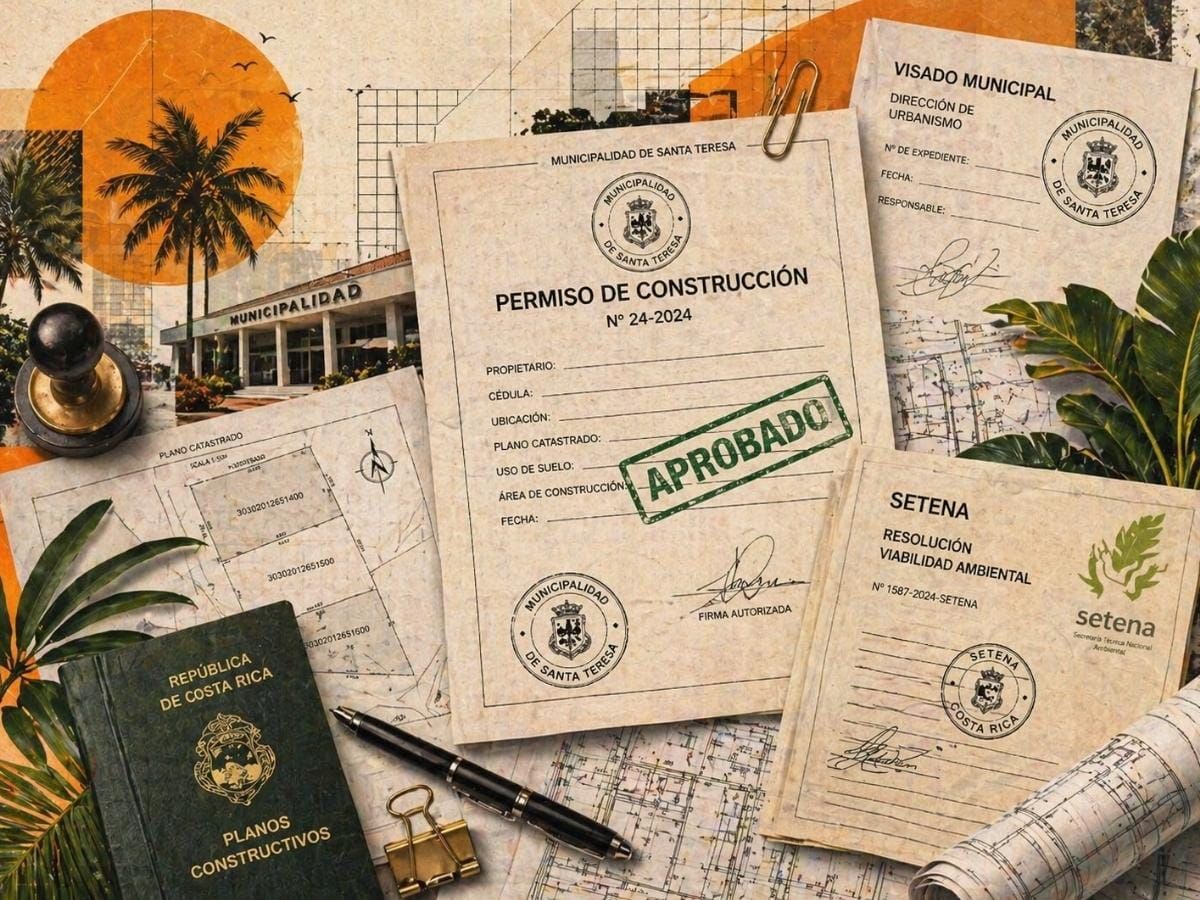
The permit process in Costa Rica is not complicated. It is slow. And the difference between a project that gets permitted in three months and one that takes eight is almost never the bureaucracy — it is whether the client and their team had the right documents ready before they started. I have watched projects stall for months because of a missing water availability letter or an expired soil infiltration study, while the client paid rent and the architect waited with finished plans sitting on a hard drive.
I have filed hundreds of building permits across Guanacaste and the Pacific coast. The process has a logic to it. Understanding that logic — what happens in what order, what takes time, and where the real bottlenecks are in 2026 — saves you months and thousands of dollars.
In This Guide
- The permit process step by step
- Water availability bottleneck
- Permit costs
- Realistic timelines
- SETENA environmental permits
- Building on agricultural land
- Why there are no inspectors
- Permits and enforcement in 2026
- The completion letter
- FAQ
How Building Permits Work in Costa Rica — Step by Step
The sequence is the same on every project. What changes is how long each step takes, which depends on the lot, the location, and how prepared the team is before they start filing.
Step 1 — Land Use Certification (Uso de Suelo)
Before your architect draws a single line, you need a land use certification from the municipalidad confirming that your lot is zoned for the type of construction you want to build. This document verifies that a residential home, a commercial building, or whatever you are planning is allowed on that specific property under the municipality's regulatory plan.
This takes one to two weeks in most municipalities. My advice: get the uso de suelo before you buy the land, or at least before you commission your architect. I have seen clients pay for a full set of construction drawings only to discover that the lot they bought is zoned agricultural with restrictions they did not expect. That is an expensive way to learn what a $30 document would have told you upfront.
Step 2 — Construction Plans and CFIA-Registered Architect
Your architect prepares the full set of construction plans — architectural, structural, electrical, and mechanical. Every plan must be designed and signed by a professional registered with the CFIA. This is not optional. Without a registered architect or engineer, the plans cannot be submitted and the project cannot be permitted.
This is usually the longest pre-permit step: two to four months for a complete set of construction drawings, depending on the complexity of the project and how quickly design decisions get made. For more on what the architect does and what the fees cover, see our guide on architect fees in Costa Rica.
Step 3 — CFIA Registration (APC Platform)
Once the plans are complete, the architect submits them digitally through the CFIA's APC platform — the Administrador de Proyectos de Construcción. The CFIA reviews the submission, measures the total construction area, and assigns an official construction value that becomes the basis for all permit fees.
If the documents are complete and correct, CFIA approval typically takes two business days. The cost is 0.256 to 1 percent of the declared project value. On a $350,000 project, that is roughly $900 to $3,500.
The key word is "complete." If the architect submits an incomplete package — missing the electrical plans, an unsigned structural sheet, an outdated cadastral survey — the review stops and the clock resets. I have seen CFIA approvals that should have taken two days stretch to three weeks because of missing documents. This is not the CFIA being slow. It is the team being unprepared.

Step 4 — Institutional Approvals
Before the municipalidad will issue the building permit, several institutional approvals must be in place. These run in parallel with or after the CFIA registration, depending on the municipality.
Water availability letter from AyA (the national water utility) or your local ASADA (community water association). This confirms that the water system has capacity to serve your property. Electricity availability from ICE, CNFL, or the local cooperative — confirming the grid can connect your project. A soil infiltration study for septic system design, required on any lot without municipal sewer connection. If the project is near a river, a fluvial alignment from INVU. And depending on the location and project size, environmental viability from SETENA.
Most of these take one to four weeks. One of them can take six months. That one deserves its own section.
Step 5 — The Water Availability Bottleneck in 2026
This is the issue that is stalling projects across the Pacific coast right now. AyA is taking three to six months to deliver water availability letters in many areas. In some zones — particularly parts of Guanacaste where development has outpaced water infrastructure — the answer is a flat no. Capacity is maxed out. No new connections.
I have seen clients buy beautiful lots at good prices and then discover that AyA has frozen water availability in that area. The lot is buildable in every other sense — titled, zoned residential, good access, flat terrain — but without a water letter, it cannot be permitted. It becomes an expensive garden.
My strongest advice in this article: verify water availability before you buy the land. Not after. Not during due diligence on the design. Before. Have your architect or lawyer request the water availability letter as part of the land purchase due diligence. If AyA says no, you have saved yourself from buying a lot you cannot build on. If AyA says yes but the letter takes four months, at least you have started the clock before the architect even finishes the plans.
Step 6 — Municipal Building Permit (Permiso de Construcción)
With CFIA-approved plans and institutional clearances in hand, you file for the building permit at the municipalidad. The municipality reviews the submission, verifies that the lot's property taxes are current, checks zoning compliance, and issues the permit.
The municipal construction tax is 1 percent of the CFIA-assessed construction value. On a $350,000 project, that is $3,500. Review timelines vary significantly by canton — some municipalities process permits in two to three weeks, others take six to eight weeks. Smaller municipalities with less volume tend to move faster. Larger ones with heavy development pressure — Santa Cruz, Nicoya, Carrillo in Guanacaste — can take longer.
Step 7 — INS Worker Insurance
Before construction starts, you must secure the poliza de riesgo del trabajo from the Instituto Nacional de Seguros. This is mandatory worker accident insurance. The cost is approximately 1.5 percent of the declared labor value. The municipality requires proof of the active INS policy before the permit is fully activated.
This is not a formality. If a worker is injured on an uninsured project, the property owner is directly liable. I cover this in detail in our guide on hiring a contractor in Costa Rica.
Step 8 — Pool Permit (If Applicable)
If your project includes a swimming pool, expect an additional two to four weeks for certification from the Ministerio de Salud — the health institution. The pool plans need separate approval for water treatment, drainage, and safety compliance. This runs in parallel with the main permit process but adds time. Plan for it from the start if a pool is in the scope.
How Much Do Building Permits Cost in Costa Rica?
The total cost of the permit process — before professional fees — runs roughly 2.5 to 3.5 percent of the project's declared construction value. Here is the breakdown on a representative $350,000 project.
CFIA registration: 0.256 to 1 percent of project value, roughly $900 to $3,500. Municipal construction tax: 1 percent, roughly $3,500. INS worker insurance: approximately 1.5 percent of declared labor value, roughly $2,500 to $4,500. Miscellaneous institutional fees, stamps, and filings: $500 to $1,000. Total permit costs: approximately $7,400 to $12,500.
Professional fees — architecture, structural engineering, and construction inspection — add another 9 to 12 percent of construction cost on top of this. On a $350,000 project, that is $32,000 to $42,000. For the full cost picture, see our cost of building guide.
Realistic Building Permit Timelines in Costa Rica
From my experience filing permits across Guanacaste and the Pacific coast, here are the timelines clients should actually plan around.
A straightforward single-family home on a flat, titled lot in a standard residential zone with water availability already confirmed: three to four months from the start of plan preparation to permit in hand.
A home in an environmentally sensitive area, near the coast, or on a lot that requires SETENA review: five to eight months.
A project where the water availability letter is delayed: add three to six months on top of whatever else the timeline looks like.
The biggest variable is not the bureaucracy. It is preparation. Projects where the architect gathers all documents — uso de suelo, water letter, soil study, cadastral survey — before submitting to the CFIA move through the system twice as fast as projects that file first and scramble to assemble missing paperwork afterward. Every missing document resets a clock somewhere.
When You Need SETENA Environmental Approval in Costa Rica
Not every project needs SETENA. The most common trigger is project size — SETENA environmental viability is generally required for projects over 500 square meters of construction. Projects in environmentally sensitive areas, near protected zones, or within the maritime coastal zone may also trigger SETENA regardless of size.
For a typical single-family home under 500 square meters on a standard residential lot, SETENA is usually not required. But check with your architect before assuming. The rules depend on location, lot size, proximity to rivers or protected areas, and the municipality's regulatory plan.
When SETENA is required, it adds two to four months to the permit timeline. The environmental impact assessment involves documentation of the site's ecological conditions, proposed mitigation measures, and a review process that moves at its own pace. It is not as intimidating as clients fear, but it must be planned for — you cannot rush it once you are in the queue.
Building on Agricultural Land in Costa Rica
This comes up regularly with foreign clients buying larger lots outside of designated residential developments. If your lot is classified as agricultural land, you can still build — but the structures need to be framed correctly in the plans.
The standard approach is to structure the project as a main house and a casa de peones — a workers' home. Both structures can be up to 300 square meters. The main house is your primary residence. The workers' home is technically for farm employees, though in practice many owners use it as a guest house, a rental unit, or even their main living space while the larger house is under construction.
A pool is typically associated with the main house in the plans. You can also build additional structures that serve agricultural purposes — a barn for animals, a utility building, a storage structure — which in practice might function as a garage, a workshop, or a covered parking area. The specifics depend on the comfort level of the owner and architect regarding how the plans are structured and presented to the municipality.
This is one area where having an experienced architect matters enormously. The regulatory framework for agricultural land has real rules, but it also has established practices for how residential projects are structured within those rules. An architect who has done this before knows how to present the project correctly. One who has not may either overcomplicate it or miss something that causes problems at the municipal review.
Why Costa Rica Has No Construction Inspectors (And What That Means for You)
This is the section most permit guides skip entirely, and it might be the most important thing a foreign client needs to understand.
Costa Rica does not have the trade inspection system that exists in the United States or Canada. In the US, a plumbing inspector comes to verify the plumbing. A roofing inspector checks the roof. An electrical inspector signs off on the wiring. Each trade gets independently verified by a municipal or county inspector before the project can move to the next phase.
In Costa Rica, none of that exists. There is no municipal plumbing inspector. No roofing inspector. No electrical inspector who visits the site to verify the work. The municipality issues the permit and may do a general site visit, but they are not checking whether your rebar spacing is correct or your plumbing connections are properly sealed.
Your only line of defense is a good architect.
The architect serving as technical director — the profesional responsable registered with the CFIA — is the person responsible for inspecting the work during construction. They visit the site at critical milestones, verify that the construction matches the approved plans, and sign off on each phase in the digital bitácora — the CFIA construction log. If they do their job well, the building gets built correctly. If they do not — if they signed the plans and never visit, which happens more often than it should — nobody else is checking.
This is why I keep saying in every article: hire a good architect. Not just for the design. For the inspection. It is the only quality control mechanism that exists in Costa Rica, and it is entirely your responsibility to make sure it is in place. The government is not going to catch a bad plumbing connection or an under-reinforced column. Your architect is, or nobody is.
The flexibility of the Costa Rican system cuts both ways. On the positive side, permits here are not as rigid as in the US. A house can change slightly during construction — a wall moves half a meter, a window gets resized, a room layout adjusts — and it will not be a problem. The location on the lot can shift slightly without triggering a major permit revision. This gives architects and builders real flexibility to solve problems and improve the design as the build progresses, which is genuinely useful on complex sites.
But that same flexibility means there is no external check on quality. The system trusts the professionals to do their jobs. When they do, it works well. When they do not, the owner bears the consequences.
Building Without Permits in Costa Rica: Why Enforcement Is Getting Serious
For years, unpermitted construction in Costa Rica was treated as a minor offense — something municipalities technically prohibited but rarely enforced. That era is ending.
Building volume across the Pacific coast and parts of the Central Valley has increased significantly. Municipalities are under pressure to manage growth, and enforcement has tightened. Some municipalities now use drones to identify unpermitted construction. Fines can exceed 50 percent of the permit value. Stop-work orders are issued and enforced. In serious cases, demolition orders are on the table.
I have seen neighbors report unpermitted work on adjacent lots — not out of spite, but because unpermitted construction creates real problems: drainage issues, setback violations, unlicensed electrical connections that affect the shared grid. The reporting mechanisms exist and people use them.
Building without a permit is no longer a calculated risk with a small downside. It is a risk with a serious financial and legal downside, and enforcement is only going in one direction.
The Completion Letter — What Most Guides Skip
When construction finishes, the process is not over. The responsible professional — the architect or engineer registered with the CFIA — must submit a completion letter to both the CFIA and the municipality. This document formally closes the project in the CFIA's digital system and notifies the municipality that construction is complete.
This step is required for the occupancy permit, for permanent water and electricity connections (as opposed to the temporary construction connections), and for registering the completed structure with the municipality for property tax purposes.
Clients skip this step more often than they should, usually because construction ends gradually — the last finishes drag out, the family moves in before the punch list is complete, and the formal closing never happens. This creates problems later when you try to sell the property. A buyer's lawyer will check whether the construction was properly closed with the CFIA, and a missing completion letter raises questions about the legality and quality of the work. Close the project properly. It takes your architect a few hours of paperwork and saves you complications down the road.
Frequently Asked Questions About Building Permits in Costa Rica
How long does it take to get a building permit in Costa Rica?
Three to four months for a straightforward single-family home on a standard residential lot with water availability confirmed. Five to eight months if SETENA environmental review is required. Add three to six months if the water availability letter from AyA is delayed, which is common in 2026 across much of Guanacaste.
How much does a building permit cost in Costa Rica?
Permit-related costs total roughly 2.5 to 3.5 percent of the declared construction value. On a $350,000 project, that is approximately $9,000 to $12,000 for CFIA registration, municipal tax, and INS insurance combined. Professional fees for the architect and engineer add another 9 to 12 percent on top.
Can foreigners get building permits in Costa Rica?
Yes. Foreigners have the same property and construction rights as Costa Rican citizens on titled land. The permit application is handled by the CFIA-registered architect, not by the owner directly. You do not need residency to build.
Do I need an environmental permit to build in Costa Rica?
Not always. SETENA environmental viability is generally required for projects over 500 square meters or in environmentally sensitive areas. A typical single-family home under 500 square meters on a standard lot usually does not need SETENA. Check with your architect — the requirement depends on project size, location, and the municipality's regulatory plan.
What documents do I need for a building permit in Costa Rica?
The core documents are: land use certification (uso de suelo) from the municipality, CFIA-registered construction plans signed by a licensed architect or engineer, water availability letter from AyA or your local ASADA, electricity availability confirmation, soil infiltration study, cadastral survey, and proof of current property tax payments. Your architect should manage the assembly and filing of all of these.
---
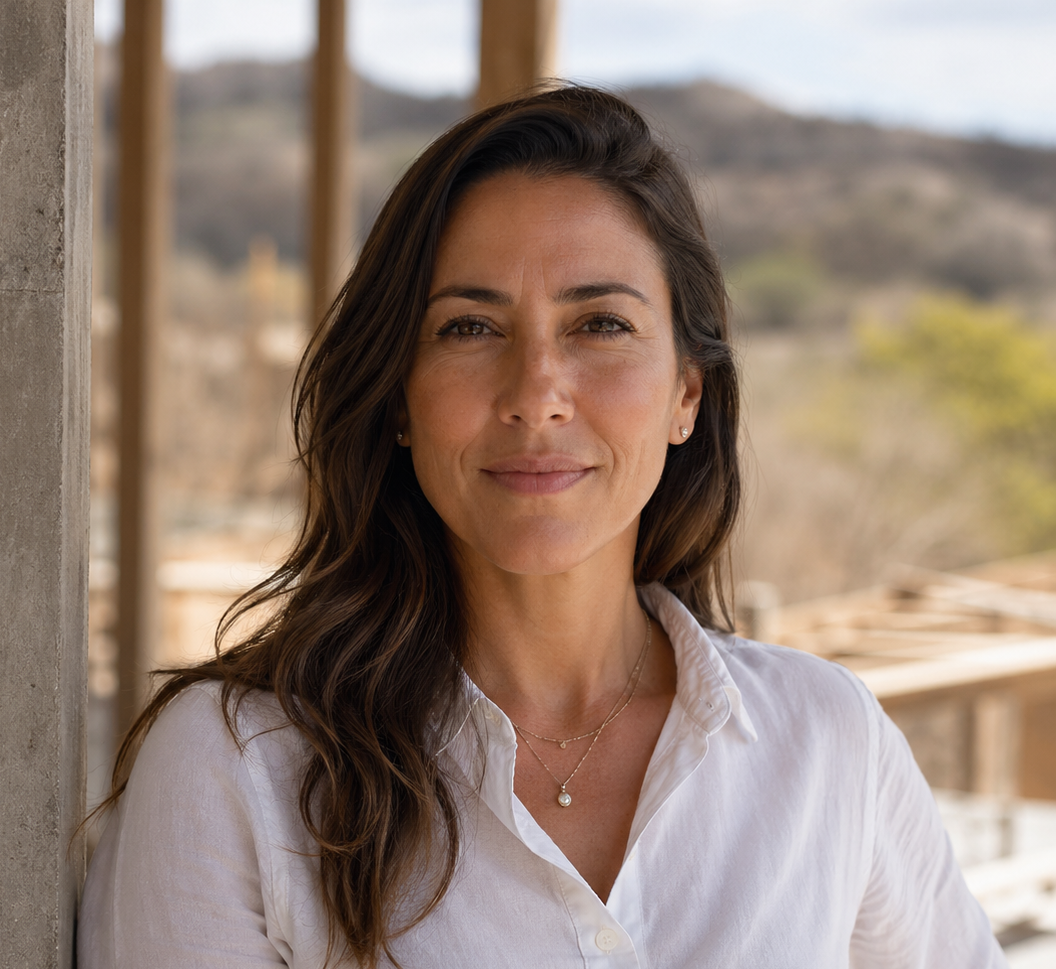
Carolina is a general contractor based in Guanacaste, Costa Rica. She has built residential and hospitality projects on the Pacific coast for over twelve years. She writes for Build Tropical about the realities of construction from the contractor's side of the table.