Is Costa Rica Safe? What Six Years as an Expat Family Has Taught Me
The version of Costa Rica crime that American media presents is dramatically different from the version we actually live.


Before we moved, every relative and half my friends sent me articles about crime in Costa Rica. Drug trafficking. Burglaries. A tourist robbed at a national park. My mother-in-law printed one out and mailed it to us. The message was clear: you are taking your children to a dangerous country.
We have been here six years. My kids walk to the neighbors' houses. We leave the car in shopping mall parking lots. I go running in the mornings. We have never been the victim of a violent crime. We have had one car break-in — someone smashed a window and took a backpack with nothing valuable in it. That is our entire criminal history in Costa Rica.
That does not mean crime does not exist. It does. But the version of Costa Rica crime that American media and worried relatives present is dramatically different from the version we actually live. This is what safety in Costa Rica looks like from the inside — not from a State Department travel advisory, but from someone who has raised two kids here for six years.
In This Guide
- The reality vs the headlines
- What crime actually looks like
- Petty theft
- Home security
- Driving safety
- Safest areas
- Areas to be careful
- Kids and safety
- What I actually worry about
- FAQ
The Reality of Crime in Costa Rica vs the Headlines
Costa Rica has a crime problem. It also has a media problem. The two are not the same.
For a realistic picture of daily life and safety in specific towns, see our guide to living in Nosara.
The country has seen an increase in drug-related violence over the past decade, particularly in port cities like Limón and in some border areas. This is real and it is serious for the communities affected. But it is almost entirely between criminal organizations. Expats and tourists are not the targets of cartel activity. The drug trafficking routes pass through Costa Rica, but the violence associated with them is concentrated in areas that most foreigners never visit and have no reason to visit.
What American media reports — and what worried relatives forward — are the worst incidents pulled from a country of five million people. A tourist robbed at a trailhead. A break-in at a vacation rental. A carjacking in San José. These things happen. They also happen in Miami, Phoenix, and Austin. The difference is that when they happen in Costa Rica, they become evidence that the whole country is dangerous. When they happen in the US, they are Tuesday.
Costa Rica's overall homicide rate is higher than the US average, but the vast majority of those incidents are concentrated in specific neighborhoods in San José, Limón, and Puntarenas that expats do not live in. The areas where Americans actually settle — Escazú, Santa Ana, Atenas, Tamarindo, Nosara — have crime rates comparable to or lower than average US suburbs.
What Crime Actually Looks Like for Expats in Costa Rica
Petty Theft: The Real Concern
The crime that affects expats is almost always property crime. Car break-ins are the most common — someone smashes a window and grabs whatever is visible. This happens in parking lots at beaches, trailheads, and shopping centers. The defense is simple: leave nothing visible in the car. No bags, no electronics, no sunglasses. An empty car does not get broken into.
House burglaries happen, particularly at vacation homes that sit empty for weeks or months. This is the primary security concern for people who own coastal property and are not there year-round. The solutions are practical: a caretaker, an alarm system, security cameras, and a relationship with your neighbors. In my experience, the homes that get burglarized are the ones that are obviously empty and obviously unsecured.
Petty scams exist — overcharging tourists, counterfeit bills, taxi drivers taking the long way. These are annoyances, not dangers. They happen less frequently the longer you live here and the more Spanish you speak.
Violent Crime Against Expats
Violent crime targeting expats — robbery at gunpoint, assault, kidnapping — is rare. It is not zero, and I do not want to minimize the experiences of people who have been through it. But in six years of living here and knowing hundreds of expat families, I can count the violent crime incidents I have personally heard about on one hand. Each one was traumatic for the person involved. None of them represent the typical experience of living in Costa Rica.
The areas where violent crime is most likely to affect a foreigner: walking alone at night in downtown San José, certain beaches after dark (particularly on the Caribbean coast), and driving through known high-risk neighborhoods. All of these are avoidable with basic awareness.

Home Security in Costa Rica: What We Actually Do
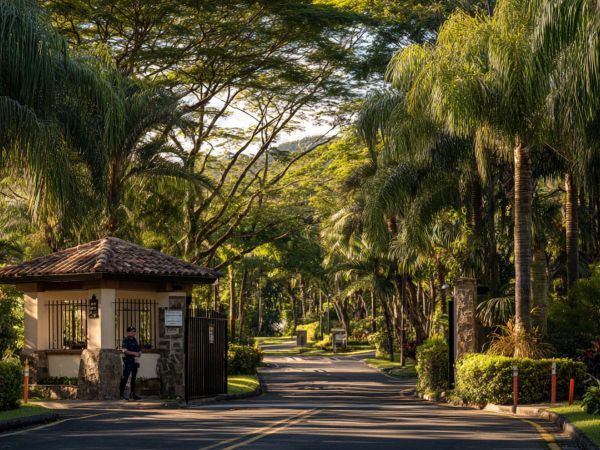
We live in a gated community in the Central Valley with a security guard at the entrance. This is standard for upper-middle-class and expat neighborhoods in Costa Rica. It is not a bunker mentality — it is the local equivalent of a neighborhood with a homeowners' association and a gate.
Beyond the community gate, our house has an alarm system, security cameras, and solid locks on every door and window. We leave lights on timers when we travel. We have good relationships with our neighbors — both Tico and expat — who keep an eye on things.
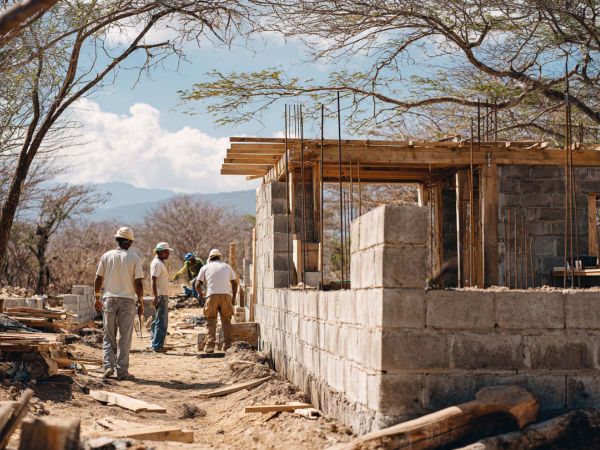
On the coast, friends who own vacation rental properties use caretakers — someone who lives on or near the property and maintains it between guests. A good caretaker is the single best security measure for a coastal property. They are present, they know the neighborhood, and they notice when something is off. Budget $300 to $500 per month depending on the scope of duties.
Private security companies are common and affordable. A basic alarm system with monitoring runs $30 to $60 per month. Security cameras (Ring, Wyze, or local brands) are easy to install and give you remote visibility. ADT and local companies like PROSESA offer full monitoring packages.
Free. No spam. Unsubscribe anytime.
Driving Safety in Costa Rica
I worry more about driving than crime. The roads are the most dangerous thing in Costa Rica.
The highways have improved significantly — the autopista to the Pacific coast is good, the road to the airport is modern, and most major routes are paved. But secondary roads are often narrow, poorly lit, winding, and shared with motorcycles, bicycles, pedestrians, and the occasional cow. Rain makes everything worse. Potholes appear overnight. And some drivers treat lane markings as decorative suggestions.
The practical advice: drive defensively. Do not drive on unfamiliar roads after dark if you can avoid it. Use Waze — it is the standard navigation app in Costa Rica and the traffic data is very accurate. Budget for a car with decent ground clearance if you live on the coast or in a rural area. And make sure your insurance is current — the INS (national insurance) vehicle policy is mandatory and covers liability, but a full-coverage private policy is worth the additional cost.
For more on the cost of vehicles and daily logistics, see our cost of living guide.
The Safest Places to Live in Costa Rica for Expats
Central Valley: Lowest Risk
Escazú, Santa Ana, Heredia, and the surrounding suburbs are among the safest areas in the country. Gated communities, private security, well-lit streets, and a strong police presence. Crime happens — mostly car break-ins and occasional home burglaries — but the risk level is comparable to a typical American suburb. This is the main reason so many expat families settle here. For a full breakdown of areas, see our guide on the best places to live in Costa Rica.
Beach Towns: Generally Safe With Awareness
Tamarindo, Nosara, Flamingo, and Santa Teresa are safe during the day. At night, basic awareness is important — stay on well-lit paths, do not walk alone on deserted beaches, and secure your car and home. Petty theft is the primary concern. The expat communities in these towns are tight-knit and watch out for each other.
Areas That Require More Caution
Downtown San José at night — specifically certain neighborhoods south and east of the center. Limón city — the Caribbean port with the highest crime rate in the country. Certain border areas near Nicaragua and Panama. These are areas that most expats have no reason to spend time in, and the risk is largely avoidable by simply not being there.
Raising Kids in Costa Rica: The Safety Perspective
This is the question I get most often from parents considering the move. My honest answer: I feel safer raising my kids here than I did in the US.
That statement surprises people, but I mean it. My children are not doing active shooter drills at school. They are not navigating the level of gun violence that pervades American life. The risks here are different — and they are, in my assessment, more manageable. I teach my kids the same things I would teach them anywhere: be aware of your surroundings, do not go with strangers, lock the house when you leave.
My kids play outside. They ride bikes in our neighborhood. They go to friends' houses. They have freedoms that many American children their age do not, because the built environment in Costa Rica — at least in the communities where expats live — feels safe enough to allow it.
The schools have security. The neighborhoods have gates. The culture is family-oriented in a way that creates natural supervision — there are always people around, watching, present.
I am not naive about this. I am making a comparative judgment based on having lived in both places. Costa Rica is not crime-free. But for my family, the daily lived experience of safety is better here than it was in the US.
What I Actually Worry About
After six years, here is my honest list.
Driving. The roads are the most statistically dangerous thing in Costa Rica. I am more careful on the highway than in any neighborhood.
Healthcare response time. If something serious happens on the coast, the nearest hospital might be two hours away. In the Central Valley, this is not a concern. On the coast, it is the real risk.
Natural events. Earthquakes happen. We have felt several. None have been serious in our area, but the country is seismically active and it is worth understanding what to do. Flooding during heavy rains is more common and more practically dangerous — do not drive through flooded roads.
My kids getting complacent about basic precautions. They have grown up in a safe neighborhood and do not have the same street awareness that a kid in a US city might develop. I work on this actively.
I do not worry about kidnapping. I do not worry about carjacking. I do not worry about random violence. These things exist statistically, but they are not part of the daily mental landscape of living here. The same way someone in Denver does not spend their day worrying about a mountain lion attack — it could happen, but it is not what you think about.
For more on what the overall move involves and what surprised us, see our guide on moving to Costa Rica from the US.
Frequently Asked Questions About Safety in Costa Rica
Is Costa Rica safe for American expats?
Yes, with basic precautions. Costa Rica is the safest country in Central America and one of the safest in Latin America. Violent crime targeting expats is rare. Petty theft is the primary concern, and it is largely preventable with common-sense measures — securing your home, not leaving valuables in cars, and being aware of your surroundings.
What is the safest area in Costa Rica for expats?
The Central Valley suburbs — Escazú, Santa Ana, Heredia — are the safest areas for expats. On the coast, Nosara, Flamingo-Brasilito, and parts of Tamarindo are considered safe. All benefit from established expat communities, private security, and relatively low crime rates.
Is it safe to drive in Costa Rica?
Driving is the most statistically dangerous activity in Costa Rica. Roads are improving but secondary routes are often narrow, poorly lit, and shared with pedestrians and motorcycles. Drive defensively, avoid unfamiliar roads after dark, use Waze, and carry full insurance coverage. The highways are generally safe and well-maintained.
Are there areas to avoid in Costa Rica?
Downtown San José after dark, Limón city, and certain border zones have higher crime rates. These are areas that most expats and tourists rarely visit. The residential and tourist areas where foreigners typically live and travel are significantly safer.
Is Costa Rica safer than the United States?
That depends on what you are comparing. Costa Rica has a higher overall homicide rate, but the violence is concentrated in specific areas that expats do not live in. The expat communities in Costa Rica have crime rates comparable to or lower than typical US suburbs. Costa Rica has no gun violence culture, no mass shootings, and no active shooter drills in schools. For many expat families, the daily experience of safety is better here.
---

Laura moved to Costa Rica from the US in 2020 with her husband and two kids. She writes for Build Tropical about expat life, raising a family in Central America, and the practical realities of daily life in Costa Rica.