Average Cost of a House in Costa Rica (2026): $230K Median + Regional Breakdown
The national median is $230,000 — but that hides a 300% regional spread. What houses actually cost in Escazú, Tamarindo, Nosara, and the Southern Zone.

The average cost of a house in Costa Rica is approximately $230,000 — a two-to-three-bedroom home with mid-quality finishes, somewhere in the Central Valley. Per square meter, the national median is $1,270 ($118 per square foot). That is the direct answer.
Here is why it does not describe what you will actually pay.
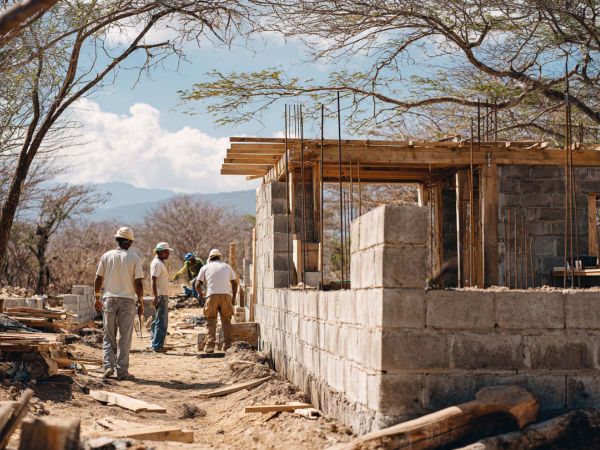
Costa Rica has a 300 percent price spread between its cheapest and most expensive markets. A concrete block house in outer Cartago costs $1,100 per square meter. A beach house in Nosara costs $2,200 to $2,800. Those are not outliers — they are the going rate in their respective markets. What follows is a breakdown of actual costs by region, what drives the variation, and what asking prices leave out.
In This Guide
- National averages
- Central Valley prices
- Pacific coast prices
- Southern Zone
- Caribbean
- Condos vs houses
- What drives price variation
- What asking prices don't tell you
- FAQ
Costa Rica Average House Price: The National Numbers
As of early 2026, the national median price per square meter for houses in Costa Rica is approximately $1,270 — roughly $118 per square foot. For apartments and condos, the median is higher at roughly $2,040 per square meter ($190 per square foot). Condos command a premium because they are concentrated in urban and coastal areas with high demand, while the house median is pulled down by affordable rural properties in provinces like Limón and outer Cartago.
A typical two-to-three-bedroom detached home with mid-quality finishes — the kind of house a middle-class Costa Rican family lives in — averages about $230,000 nationally. But that number ranges from $120,000 in affordable inland towns to $500,000 or more in premium suburbs and beach areas.
Property prices rose approximately 7 percent in dollar terms between early 2025 and early 2026, driven by continued demand from digital nomads, retirees, and remote workers, combined with stable macroeconomic conditions. Over the past decade, prices have increased roughly 60 percent in local currency terms and about 40 percent in US dollars.
For the Guanacaste market specifically — where most foreign buyer activity is concentrated — see our Guanacaste real estate market 2026 guide.
These numbers come from listing-based data aggregated from major Costa Rica property portals. They are asking prices, not transaction prices — actual sale prices typically close 7 to 12 percent below asking, which is an important distinction I will return to.
House Prices in Costa Rica's Central Valley
The Central Valley — San José, Escazú, Santa Ana, Heredia, Alajuela — is the most liquid real estate market in the country and the one with the most reliable price data.
Premium Suburbs: Escazú and Santa Ana
Houses in Escazú and Santa Ana range from $1,200 to $2,000 per square meter depending on the development, the lot, and the finish level. A three-bedroom house in a gated community with a garden runs $350,000 to $600,000. Condos in premium developments range from $2,000 to $3,000 per square meter — a two-bedroom condo in Avenida Escazú or a newer Santa Ana development lists for $250,000 to $450,000.
These prices have appreciated 8 to 12 percent annually in top neighborhoods, driven by local professional demand and corporate expat relocations. Vacancy rates are low and rental demand is consistent.
Mid-Range: Heredia and Alajuela
Heredia and Alajuela corridors offer more affordable entry points. Houses run $1,000 to $1,400 per square meter. A three-bedroom in a decent neighborhood lists for $200,000 to $350,000. These areas are benefiting from infrastructure improvements — as ring roads and transit projects reduce commute times to San José, formerly peripheral neighborhoods are repricing upward.
Budget-Friendly: Cartago, Grecia, Atenas
Outer Cartago, Grecia, and Atenas offer the lowest Central Valley prices. Houses at $800 to $1,100 per square meter. A solid two-to-three-bedroom home can be found for $120,000 to $200,000. These areas attract retirees and budget-conscious expats willing to trade proximity to San José for lower costs. For more on where retirees settle, see our guide on the best areas to invest in Costa Rica.

House Prices on Costa Rica's Pacific Coast
The Pacific coast is where prices diverge most dramatically by location and property type. The coast is not one market — it is a collection of micro-markets with different price dynamics.
Guanacaste: Tamarindo, Nosara, Flamingo
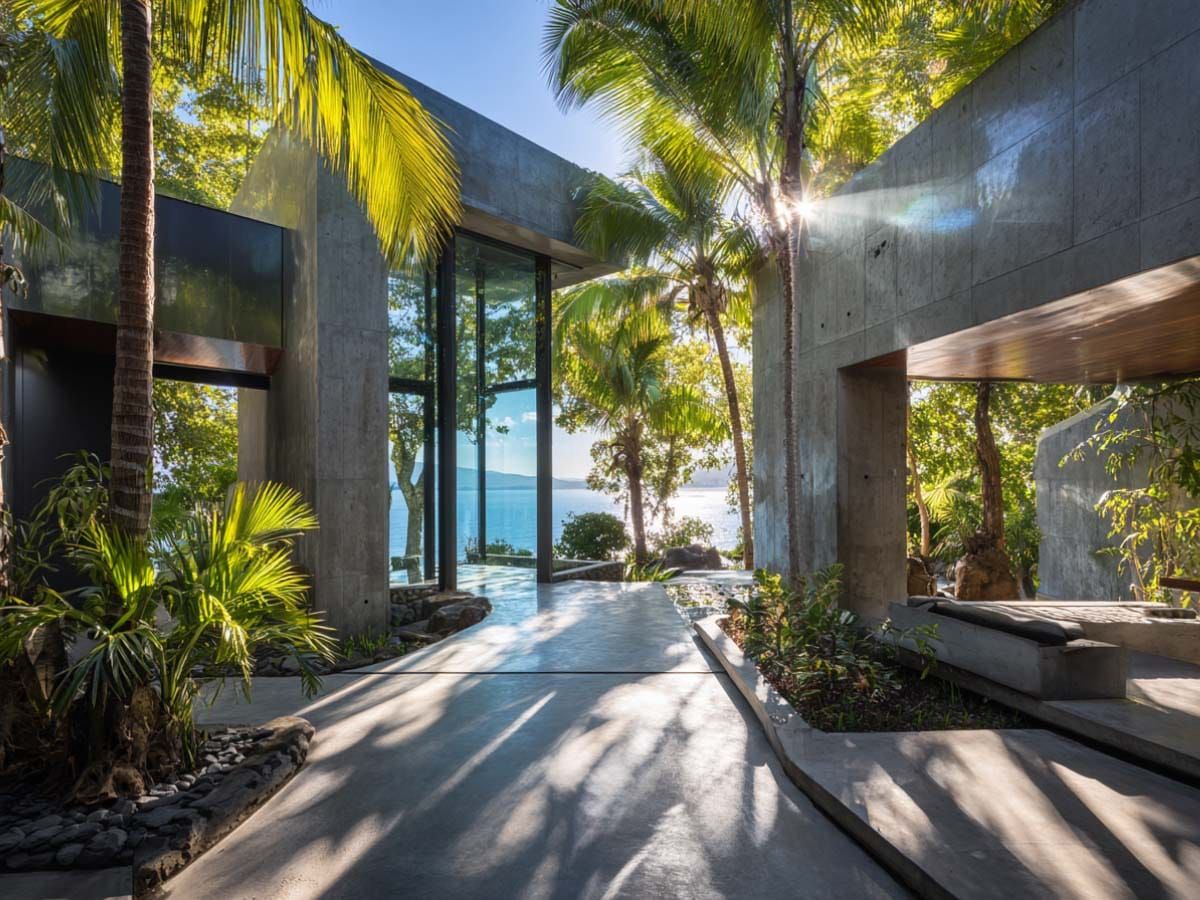
Prime Guanacaste is the most expensive residential market in Costa Rica outside of ultra-luxury developments. Houses run $1,800 to $2,500 per square meter. Condos in premium developments reach $2,500 to $3,800 per square meter.
A finished two-bedroom house in Tamarindo or Nosara — the kind of property that functions as both a home and a vacation rental — lists for $400,000 to $700,000. A luxury three-bedroom with a pool and ocean view lists for $800,000 to $1.5 million or more. These are asking prices. Transaction prices run 7 to 15 percent lower.
The Flamingo-Brasilito-Potrero area offers slightly better value than Tamarindo and Nosara, with comparable beach access and growing infrastructure. A similar two-bedroom here lists for $350,000 to $550,000.
Central Pacific: Jacó, Manuel Antonio
Jacó and Manuel Antonio sit in the middle of the Pacific coast price spectrum. Houses at $1,500 to $2,000 per square meter. Condos at $1,800 to $2,500 per square meter. Jacó is the most accessible beach town from San José (about 90 minutes by car) and attracts a mix of local weekenders, foreign buyers, and investors. Some Jacó condo developments are oversupplied — inventory sits and prices have corrected 10 to 20 percent from 2022 peaks. For more on which areas are overvalued and which represent opportunity, see our real estate market 2026 analysis.
House Prices in Costa Rica's Southern Zone
The Uvita-Dominical-Ojochal corridor is the value play on the Pacific coast. Properties here trade at 30 to 40 percent below comparable Guanacaste locations.
Houses run $1,200 to $1,800 per square meter. A buildable ocean-view lot that costs $200,000 in Nosara costs $80,000 to $120,000 in the Southern Zone. A finished two-bedroom house lists for $250,000 to $400,000 — roughly half of comparable properties in Tamarindo.
The discount reflects real factors: inferior infrastructure, limited healthcare access, longer drive from both international airports, and lower resale liquidity. But the natural beauty is extraordinary, the expat community is growing, and the price gap may narrow as the area develops. For investors with a long time horizon, the Southern Zone offers the most attractive entry pricing in the country.
Costa Rica Caribbean Coast: The Wild Card
The Caribbean coast — Limón province, Puerto Viejo, Cahuita — is the lowest-priced region in Costa Rica. Houses at $800 to $1,200 per square meter. Basic homes for $80,000 to $150,000.
The Caribbean is fundamentally different from the Pacific in every way: different climate (rain year-round, no distinct dry season), different culture (Afro-Caribbean influence), different infrastructure (less developed), and different buyer profile (younger, more adventurous, lower budget). It is not for everyone. But for buyers who connect with it, the value is exceptional.
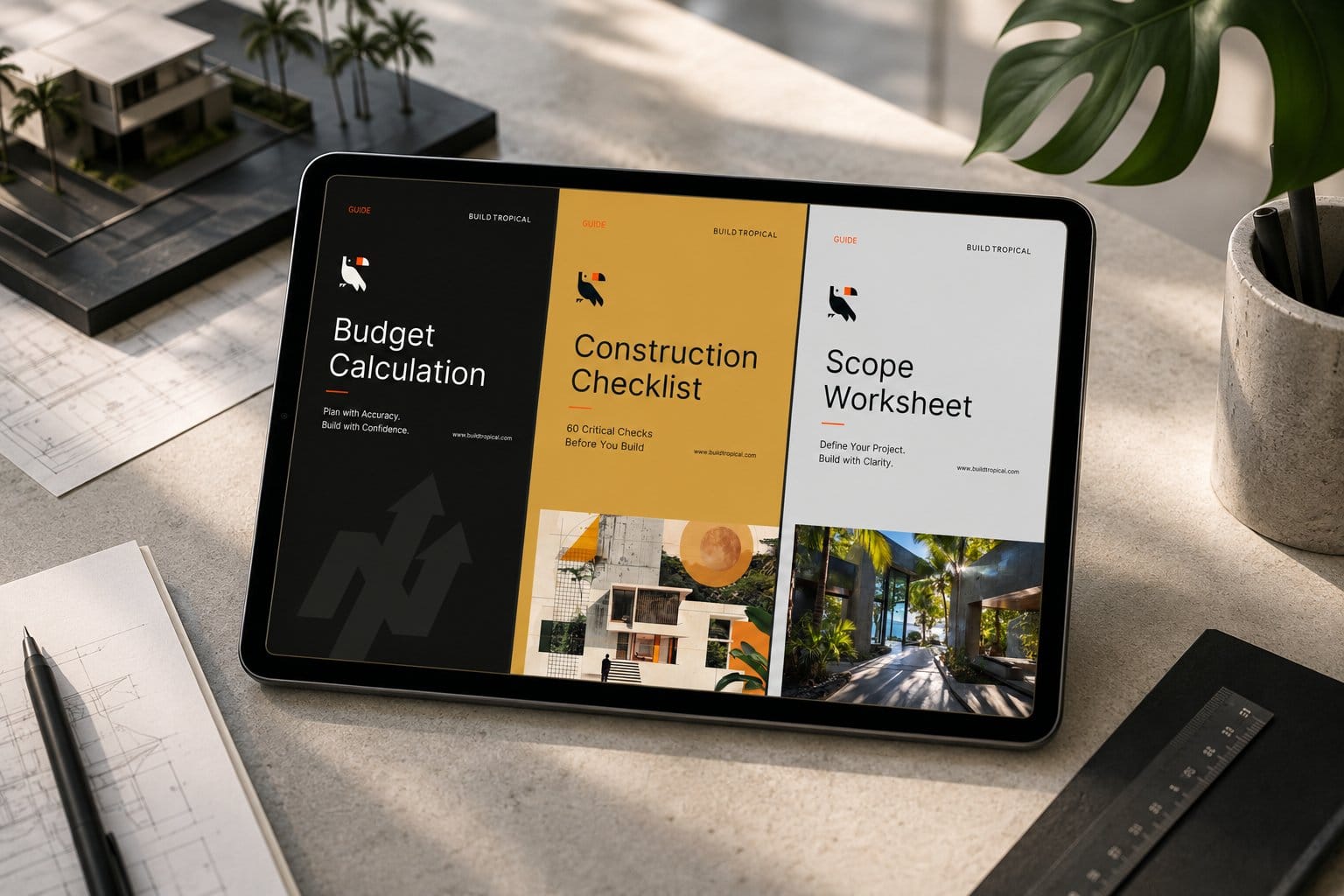
Most budget blowouts in Costa Rica are locked in long before anyone pours concrete — in the scope you never defined and the number you never pressure-tested. Build Ready is the 70-point checklist, scope worksheet and budget model I use to get that on paper before a client talks to land agents, architects or contractors.
See what is inside Build Ready →Why Condos Cost More Per Square Meter Than Houses
This surprises many buyers, but the data is clear: condos in Costa Rica average roughly $2,040 per square meter nationally versus $1,270 for houses — a 60 to 70 percent premium.
The reason is location selection bias. Condos are built in high-demand areas: Escazú, Santa Ana, Tamarindo, Nosara, Jacó. Houses include everything from premium suburbs to rural Limón. The condo median reflects urban and coastal premium pricing. The house median is diluted by affordable rural stock.
Within the same neighborhood, condos and houses are more comparable. A two-bedroom condo in Escazú and a two-bedroom house in Escazú will have similar per-square-meter pricing. But the condo includes shared amenities (pool, gym, security) that justify a modest premium, and the house includes land value that shows up in the total price rather than the per-square-meter rate.
What Drives Price Variation in Costa Rica Real Estate
Five factors explain most of the price variation across the country.
Location and proximity to the coast is the biggest driver. Beachfront or ocean-view properties command 2 to 3 times the per-square-meter price of inland properties in the same province.
Infrastructure access — road quality, water availability, internet reliability, proximity to hospitals and airports — directly affects pricing. Areas with good infrastructure command premiums because they are more livable and more rentable.
Construction quality and age determine pricing within a location. A well-maintained 2020 build commands a premium over a 2005 build in the same development. The tropical climate is hard on buildings — maintenance-deferred properties lose value quickly.
Lot size and topography matter for houses. A flat, buildable lot with road access costs more than a steep lot with limited access, even in the same area.
Titled versus concession land is a legal distinction that affects pricing on the coast. Titled property (propiedad en fee simple) carries a premium over concession land in the maritime zone. For a full explanation, see our guide on buying land in Costa Rica.
What Asking Prices in Costa Rica Do Not Tell You
Every price I have quoted in this article is an asking price — what the seller or developer lists the property for. Transaction prices — what properties actually sell for — are lower.
The typical negotiation discount in Costa Rica runs 7 to 12 percent below asking in normal market conditions. In segments with excess inventory — certain coastal condo developments, overpriced lots that have sat for a year — discounts of 15 to 25 percent are achievable for cash buyers willing to negotiate.
Days on market average 360 to 420 nationally. Properties that sell in under 180 days are either well-priced or in exceptional locations. Properties sitting at 400-plus days are overpriced, and the seller either does not know it or is not willing to accept it.
Closing costs add 3 to 4 percent to the purchase price — transfer tax, stamps, notary fees, and legal due diligence. Budget for this on top of the purchase price. For the full investment framework, see our guide on the build or buy decision in Costa Rica.
Frequently Asked Questions About House Prices in Costa Rica
What is the average house price in Costa Rica in 2026?
The national median for a typical two-to-three-bedroom detached home with mid-quality finishes is approximately $230,000. Per square meter, houses average roughly $1,270 nationally. These figures vary enormously by region: Central Valley houses run $1,000 to $2,000/sqm, Pacific coast homes run $1,500 to $2,500/sqm, and Caribbean coast homes run $800 to $1,200/sqm.
How much is a house near the beach in Costa Rica?
In established beach towns like Tamarindo, Nosara, or Flamingo, a finished two-bedroom house with a pool lists for $400,000 to $700,000. In the Southern Zone (Uvita, Dominical), comparable properties list for $250,000 to $400,000. Beachfront or ocean-view properties command significant premiums — expect $800,000 and up for a three-bedroom with a view in Guanacaste.
Are house prices in Costa Rica going up or down?
Prices rose approximately 7 percent nationally in dollar terms between early 2025 and early 2026. High-demand areas like Escazú and established coastal towns are seeing 3 to 8 percent annual growth. Some overbuilt coastal segments have corrected 15 to 30 percent from 2022 peak pricing. The direction depends entirely on the specific market.
How much does it cost to build versus buy in Costa Rica?
Building a mid-range home costs roughly $1,500 to $2,200 per square meter of construction, plus land, professional fees, and infrastructure. On a like-for-like basis, building typically costs 15 to 20 percent less than buying turnkey because you eliminate the developer's margin. The trade-off is 10 to 14 months of construction time before you can occupy or rent the property.
Can foreigners buy property in Costa Rica?
Yes. Foreigners have the same property ownership rights as Costa Rican citizens on titled land. No residency is required to purchase property. The purchase process involves a notary (who acts as the closing attorney), title verification through the National Registry, and payment of transfer taxes and stamps totaling approximately 3 to 4 percent of the purchase price.
---

James is a real estate investor on the Pacific coast of Costa Rica with a background in commercial real estate in Canada. He writes for Build Tropical about the numbers behind tropical property investment.