Things to Know Before Moving to Costa Rica (That Nobody Warns You About)
I arrived feeling like I had done my homework. Within two weeks I realized the homework had prepared me for about 40 percent of the actual experience.


Before we moved, I read everything. Blog posts, Facebook groups, relocation guides, government websites. I arrived in Costa Rica in March 2020 feeling like I had done my homework. Within two weeks I realized that the homework had prepared me for about 40 percent of the actual experience.
The other 60 percent was the stuff nobody writes about. not because it is secret, but because it is the kind of thing you only learn by living it. The banking system that makes you want to cry. The fact that "fifteen minutes" means something different here. The rainy season that is not a season so much as a way of life. The beauty that sneaks up on you on a random Tuesday when you are not looking for it.
This is the list I would have wanted six years ago. Not the romantic version. Not the scary version. The real one.
In This Guide
- Tico time
- Banking
- The rainy season
- Driving culture
- Things you can't buy
- Spanish
- Cars and import taxes
- Healthcare surprises
- The bureaucracy
- What you'll miss
- What you'll gain
- FAQ
Tico Time Is Not a Joke. It Is a Cultural Operating System
Every expat guide mentions "pura vida" and "Tico time" like they are charming quirks. They are not quirks. They are how the country operates, and if you cannot adapt to them, you will be miserable.
When you do choose where to settle, our living in Nosara guide gives you an honest picture of one of the most talked-about options on the Pacific coast.
When someone says they will be there in fifteen minutes, they might mean thirty. Or an hour. When a contractor says the job will be done Friday, they mean next week. When the internet company says the technician will come between 8 and 12, they mean between 8 and 5, or possibly tomorrow.
This is not laziness or disrespect. It is a genuinely different relationship with time and urgency. Things get done. They get done well. They get done on a schedule that is not yours, and if you spend your energy fighting that, you will exhaust yourself without changing anything.
The expats who thrive here learn to work within this system. They build buffer time into every plan. They confirm appointments the day before. They bring something to read when they know they will wait. They stop saying "but they said fifteen minutes" and start saying "let me know when you are actually here."
The Banking System Will Test Your Marriage
Opening a bank account in Costa Rica takes longer than you think, requires more documents than you expect, and involves more visits than anyone warned you about. The national banks (Banco Nacional, Banco de Costa Rica) are the most accessible for foreigners but the slowest to process anything. Private banks like BAC and Scotiabank are faster but have higher requirements and fees.
You will need your passport, your residency card (or proof of application), a utility bill in your name, proof of income, and sometimes a reference letter from your bank in the US. Some branches ask for documents that other branches of the same bank do not require. The process can take two to six weeks.
Online banking exists and works, but the interfaces feel like they were designed in 2008. Wire transfers between accounts can take one to three business days. even within the same bank. International transfers are an adventure in form-filling.
My advice: keep your US bank account active. Set up direct deposit from Social Security or pension there. Use a debit card with no foreign transaction fees (Schwab and Capital One are popular among expats) for daily spending while your Costa Rica account gets sorted out.
The Rainy Season Is Not What You Imagine
On the Pacific coast, the rainy season runs from May through November. That is seven months. Not a brief monsoon. Not an occasional afternoon shower. Seven months of daily rain, usually starting between 1 and 3 PM, often heavy, sometimes lasting into the evening.
The mornings are beautiful, sunny, warm, clear. By early afternoon, the clouds build. By mid-afternoon, it rains. Sometimes gently. Sometimes in a way that turns the road into a river and the power goes out and the internet drops and you sit in your house listening to the roof take a beating and wondering if this is what you signed up for.
It is. And it is fine. You adapt. You run errands in the morning. You plan outdoor activities before noon. You learn which roads flood and avoid them. You get a good rain jacket and waterproof bags for your electronics. After the first season, it becomes background, something you plan around, not something that surprises you.
The green season (the local euphemism for rainy season) is also when the country is most beautiful. Everything is impossibly green. The rivers are full. The waterfalls are spectacular. Tourist crowds disappear. Rental prices drop. If you can make peace with afternoon rain, you get a version of Costa Rica that the dry-season tourists never see.

Driving Culture Requires Recalibration
I covered driving safety in detail in our guide on whether Costa Rica is safe, but the cultural side deserves its own mention.
Costa Rican drivers are not aggressive in the way Miami or Rome drivers are aggressive. They are unpredictable. Turn signals are optional. Passing on blind curves happens. Motorcycles appear in places you do not expect them. Pedestrians walk on highways without sidewalks. Speed bumps appear without warning. And the concept of a lane is more of a suggestion in many areas.
You will adapt. After six months, you will drive like a Tico, scanning constantly, trusting no one's signals, and developing an intuition for what the car ahead of you is about to do. But the first few months require active recalibration of every driving habit you developed in the US.
Get full insurance coverage from INS (the national insurer) plus a private policy. Use Waze for navigation. it knows every road closure, pothole cluster, and police checkpoint. And do not drive unfamiliar mountain roads after dark until you know the area.
Things You Cannot Buy in Costa Rica (Or Can But Shouldn't)
This surprises people more than it should. Costa Rica has excellent grocery stores. Auto Mercado and PriceSmart cover most needs. But specific items that you take for granted in the US are either unavailable, wildly expensive, or available only in San José.
Clothing in larger sizes is hard to find. Specific medications or supplements may not be available (bring a supply and research local equivalents before you run out. Quality children's shoes and sports equipment are limited and expensive. Electronics cost 30 to 50 percent more than US prices. Books in English are scarce outside of San José. Specific food items) your favorite hot sauce, a particular cheese, certain spices, may not exist here.
The solution most expats develop: a shopping list for every trip back to the US, a friend willing to bring things down in a suitcase, and an Amazon-to-Miami-to-Costa Rica shipping service (several exist and they work). You also discover local substitutes that are better than what you had. the produce here is extraordinary, the coffee is world-class, and the farmers' markets on weekends are a genuine highlight of living here. For the full cost breakdown, see our cost of living guide.
Free. No spam. Unsubscribe anytime.
Your Spanish Needs to Exist
You do not need to be fluent. You do need to try. The difference between an expat who speaks broken Spanish and an expat who refuses to learn is enormous, in terms of daily ease, relationships with neighbors, and how you are treated in government offices, banks, and shops.
Basic conversational Spanish (enough to handle a grocery store, a taxi, a doctor's appointment, a parent-teacher meeting) is achievable in three to six months of consistent practice. Take classes. Use Duolingo as a supplement, not a substitute. Practice with every Tico who will talk to you. Accept that you will sound ridiculous and do it anyway.
In the Central Valley and tourist areas, you can survive without Spanish. In smaller towns, the coast outside of tourist zones, and any government office, Spanish is the only language that works. The longer you live here without learning, the harder it gets and the more isolated you become.
Cars Cost Double and That Is Not an Exaggeration
Costa Rica's import tax on vehicles is one of the highest in the world. A car that costs $30,000 in the US costs $50,000 to $60,000 here. A used car that would be $15,000 in the US is $25,000 to $30,000 here. This is not a hidden cost. it is a line item that significantly impacts your budget if you need a vehicle, and you almost certainly do unless you live in downtown San José.
Most expat families buy used. a reliable Toyota RAV4 or Hyundai Tucson with decent mileage runs $20,000 to $35,000. Some import a vehicle from the US, but the import tax applies regardless and the process is bureaucratic. Others buy from departing expats, which can be the best value if you find the right timing.
Budget for a vehicle as a major expense. It is not a trivial purchase here the way it might be in the US. For more on the full financial picture, see our guide on moving to Costa Rica from the US.
Healthcare Surprises. Good and Bad
The good surprise: Costa Rica's healthcare system is better than most Americans expect. The CAJA public system covers everything. Private hospitals in the Central Valley are modern, well-staffed, and a fraction of US costs. Doctors are well-trained. Dental care is excellent and affordable.
The bad surprise: getting into the CAJA system is slow. Your assigned EBAIS (neighborhood clinic) may have long waits. Specialist appointments through the public system can take months. Prescription availability is inconsistent. a medication you depend on may be out of stock for weeks.
The practical surprise: you will build a hybrid system. CAJA for the safety net and prescriptions. A private doctor for anything you want handled quickly. Private insurance from INS or an international provider for major events. Out-of-pocket private care for routine visits. a doctor visit costs $50 to $80, blood work costs $30 to $60, dental cleaning costs $40 to $70. For the full healthcare breakdown, see our guide on retiring in Costa Rica.
The Bureaucracy Is Slow But It Works
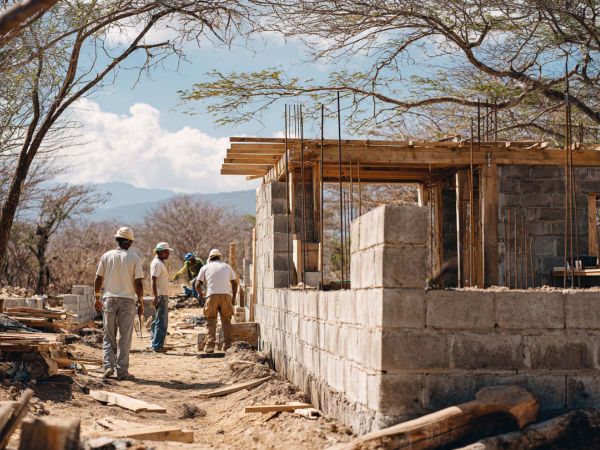
Every government process in Costa Rica takes longer than you think it should. Residency applications. Driver's license renewals. Property transfers. Business registration. Bank account openings. Vehicle registration. Every single one involves multiple visits, multiple documents, and at least one moment where someone tells you that you need a document you have never heard of.
It works. Things get processed. Permits get issued. Cards get printed. It just happens on a timeline that would make a German bureaucrat weep. The expats who handle this best are the ones who hire a professional to manage each process (an immigration attorney for residency, a notary for property, an accountant for taxes) and let the professionals navigate the system while they focus on building their life.
For the full residency process, see our guide on Costa Rica residency visas explained.
What You Will Miss That You Did Not Expect to Miss
Not the big things. The small things. Reliable mail delivery. Being able to return something to a store without an argument. Hardware stores where everything is organized and labeled. Screens on windows that actually keep bugs out. Roads without potholes. Customer service phone numbers that someone answers. Your dentist who knows your teeth. The specific grocery store layout you navigated on autopilot. Sunday football with friends.
You will also miss people more than you planned. Time zones make phone calls harder than they should be. Holidays feel different when your family is a plane ride away. Your kids' grandparents are on FaceTime instead of at the kitchen table. This is the real cost of moving abroad, and no cost-of-living spreadsheet accounts for it.
What You Will Gain That Nobody Told You About
Slower mornings. The sound of howler monkeys at dawn. Your children becoming bilingual without you trying. The realization that you need about half of what you owned in the US. Neighbors who bring you fruit from their tree. A relationship with weather that is personal and daily instead of something you check on an app. The ability to walk into any government office and be treated the same as a Costa Rican citizen. A second Christmas in the tropics that feels completely different from every Christmas you have ever had. The understanding (slow, gradual, earned) that the frustrations and the beauty are not separate experiences. They are the same experience. That is what living somewhere actually means.
For the full story of what our move involved, see our guide on moving to Costa Rica from the US. For where to settle, see best places to live in Costa Rica.
Frequently Asked Questions About Moving to Costa Rica
What is the hardest thing about living in Costa Rica?
The bureaucracy and the pace. Everything takes longer than you expect, banking, government processes, deliveries, repairs. The adjustment is not intellectual (you know things will be slower) but emotional (you feel the slowness every day until you stop fighting it). Most expats say the first year is the hardest and the second year is when it starts to feel like home.
Do I need to speak Spanish to live in Costa Rica?
You can survive without Spanish in the Central Valley and major tourist areas, but you will miss most of the country. Basic conversational Spanish transforms your daily experience, interactions with neighbors, government offices, shops, and schools become easier and more human. Start learning before you arrive and commit to continuing after.
How much does a car cost in Costa Rica?
Import taxes roughly double the US price. A reliable used SUV (Toyota RAV4, Hyundai Tucson) runs $20,000 to $35,000. New vehicles are proportionally more expensive. This is one of the largest single expenses most expats face and should be budgeted for separately.
What should I bring from the US when I move?
Medications and supplements you depend on (verify local availability first), quality children's shoes and clothing in larger sizes, specific electronics, books in English, and any specialty food items you cannot live without. Most daily necessities are available locally. Ship or bring what is hard to find, buy everything else here.
Is the rainy season really that bad?
It rains every afternoon from May through November on the Pacific coast. It is not bad. it is different. Mornings are sunny and beautiful. You plan outdoor activities before noon and indoor activities after. The country is at its most beautiful during the green season. Most expats come to prefer it over the dry, dusty months.
---

Laura moved to Costa Rica from the US in 2020 with her husband and two kids. She writes for Build Tropical about expat life, raising a family in Central America, and the practical realities of daily life in Costa Rica.