
Healthcare in Costa Rica for Expats: CAJA, Private Insurance, and What to Actually Expect
In the US, seeing a specialist means a referral, pre-authorization, a 3-week wait, and a $250 copay. In Costa Rica, I call directly and get an appointment within a week.

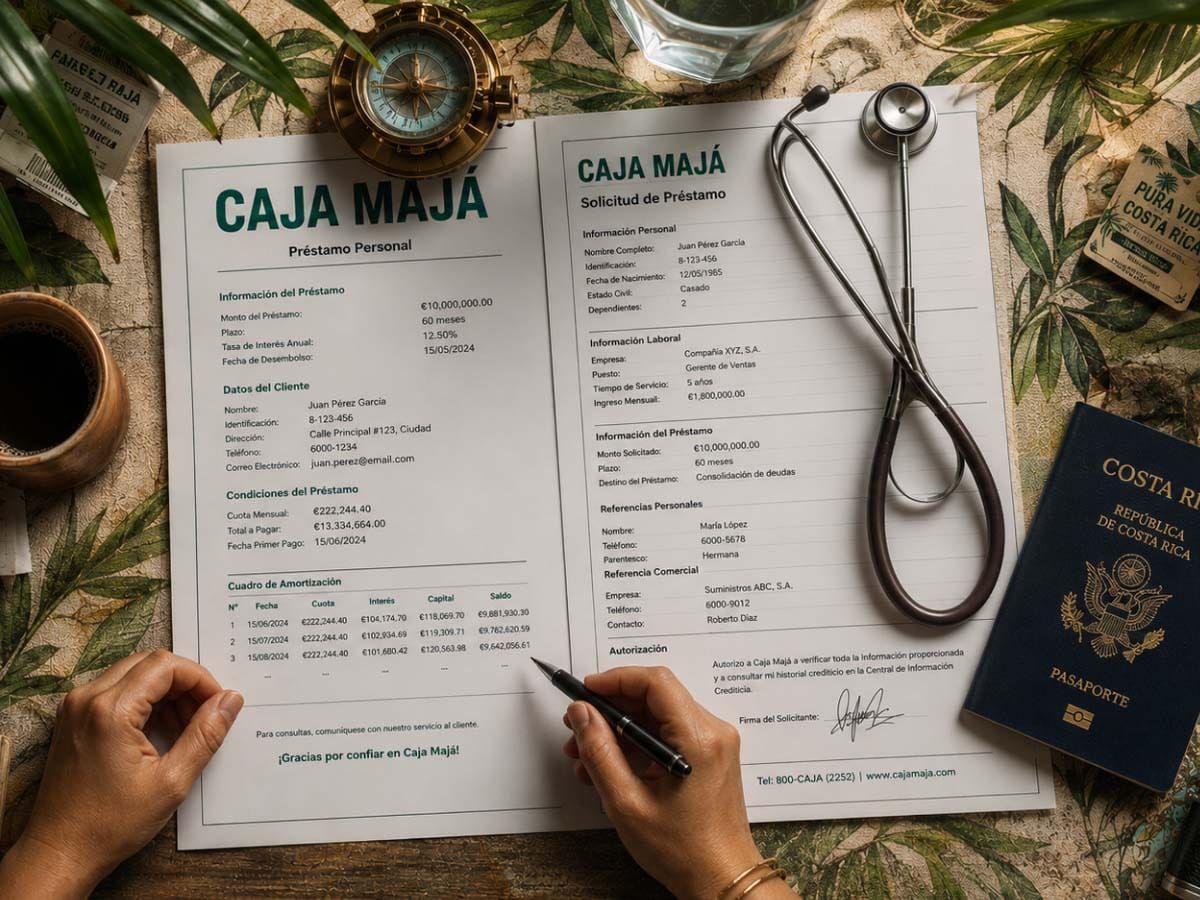
Healthcare was the question that kept me up the night before we moved. Not the house. Not the schools. Not the language. Healthcare. Because when you have two kids and you are about to move to a country where you do not speak the language fluently and you do not know a single doctor, the question of what happens if someone gets hurt or sick becomes very real.
Six years later, I can tell you that the Costa Rica healthcare system is better than I expected, more complicated than I expected, and structured in a way that no single article I read before moving accurately described. The reality is a hybrid. You use the public system for some things, the private system for others, and you learn which one to use when through a combination of advice, experience, and one very stressful night in an emergency room.
Healthcare in Costa Rica: What Expats Need to Know
Every legal resident must enroll in CAJA, the public healthcare system. It covers everything from primary care to surgery with no copays or deductibles. The trade-off is speed: non-urgent specialist appointments take 3 to 6 months through CAJA. Most expats supplement with private insurance for faster access. INS (the national insurer) offers excellent private plans. Private hospitals in the Central Valley, especially CIMA and Hospital Metropolitano, are modern and well-staffed. Out-of-pocket private care is affordable by US standards. The system that works best is a hybrid: CAJA as your safety net, private insurance for fast access, and out-of-pocket for specific tests and routine visits.
In This Guide
- CAJA public system
- How CAJA costs work
- Private hospitals ranked
- Private insurance
- The hybrid system
- Prescriptions
- Dental care
- Emergency protocol
- What surprised us
- FAQ
The CAJA Public Healthcare System Explained
CAJA, the Caja Costarricense de Seguro Social, is Costa Rica's universal public healthcare system. Every legal resident is required to enroll and contribute. In return, you get access to a comprehensive healthcare system that covers primary care, specialist referrals, hospitalization, surgery, diagnostic imaging, lab work, and prescription medications. No copays. No deductibles. No surprise bills.
The system is organized in tiers. Your assigned EBAIS (Equipo Basico de Atencion Integral en Salud) is your neighborhood primary care clinic. This is your first point of contact for non-emergency care. The EBAIS refers you to a specialist at a regional clinic or hospital if needed. The specialist refers you to a national hospital for complex procedures.
The quality of care is real. The doctors are well trained, many studied internationally, and Costa Rica's health outcomes (life expectancy, infant mortality) are comparable to the US at a fraction of the cost. The CAJA is not a developing-world charity clinic. It is a functioning universal healthcare system that covers five million people.
The trade-off is speed. A non-urgent specialist appointment through CAJA can take 3 to 6 months. Your EBAIS may have long wait times for walk-in visits. Prescription availability can be inconsistent: a medication you depend on might be in stock one month and unavailable the next.
Emergency care, however, is prompt. I know expats who have been through cardiac events, broken bones, and acute illness through CAJA emergency departments and received excellent, timely care.
How CAJA Costs Work for Expats
Your monthly CAJA contribution is based on your declared income, typically 9 to 11 percent. For a retiree on the Pensionado visa declaring $1,000 per month, that is roughly $90 to $110 monthly. For a family with higher declared income, it scales accordingly.
Enrollment happens after your residency application is filed. The process involves visiting your local CAJA office with your cedula or residency application receipt, proof of income, and patience. The bureaucracy is slow but functional.
Once enrolled, all services within the CAJA system are covered. There are no additional charges for doctor visits, hospital stays, surgeries, or prescriptions that are in the CAJA formulary. This is the most comprehensive public healthcare coverage most Americans have ever had access to.
For a full breakdown of how CAJA fits into your monthly budget, see our cost of living guide.
Private Hospitals in Costa Rica: Where to Go and Why
The Central Valley has three private hospitals that serve most of the expat community. Each has strengths.
CIMA Hospital (Escazu)
CIMA is the largest and most comprehensive private hospital in Costa Rica. Affiliated with the Baylor College of Medicine in Texas. Full range of specialties, modern imaging and surgical facilities, English-speaking staff across most departments. This is where most expats with complex medical needs end up. It is the hospital your international insurance is most likely to have a direct billing agreement with.
Clinica Biblica (San Jose)
One of the oldest and most respected hospitals in Central America. Strong surgical reputation, excellent specialists, more affordable than CIMA for many procedures. Located in downtown San Jose, which is less convenient for expats in western suburbs but worth the drive for the quality of care.
Hospital Metropolitano (San Jose / Locations Across GAM)
This is the hospital our family uses most. We go to Metropolitano for emergencies because there is a location close to our house and the emergency department is efficient and well-organized. We also go there for annual health check packages because they offer the best comprehensive screening packages I have found in the country: full blood panels, imaging, cardiac screening, and specialist consultations bundled at reasonable prices.
Beyond the packages, we buy specific tests individually as needed. If I want a particular blood panel or my husband wants a cardiac stress test, we walk in, request it, and get results within days. No referral needed. No insurance pre-authorization. Just a straightforward transaction.
Private Insurance in Costa Rica for Expats
INS (Instituto Nacional de Seguros)
This is what our family uses, and I recommend it to every expat who asks. We bought our INS policy through comerseguros.com, which is an insurance broker that specializes in expat coverage. The team is responsive, easy to reach, and they handled the entire enrollment process for us.
Our experience with INS has been fantastic. Claims have been processed without drama. Appointments at private hospitals have been covered as expected. The bureaucratic friction that I feared based on my experience with US insurance has simply not materialized. It is the most unproblematic insurance relationship I have ever had.
INS plans vary by coverage level and age. For adults in their 30s to 50s, expect $60 to $150 per month per person. Rates increase with age, as they do everywhere. The coverage includes private hospital access, specialist visits, diagnostic imaging, lab work, and prescription coverage within the plan formulary.
International Insurance (BUPA, Cigna, Allianz)
International plans run $100 to $500 per month, scaling steeply with age and pre-existing conditions. They offer broader coverage including medical evacuation and treatment outside Costa Rica. For expats who travel frequently or want the option of treatment in the US, international plans provide that flexibility. For expats who plan to receive all their care in Costa Rica, INS is typically more cost-effective.
A Note on Insurance Protections
Multiple expat friends have told me that private insurance in Costa Rica seems to offer stronger consumer protections than what they experienced with private insurance in the US. Fewer denied claims, less fighting with the insurer, more straightforward coverage decisions. I cannot confirm this as a legal fact, and the specifics depend on your plan and your insurer. But it is something I have heard consistently enough to mention. If you are coming from the US insurance system and dreading dealing with another insurer, your experience here may be more pleasant than you expect.
Free. No spam. Unsubscribe anytime.
The Hybrid System Most Expats Actually Use
Almost nobody uses just CAJA or just private care. The system that works is a hybrid, and learning which system to use for what is one of the most practical skills you develop as an expat.
CAJA for: enrollment (mandatory), prescriptions (many medications are free through the CAJA formulary), chronic condition management (regular specialist follow-ups), and the financial safety net of knowing that if something catastrophic happens, you are covered regardless of private insurance limits.
Private insurance for: fast specialist access (days instead of months), elective procedures on your timeline, hospital choice (CIMA, Metropolitano, Biblica), and the peace of mind that comes with knowing you can see a doctor this week, not in four months.
Out-of-pocket for: routine doctor visits ($50 to $80), specific blood panels or lab work ($30 to $60), dental cleanings ($40 to $70), and any test or consultation where the cost is low enough that filing an insurance claim is not worth the effort.
Prescriptions and Medications in Costa Rica
The CAJA formulary covers a wide range of medications, dispensed at no additional charge from CAJA pharmacies. For common prescriptions (blood pressure, cholesterol, diabetes management, thyroid, contraception), the CAJA system works well.
Where it gets complicated: specific medications or brands you depended on in the US may not be in the CAJA formulary or available in Costa Rica at all. The generic equivalents may have different names. Dosages may differ. Some medications require a local prescription from a Costa Rican doctor, even if you have a valid US prescription.
The practical approach: bring a three to six month supply of any critical medication when you move. Give your Costa Rican doctor your complete medication list and ask them to prescribe local equivalents. Use the CAJA pharmacy for what they carry. Use private pharmacies (Farmacia Fischel, Farmacia La Bomba) for what CAJA does not stock. Budget $50 to $150 per month for out-of-pocket prescription costs depending on your medication needs.
Dental Care in Costa Rica
Dental care is genuinely excellent and genuinely affordable. This is not marketing. Costa Rica has a well-established dental tourism industry because the quality of care is high and the prices are 40 to 70 percent below US costs.
A routine cleaning and checkup runs $40 to $70. A filling costs $60 to $120. A crown runs $400 to $600 compared to $1,000 to $1,500 in the US. Cosmetic dentistry (veneers, implants) is where the savings are most dramatic, with procedures running 50 to 70 percent below US prices.
The dentists in the Central Valley who serve the expat community are typically well-trained, many with US or European credentials, working with modern equipment in clean, professional offices. Ask the expat community for recommendations. Word of mouth is how most people find their dentist here.
What to Do in a Medical Emergency
Call 911. It works in Costa Rica and dispatches both ambulance and emergency services. Response times in the Central Valley are reasonable (10 to 20 minutes in most areas). On the coast, response times are longer and the nearest hospital may be an hour or more away.
If you can transport yourself, go directly to the nearest emergency room. In the Central Valley, CIMA, Clinica Biblica, and Hospital Metropolitano all have 24-hour emergency departments. If you are on the coast and the situation is serious, drive to the nearest CAJA hospital (every province has one) for stabilization, then transfer to a Central Valley private hospital if needed.
Keep a card in your wallet with your blood type, allergies, current medications, insurance policy number, and emergency contact. This sounds basic but it matters when you cannot communicate clearly in a stressful moment.
What Surprised Us About Healthcare in Costa Rica
The biggest surprise was how accessible private care is. In the US, seeing a specialist means a referral from your PCP, insurance pre-authorization, a 3-week wait, and a $250 copay. In Costa Rica, I can call a specialist directly, get an appointment within a week, pay $80 to $150 out of pocket or run it through INS, and walk out with results the same day. The friction is dramatically lower.
The second surprise was prescription freedom. Many medications that require a prescription in the US are available over the counter in Costa Rica. Antibiotics, anti-inflammatories, and other common medications can be purchased at any pharmacy. This is both convenient and worth being careful about. Self-prescribing is easy. It is not always wise.
The third surprise was cost transparency. When I ask a Costa Rican doctor or hospital what something costs, they tell me. Before the procedure. In writing. There are no surprise bills, no balance billing, no mysterious charges that appear three months later. The price they quote is the price you pay.
For more on how healthcare fits into the retirement decision, see our guide on retiring in Costa Rica. For the full cost picture, see best places to live in Costa Rica.
Frequently Asked Questions About Healthcare in Costa Rica
Is healthcare in Costa Rica good enough for expats?
Yes. The public CAJA system provides comprehensive coverage, and private hospitals in the Central Valley (CIMA, Clinica Biblica, Hospital Metropolitano) are modern, well-staffed, and affordable. Most expats use a hybrid of public and private care. Health outcomes in Costa Rica (life expectancy, infant mortality) are comparable to the US.
How much does healthcare cost in Costa Rica for expats?
CAJA enrollment costs 9 to 11 percent of declared income (roughly $90 to $200/month for most expats). Private INS insurance runs $60 to $150/month per person. Out-of-pocket doctor visits cost $50 to $80. A comprehensive annual health check package at a private hospital runs $300 to $600. Total healthcare spending for a family of four: $400 to $600 per month.
Does Medicare work in Costa Rica?
No. Medicare does not cover you outside the United States. You need CAJA enrollment (mandatory for residents) plus either private insurance or a cash reserve for medical expenses.
What is the best private hospital in Costa Rica?
CIMA in Escazu is the most comprehensive. Clinica Biblica has the strongest surgical reputation. Hospital Metropolitano is excellent for emergencies and health check packages. All three are in the Central Valley. On the coast, private hospital access is limited to clinics, with serious care requiring a trip to San Jose.
Can I buy prescription medication without a prescription in Costa Rica?
Many common medications (antibiotics, anti-inflammatories, some chronic condition drugs) are available over the counter at Costa Rican pharmacies. Controlled substances still require a prescription. Bring a supply of critical medications when you move, and work with a local doctor to establish prescriptions for long-term needs.
---

Laura moved to Costa Rica from the US in 2020 with her husband and two kids. She writes for Build Tropical about expat life, raising a family in Central America, and the practical realities of daily life in Costa Rica.